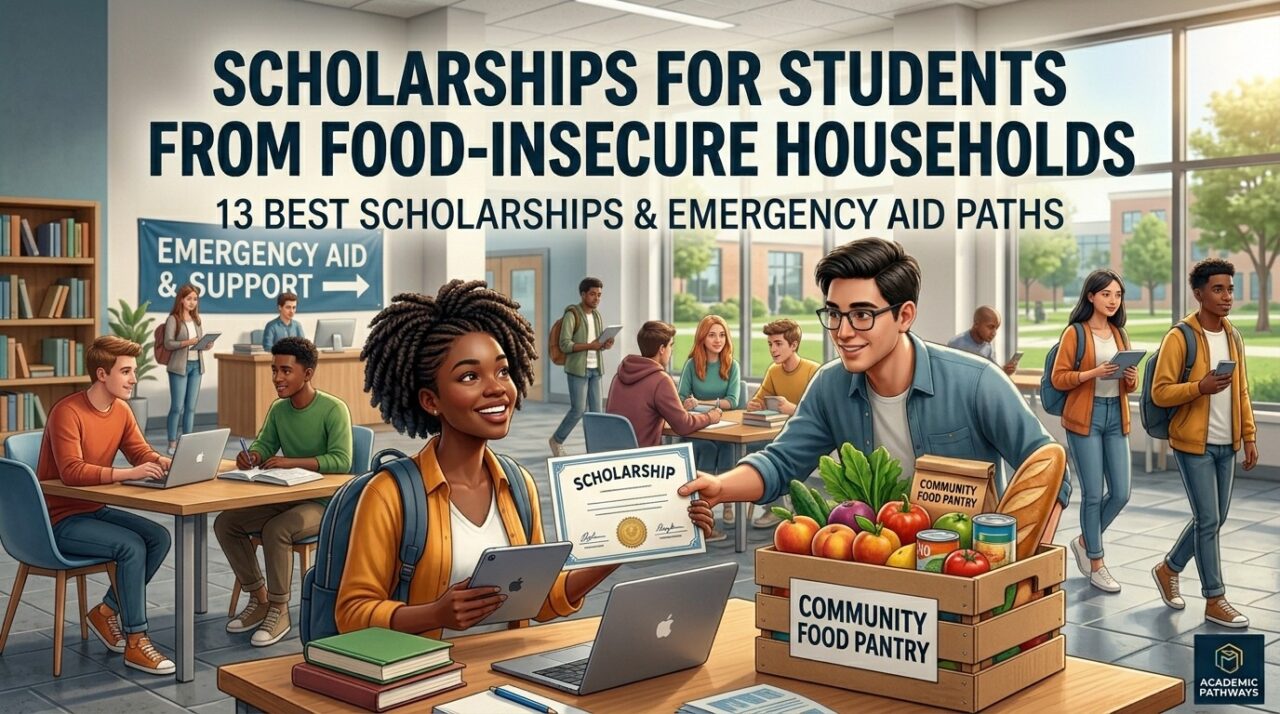
Scholarships for Students From Food-Insecure Households: 13 Best Scholarships and Emergency Aid Paths
January
1) APIA Scholarship
Why It Slaps: This is one of the better national options for students whose financial pressure is real, because APIA Scholars says it focuses on students who are most in need and prioritizes applicants with significant financial need. It is also useful because it can work for students heading to either 2-year or 4-year schools, and the award range is big enough to matter. For students in households where tuition, groceries, rent, and transportation all compete for the same dollars, this is the kind of flexible scholarship that can actually move the needle.
Amount: $2,500 to $20,000
Deadline: January 15, 2026 for the 2026–27 cycle
Apply/info: Official scholarship page
February
2) Jeannette Rankin National Scholar Grant
Why It Slaps: This is a strong match for older students from financially strained households because it is built for women, nonbinary, or Two-Spirit students age 35+ pursuing a first associate, first bachelor’s, or technical/vocational path with financial need. What makes it especially practical is that the grant is unrestricted and renewable, which is huge when the real crisis is not just tuition but also groceries, gas, childcare, or keeping the lights on. For adult learners juggling school and survival, that flexibility is a big deal.
Amount: Up to $2,500 annually, renewable for up to five years
Deadline: February 13, 2026 for the 2025–26 cycle; the homepage says the next cycle opens in November 2026
Apply/info: Official grant page
3) Dell Scholars Program
Why It Slaps: Dell Scholars is one of the best fits on this page for students coming from real financial stress because Pell eligibility is built into the program and the scholarship is paired with concrete support for basic needs. The program does not just hand out money and disappear. It includes a sizable scholarship, laptop, book credits, advising, career coaching, and emergency funds, which makes it much stronger than a one-time check for students who need stability as much as cash.
Amount: $20,000 plus laptop, textbook credits, and emergency support
Deadline: February 15, 2026 for the 2026 cycle
Apply/info: Official program page
4) Horatio Alger Undergraduate Scholarships
Why It Slaps: Horatio Alger is one of the clearest “money-stress plus adversity” scholarships in the national market. The program explicitly centers students with critical financial need who have shown perseverance through hardship, which makes it especially relevant for students whose academic story has been shaped by unstable household finances, food problems, or broader family strain. It is also broad enough to serve juniors, seniors, and some college students aiming for a bachelor’s degree.
Amount: Scholarship family amounts vary; Horatio Alger says annual awards in this scholarship family range from $10,000 to $50,000
Deadline: February 15, 2026 for seniors; March 1, 2026 for juniors
Apply/info: Official scholarship page
5) HSF Scholar Program
Why It Slaps: For students of Hispanic heritage, this is a serious funding lane because HSF combines direct scholarship money with advising, mentoring, leadership development, and career support. The award itself is based on relative need, and the application also requires FAFSA submission, so it lines up well with students who are trying to stack every legitimate dollar they can. It is not the biggest single award on this page, but it is one of the strongest ecosystem plays because the support network can keep paying off after the initial money lands.
Amount: $500 to $5,000
Deadline: February 15, 2026 for the 2026 cycle
Apply/info: Official scholarship page
6) TheDream.US National Scholarship
Why It Slaps: This is one of the strongest verified options for undocumented students with major unmet need. TheDream.US is built specifically for students who are currently undocumented, meet the academic rules, and have significant unmet financial need. For households dealing with food insecurity, this matters because the award size can be large enough to change the entire college equation rather than just trim a small expense.
Amount: Up to $16,500 for an associate degree, up to $33,000 for a bachelor’s degree, plus up to $6,000 in stipends at some National Partner Colleges
Deadline: February 28, 2026 for the 2026–27 round
Apply/info: Official scholarship page
April
7) Coca-Cola Foundation First Generation HBCU Scholarship
Why It Slaps: This is a strong niche fit for first-generation students planning to attend a TMCF member institution because the listing specifically says financial need is welcome and first-gen status is part of the scholarship’s setup. Students from food-insecure households often overlap with first-gen financial strain, and that is what makes this award worth watching. It is not universal, but for the right student it is one of the cleaner targeted options on the board.
Amount: Up to $10,000
Deadline: April 24, 2026
Apply/info: Official scholarship listing
8) Denny’s Hungry for Education Scholarships
Why It Slaps: This program is not strictly need-based, but it belongs in this guide because it is one of the few active scholarship programs tied to community uplift and hunger-related themes that college students can actually apply to right now. The current college tracks shown on the official page include a USHLI option and a HACU-member-institution option, so eligible students should not ignore it just because it is branded differently from a traditional hardship scholarship. For students who have a strong story, essay-based scholarships like this can sometimes be easier to win than giant national merit pools.
Amount: Current college tracks shown on the official page include $1,000 and $2,000 awards, depending on partner track
Deadline: April 12, 2026 for the USHLI track; May 15, 2026 for the HACU track
Apply/info: Official scholarship hub
May
9) HACU Coca-Cola First Generation Scholarships
Why It Slaps: This is a clean fit for first-generation students attending or planning to attend a HACU-member institution. HACU says 17 scholarships of $5,000 are being awarded, which makes this more than a token opportunity, and the eligibility is concrete enough that students can quickly tell if they qualify. For first-gen students from food-insecure households, especially those trying to reduce the amount they need to borrow or work, this is a smart add-on application.
Amount: $5,000
Deadline: May 15, 2026
Apply/info: Official HACU page
June
10) Horatio Alger Career & Technical Education Scholarships
Why It Slaps: This is one of the best options for students who are not taking the classic four-year-college route, including nontraditional students and students going into certificate or associate programs. That matters a lot for families under food pressure, because shorter career programs can be the most realistic path to faster earnings and lower total cost. Horatio Alger’s CTE scholarship is also refreshingly direct about serving students with adversity and need, which makes it more relevant than generic trade-school lists.
Amount: Up to $2,500
Deadline: June 15, 2026
Apply/info: Official scholarship page
September
11) The Gates Scholarship
Why It Slaps: This is one of the heaviest hitters for students from low-income households because it is a last-dollar scholarship tied to the full cost of attendance that is not already covered by other aid and the Student Aid Index. In plain English, that means it is designed to close the kind of gap that can make a student choose between staying enrolled and stepping away. It is extremely competitive, but if your reader fits the profile, this is absolutely a first-tier application.
Amount: Full cost of attendance not already covered by other aid and the Student Aid Index
Deadline: Most recent verified cycle closed September 15, 2025; watch the official page for the next opening
Apply/info: Official scholarship page
12) QuestBridge National College Match
Why It Slaps: QuestBridge is one of the best “big swing” options in the country for high-achieving students from low-income backgrounds. The upside is massive because the Match can lead to early admission and a full four-year scholarship at a top college, which can erase the kind of cost burden that keeps food, housing, and school expenses in constant conflict. For students with strong grades and strong context, this belongs near the very top of the application list.
Amount: Full four-year scholarship; QuestBridge says the Match Scholarship can be worth over $325,000 at some partner colleges
Deadline: Application opens in late summer; September 30 deadline
Apply/info: Official program page
November
13) Stephen J. Brady Stop Hunger Scholarship
Why It Slaps: This is the most on-theme scholarship here for students who are already doing anti-hunger work in their communities. It is not a general hardship scholarship, so it is not for everyone, but for a student whose lived experience with hunger has turned into leadership, advocacy, pantry work, mutual aid, food rescue, or awareness-building, this is a standout opportunity. It also pairs student scholarship money with a grant for the hunger-relief organization, which makes it feel bigger than a personal award.
Amount: $10,000 academic scholarship plus $5,000 grant for the recipient’s hunger-relief charity
Deadline: Annual application period runs September 5 to November 5
Apply/info: Official scholarship page
14) Jack Kent Cooke College Scholarship Program
Why It Slaps: This is one of the most valuable high-achievement, high-need scholarships in the country. It is built for seniors with serious academic strength and financial need, and the program can cover a large share of total college costs while also adding advising and long-term support. For a student from a food-insecure household with the grades to compete, this is the kind of award that can fully change the college choice set.
Amount: Up to $55,000 per year
Deadline: Most recent verified deadline was November 12, 2025 for spring 2026 graduates; use the official page to watch for the next cycle
Apply/info: Official scholarship page
Also Tell Readers to Check Campus Hunger and Emergency Aid
A lot of students in food-insecure households will get faster help from campus meal support, food-access micro-grants, and emergency grants than from outside scholarships alone. The U.S. Department of Education’s Basic Needs for Postsecondary Students Program exists because colleges are building systems around food, housing, transportation, childcare, health, and technology support, and real campuses already offer meal-plan scholarships, e-grocery grants, and emergency retention funds.
Useful examples to mention in the article:
- Rutgers No Hungry Knights Scholarship
- CUNY SPS Food Access Initiative
- Lehman College Basic Needs Support Grants
- CCNY Emergency Grants Program
- Brooklyn College Student Emergency Grant
- UNCF Emergency Student Aid
FAQs
Are there scholarships specifically for students from food-insecure households?
Yes, but not many that use that exact phrase in the eligibility rules. Most of the best real options work through adjacent criteria like critical financial need, Pell eligibility, first-generation status, unmet need, undocumented status, or adversity, plus campus basic-needs support. That is why students should apply both to outside scholarships and to school-run food and emergency aid programs.
Should students still file the FAFSA even if they are hunting for outside scholarships?
Absolutely. FAFSA is still the gateway to federal aid and often to state and campus aid too, which matters even more for students whose households are already under pressure from food costs and other basic needs. Outside scholarships are helpful, but FAFSA-based aid is usually the foundation that everything else stacks on top of.
Can college students get SNAP?
Some can, but college students usually have to meet both normal SNAP rules and a student exemption if they are enrolled at least half-time. USDA says students attending an institution of higher education more than half-time are generally eligible only if they meet an exemption, such as working enough hours, participating in work-study, caring for a child under certain rules, or meeting another listed exemption.
What campus terms should students search for if they need food help fast?
Tell readers to search their college website for phrases like basic needs center, food pantry, meal swipe scholarship, food access grant, student emergency grant, emergency retention grant, and Dean of Students emergency fund. Schools and partner organizations already use these exact kinds of models, and students often miss them because they search only for “scholarships.”
Related Internal Links
- FAFSA 2026–27: Complete Guide for High School Seniors
- Pell Grant Changes for 2026–27: New Rules, Max Award, and What Students Need to Know
- Compare Financial Aid Offers: Complete 2026 Guide
- How to Read a Financial Aid Offer (and Appeal It)
- Grants for College Students in the United States
- Best Financial Aid College: A Complete 2026 Guide