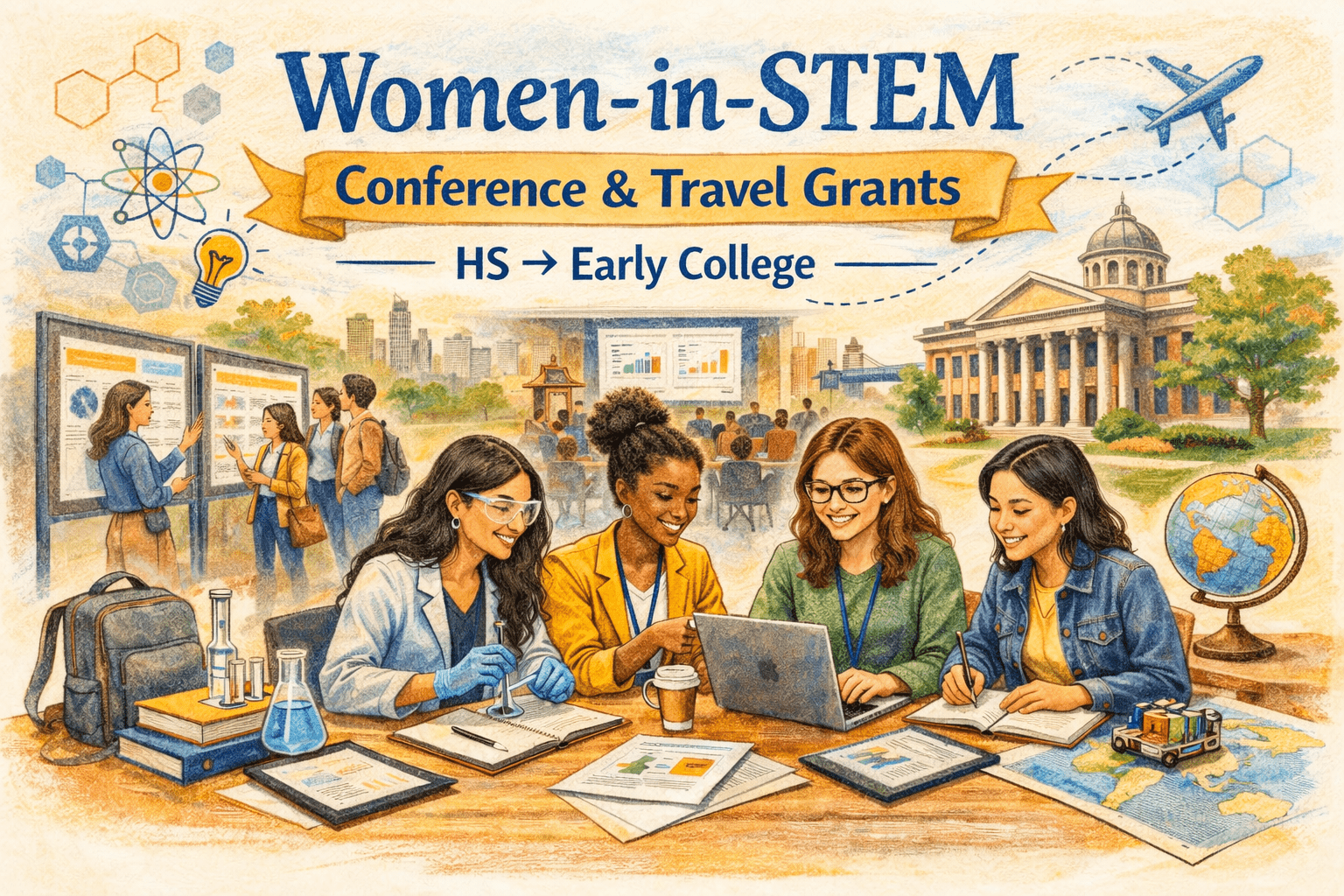
Undocumented Women Scholarships — Safe, No-SSN Options (2026 Update)
A curated, verified list of 30+ scholarships for undocumented and DACA women in the U.S. with no-SSN or ITIN-OK options. Clear eligibility tags, amounts, deadlines, and official application links.
TheDream.US — National Scholarship
💥 Why It Slaps: Major tuition support at partner colleges; 🧷 DACA OK; often workable for undocumented students at in-state partner schools; 🚫 No federal aid needed.
💰 Amount: Up to ~$33K–$39K over 4 years (varies by college; tuition/fees)
⏰ Deadline: Opens late fall; typically Jan–Feb
🔗 Apply/info: https://www.thedream.us/scholarships/national-scholarship/
TheDream.US — Opportunity Scholarship (Locked-Out States)
💥 Why It Slaps: For students in states that block in-state tuition/college access; funds study at out-of-state partner schools; 🧷 DACA OK.
💰 Amount: Up to ~$80K total (tuition/fees + housing/food estimates)
⏰ Deadline: Opens late fall; typically Jan–Feb
🔗 Apply/info: https://www.thedream.us/scholarships/opportunity-scholarship/
Golden Door Scholars
💥 Why It Slaps: One of the most generous private programs for undocumented students; many partner schools; 🧷 DACA OK.
💰 Amount: Up to full tuition + support (varies by partner)
⏰ Deadline: Usually Sept–Oct
🔗 Apply/info: https://www.goldendoorscholars.org/
Davis-Putter Scholarship Fund
💥 Why It Slaps: For student activists advancing social/economic justice; 🚫 No citizenship requirement noted; No-SSN typically not requested on the app.
💰 Amount: Up to $15,000/year
⏰ Deadline: April (annual)
🔗 Apply/info: https://www.davisputter.org/
Point Foundation — Flagship Scholarships (LGBTQ+)
💥 Why It Slaps: Comprehensive LGBTQ+ support; leadership & mentorship; commonly open regardless of citizenship; 🌈 LGBTQ+; 👩 Women welcome.
💰 Amount: Varies (often multi-year + coaching)
⏰ Deadline: Jan–Feb (cycles vary)
🔗 Apply/info: https://pointfoundation.org/scholarships/
Point Foundation — Access Scholarship (LGBTQ+)
💥 Why It Slaps: Lower-lift app for 2- and 4-year students; 🌈 LGBTQ+; 🚫 Often no citizenship restriction.
💰 Amount: $1,000–$5,000
⏰ Deadline: Fall/Winter windows
🔗 Apply/info: https://pointfoundation.org/scholarships/access/
Point Foundation — Community College Scholarship (LGBTQ+)
💥 Why It Slaps: Designed for CC students planning to transfer; 🌈 LGBTQ+; 🚫 citizenship often not required.
💰 Amount: $2,400–$4,800 + support
⏰ Deadline: Spring–Summer
🔗 Apply/info: https://pointfoundation.org/scholarships/community-college/
APIQWTC QScholarship (AAPI LGBTQ+)
💥 Why It Slaps: Community-based AAPI LGBTQ+ awards; 🚫 Typically no citizenship requirement; 🌈 LGBTQ+; 📍 NorCal focus but flexible.
💰 Amount: $1,500–$7,500 (varies)
⏰ Deadline: Spring
🔗 Apply/info: https://apiqwtc.org/apiqwtc-scholarship-fund/
Prism Foundation Scholarships (API LGBTQ+)
💥 Why It Slaps: Grants to API LGBTQ+ students with community impact; 🚫 Usually no citizenship requirement; 🌈 LGBTQ+.
💰 Amount: $1,000–$5,000
⏰ Deadline: Spring
🔗 Apply/info: https://theprismfoundation.org/scholarships
Soroptimist “Live Your Dream” Awards (Women)
💥 Why It Slaps: For women with dependents in undergrad/vocational programs; 👩 Women; 🧾 ITIN OK (U.S. residents may use SSN or TIN for tax forms); 🚫 No citizenship requirement to apply.
💰 Amount: $1,000–$16,000 (local/region/finalist tiers)
⏰ Deadline: Nov (most clubs)
🔗 Apply/info: https://www.liveyourdream.org/
Science Ambassador Scholarship (Women & Nonbinary, STEM)
💥 Why It Slaps: Mini-lecture video; 🚫 No U.S. citizenship required; 🧪 STEM; 👩 Women & nonbinary.
💰 Amount: $20,000 (one-time; 5 awards as of 2025)
⏰ Deadline: Opens Fall; due Dec (typical)
🔗 Apply/info: https://www.scienceambassadorscholarship.org/
Patsy Takemoto Mink Education Support Awards (Women w/ Children)
💥 Why It Slaps: For low-income mothers pursuing education; 🚫 App states no discrimination based on immigration status; 👩 Women.
💰 Amount: Up to $5,000
⏰ Deadline: Summer (varies)
🔗 Apply/info: https://www.patsyminkfoundation.org/education-support-application
Chicana Latina Foundation Scholarship (Women)
💥 Why It Slaps: Iconic Bay Area Latina leadership award; 👩 Women; 📍 CA/Latina focus; AB540/CA Dream Act students historically supported.
💰 Amount: $1,500 (typical)
⏰ Deadline: Spring
🔗 Apply/info: https://chicanalatinafoundation.communityforce.com/Login.aspx
La Unidad Latina Foundation
💥 Why It Slaps: Community-driven awards; 🚫 Often no citizenship requirement; Latina-friendly.
💰 Amount: $500–$2,000
⏰ Deadline: Fall
🔗 Apply/info: https://www.lulf.org/scholarships
Los Hermanos de Stanford Scholarship
💥 Why It Slaps: Explicitly allows SSN or ITIN for disbursement; 📍 U.S./Puerto Rico.
💰 Amount: $1,000 (typical)
⏰ Deadline: Spring
🔗 Apply/info: https://hermanos.weebly.com/scholarship.html
Ascend Educational Fund (NYC)
💥 Why It Slaps: Created for immigrant students regardless of status; 📍 NYC; 🧷 DACA OK; 🚫 No citizenship requirement.
💰 Amount: $2,500–$20,000 (multi-year)
⏰ Deadline: Feb–May
🔗 Apply/info: https://www.ascendfundny.org/scholarship
Esperanza Fund (DC/MD/VA)
💥 Why It Slaps: For immigrant students in the DMV regardless of status; mentoring + support.
💰 Amount: $5,000–$20,000 (multi-year)
⏰ Deadline: Feb–April
🔗 Apply/info: https://www.esperanzafund.org/scholarship/
Que Llueva Café Scholarship — CORE
💥 Why It Slaps: National award for undocumented students; no GPA cutoffs; storytelling-forward.
💰 Amount: $500–$1,000 (varies)
⏰ Deadline: Jan–March
🔗 Apply/info: https://ca-core.org/scholarship/
Hispanic Development Fund (Kansas City)
💥 Why It Slaps: Large local fund; undocumented/DACA welcome; 📍 KC metro.
💰 Amount: $1,000–$5,000+
⏰ Deadline: Jan–March
🔗 Apply/info: https://www.hdfkc.org/
HEEF — Hispanic Education Endowment Fund (Orange County, CA)
💥 Why It Slaps: OC-focused, inclusive of AB540/undocumented; multiple sub-awards; 📍 SoCal.
💰 Amount: $1,000–$5,000+
⏰ Deadline: Dec–Jan
🔗 Apply/info: https://heef.org/scholarships/
CHIRLA College Scholarships (CA)
💥 Why It Slaps: Designed by an immigrant-rights org; undocumented welcome; 📍 California priority.
💰 Amount: $500–$2,500 (varies)
⏰ Deadline: Spring–Summer
🔗 Apply/info: https://www.chirla.org/
eQuality Scholarship Collaborative (Northern CA; LGBTQ+ & Allies)
💥 Why It Slaps: Does not ask for SSN or citizenship status; multiple award categories; 🌈 LGBTQ+ affirming.
💰 Amount: $6,000–$12,000+ (varies)
⏰ Deadline: Jan (typical)
🔗 Apply/info: https://www.equalityscholarship.org/
Foundation 649 Scholarship (AAPI)
💥 Why It Slaps: Specifically welcomes undocumented applicants; creative/social impact prompt; 📍 National.
💰 Amount: $1,000–$2,500 (renewable for some)
⏰ Deadline: Spring
🔗 Apply/info: https://foundation649.com/
California Latino Legislative Caucus Foundation (CLLCF) Scholarship
💥 Why It Slaps: Open to all students irrespective of immigration status; easy statewide app; 📍 CA.
💰 Amount: $5,000 (typical)
⏰ Deadline: May–June
🔗 Apply/info: https://www.cllcf.org/scholarship-program
Women in Aviation International (WAI) Scholarships (Women)
💥 Why It Slaps: Hundreds of aviation/aero awards; 👩 Women; 🚫 Many do not require U.S. citizenship unless specified.
💰 Amount: $1,000–$50,000+ (varies widely)
⏰ Deadline: Oct 15, 2025 (current cycle)
🔗 Apply/info: https://www.wai.org/scholarships
AAJA Scholarships (Journalism)
💥 Why It Slaps: Multiple named scholarships & internship grants via AAJA; 🚫 Citizenship not listed as a blanket requirement; 📍 National.
💰 Amount: $1,000–$5,000+
⏰ Deadline: May–June windows (vary by award)
🔗 Apply/info: https://www.aaja.org/news-and-resources/scholarships-internships/
SHPE — ScholarSHPE (STEM; DACA-friendly)
💥 Why It Slaps: Many SHPE awards; includes scholarships for DACA & undocumented students through designated funds; 🧪 STEM.
💰 Amount: $1,000–$10,000+
⏰ Deadline: April–June (varies)
🔗 Apply/info: https://shpe.org/engage/programs/scholarshpe/
GMiS Scholars (HENAAC) — Great Minds in STEM
💥 Why It Slaps: Long-running Hispanic STEM awards; many years have accepted DACA; 🧪 STEM.
💰 Amount: $500–$10,000
⏰ Deadline: April–June
🔗 Apply/info: https://gmis-scholars.org/
QuestBridge — National College Match (Full-Ride Pathway)
💥 Why It Slaps: Top-college full scholarship pathway; undocumented students can apply (many partners are need-blind/meet full need for undocumented/DACA).
💰 Amount: Full 4-year scholarship (at matched partner)
⏰ Deadline: Sept 30, 2025 (this year)
🔗 Apply/info: https://www.questbridge.org/apply-to-college/programs/national-college-match
Women & Minorities in Transportation — WTS International Scholarships (Women)
💥 Why It Slaps: Undergrad/grad awards via WTS chapters; 👩 Women; many awards do not require U.S. citizenship (check each listing).
💰 Amount: $2,500–$10,000+
⏰ Deadline: Fall–Winter (by chapter)
🔗 Apply/info: https://www.wtsinternational.org/ (navigate to Scholarships)
Hispanic Heritage Foundation — Youth Awards
💥 Why It Slaps: Category awards (STEM, Healthcare, Business, etc.); DACA frequently eligible; 📍 National with regional ceremonies.
💰 Amount: $1,000–$10,000 (varies)
⏰ Deadline: June–Oct (varies annually)
🔗 Apply/info: https://hispanicheritage.org/youth-awards/
Education First (City Chapters)
💥 Why It Slaps: Community-based scholarships across select U.S. cities; inclusive; 🚫 Usually no citizenship restriction.
💰 Amount: $2,000–$5,000+
⏰ Deadline: Fall–Winter (varies by city)
🔗 Apply/info: https://educationfirst.org/our-scholarships/
Latinos in Technology Scholarship — Hispanic Foundation of Silicon Valley (STEM)
💥 Why It Slaps: Transfer & university awards for CS/Eng majors; 🧪 STEM; 🧷 DACA OK; 📍 NorCal focus.
💰 Amount: Up to $10,000/yr (renewable; up to 3 years)
⏰ Deadline: Feb–March
🔗 Apply/info: https://www.hfsv.org/scholarships/latinos-in-technology-scholarship/
MANA de San Diego — Latina Scholarship (Women)
💥 Why It Slaps: Long-standing Latina awards; AB540/CA Dreamers often supported; 👩 Women; 📍 San Diego.
💰 Amount: $500–$5,000
⏰ Deadline: Spring
🔗 Apply/info: https://manasd.org/programs/scholarship/
Women in Public Finance — National & Local Chapter Scholarships (Women)
💥 Why It Slaps: Finance/public policy careers; 👩 Women; citizenship often not required (varies by chapter).
💰 Amount: $1,000–$10,000
⏰ Deadline: Summer–Fall
🔗 Apply/info: https://wpfc.com/scholarship
Latinas in Tech — Scholarship Fund (Women in Tech)
💥 Why It Slaps: For Latina students in tech-aligned majors; 👩 Women; 🧷 DACA commonly eligible.
💰 Amount: $1,000–$5,000
⏰ Deadline: Varies
🔗 Apply/info: https://www.latinasintech.org/ (Programs → Scholarships)
CLLCF (repeat reminder for grad/undergrad) — statewide CA
💥 Why It Slaps: Stating again because explicitly status-inclusive (apply undergrad or grad); great “safety” pick for privacy.
💰 Amount: $5,000
⏰ Deadline: Spring
🔗 Apply/info: https://www.cllcf.org/faq
Latina Leadership Network — CA Community Colleges (Women)
💥 Why It Slaps: Latina CC students; 👩 Women; 📍 California CC; inclusive culture and strong mentorship.
💰 Amount: $500 (typical)
⏰ Deadline: Spring
🔗 Apply/info: https://llnccc.org/student-scholarships/
Women in Aviation (repeat niche: maintenance/dispatch/ATC)
💥 Why It Slaps: Separate award tracks (dispatch, maintenance, pilot, engineering); 👩 Women; check listing for No-citizenship tags.
💰 Amount: $1,000–$50,000+
⏰ Deadline: Oct 15, 2025
🔗 Apply/info: https://www.wai.org/scholarships
Foundation-Backed Local/Regional “Dreamer-Friendly” Picks
💥 Why It Slaps: These are reliable, status-inclusive umbrellas with multiple awards (great odds):
• North Carolina Society of Hispanic Professionals (resource hub + status-agnostic list): https://www.thencshp.org/scholarships
• Beyond HB 1079 (WA) list (undocumented): https://depts.washington.edu/ecc/lwb/wp-content/uploads/2017/11/BeyondScholarshiplist.pdf
That’s 30+ live links above. Prioritize the ones marked 🏷 No-SSN / 🧾 ITIN OK / 🚫 No-Citizenship Req. if privacy is your top concern.
Quick, Data-Driven Snapshot (🎯 2025-2026)
- Status-inclusive options here: 20+ programs explicitly allow undocumented/DACA or don’t ask status.
- Women-only programs: 9+ (Soroptimist, Patsy Mink, CLF, WAI, LLNCCC, etc.).
- STEM-specific: 7+ (Science Ambassador, SHPE, GMiS, HFSV LiT, WAI Engineering, etc.).
- No-SSN (or ITIN OK) callouts: eQuality (no SSN asked), Soroptimist (SSN or ITIN if U.S. resident), Los Hermanos de Stanford (SSN or ITIN). apiqwtc.org
“Safe Office” Pointers on Campus (📍 Keep yourself protected)
- Search your school site for: “Dream Resource Center,” “Undocumented Student Program,” “AB540/CA Dream Act” (CA), “DREAMers”.
- Typical safe units: Equity/Success Centers, Financial Aid (state aid advisors), Legal Clinics, and Scholarship Offices. Ask:
-
- “Do you accept ITIN instead of SSN for scholarship/tax forms?”
- “Is my data ever reported outside the university?”
- “Can you help with state aid (e.g., CA Dream Act Application)?”
A few key verification notes (privacy-friendly facts)
- eQuality explicitly: “We do not ask for Social Security numbers nor citizenship/residency status.” apiqwtc.org
- Soroptimist — U.S. residents may provide SSN or Tax ID (ITIN) for tax forms; non-citizens living/working/studying in the U.S. are eligible. Empower Women and Girls
- Los Hermanos de Stanford disburses with SSN or Tax ID.
- Ascend Educational Fund and Esperanza Fund serve immigrant students regardless of status.
- QuestBridge accepts applications from students regardless of citizenship and several partner colleges explicitly include undocumented in domestic “need-blind” pools. QuestBridge
- CLLCF: “All students, irrespective of immigration status, are eligible.” cllcf.org
- Science Ambassador Scholarship: “You do not need to be a U.S. citizen to apply.” Science Ambassador Scholarship
- SHPE offers designated funds for DACA/undocumented students. SHPE
- Golden Door Scholars is widely recognized for funding undocumented students (check current cohort windows). goldendoorscholars.org
Financing Educational Mobility: Undocumented Women’s Scholarships in the United States (2026)
Undocumented women pursuing postsecondary education in the United States occupy a high-potential, high-constraint zone in the human-capital pipeline: they are disproportionately likely to be low-income, first-generation, and embedded in family caregiving roles, while also being systematically excluded from federal student aid and facing volatile state policy environments. Recent national estimates suggest roughly 510,000 undocumented students are enrolled in U.S. higher education (about 2.4% of all higher-ed students), with only ~27.7% estimated to hold or be eligible for DACA—meaning most are “fully undocumented” and must finance college without federally backed grants/loans. In the broader unauthorized population, women represent ~45% (about 6.17 million people), and roughly 32% of unauthorized adults ages 15+ live with at least one U.S.-citizen child—facts that help explain why scholarship design for undocumented women must integrate caregiving realities and risk-management needs, not only tuition coverage.
This research paper synthesizes current data, policy dynamics, and program evidence to (1) map the funding pathways available to undocumented women; (2) assess what scholarship models demonstrably improve persistence and degree completion; and (3) propose design and evaluation principles for scholarships and grantmaking that minimize immigration-status risk while maximizing educational and workforce mobility.
1. Definitions and why “undocumented women” is a distinct scholarship category
“Undocumented” is not a single financial-aid profile. Scholarship eligibility and lived constraints vary across at least three common subgroups:
-
Fully undocumented students (no lawful status; often no SSN; ineligible for federal aid).
-
DACA recipients / DACA-eligible students (temporary protection; some may have SSNs, but DACA does not confer federal student aid eligibility).
-
TPS / parole / asylum-pending students, whose work authorization and documentation options can differ.
Gender matters because constraints are not additive; they are interactive. Undocumented women frequently face:
-
Higher expected care labor (siblings, children, elders), driving part-time enrollment and stop-out risk.
-
Greater exposure to workplace exploitation and constrained occupational mobility (especially where licensure barriers or SSN-based screening exist).
-
A labor market that already pays women less on average (e.g., in Q3 2025 women’s median weekly earnings were ~80.7% of men’s).
Therefore, scholarships for undocumented women function not only as tuition offsets, but as stability instruments—reducing the probability of interruption, burnout, or forced withdrawal.
2. Scale of need: enrollment, demographics, and the “federal aid gap”
2.1 Enrollment and degree level
A June 2025 national snapshot estimates ~510,000 undocumented students enrolled in U.S. colleges and universities, with ~15.2% pursuing advanced degrees and ~84.8% in undergraduate programs. This matters for women’s scholarships because graduate/professional pathways (MSW, MPH, JD, MD/DO, PhD) often require multi-year financing and can be derailed by small liquidity shocks (fees, licensing exams, unpaid internships, clinical placements).
2.2 The federal aid exclusion (structural, not behavioral)
Federal Student Aid guidance is explicit: undocumented students are not eligible for federal student aid, though they may qualify for state, institutional, or private aid. This exclusion creates a predictable affordability cliff:
-
Even when admitted, students must replace Pell Grants, federal loans, and work-study with private scholarships, institutional grants, state aid (where available), or cash-flow strategies (work, payment plans, family pooling).
-
The exclusion increases the importance of scholarships that cover not only tuition, but also non-tuition cost of attendance (transportation, childcare, books, technology, clinical travel).
3. Policy landscape: tuition equity, state aid alternatives, and volatility risk
3.1 Tuition equity as a price-lever
Many states have adopted “tuition equity” policies enabling eligible residents to pay in-state rates regardless of immigration status. The National Immigration Law Center (NILC) emphasizes that federal law does not categorically prohibit in-state tuition for undocumented students; the key federal constraint (IIRIRA §505) concerns benefits “based on residence” unless similarly available to U.S. citizens in comparable circumstances—an issue states often address through criteria like in-state high-school attendance and graduation.
Why this matters for scholarships: tuition equity reduces the required scholarship “ticket size.” A $2,000–$5,000 private award is far more likely to close the gap at in-state rates than out-of-state or international pricing.
3.2 State financial aid and alternative applications
Where states extend aid to non-FAFSA students, they frequently use alternative financial-aid applications (state analogs to FAFSA). For example:
-
New Jersey’s Alternative Financial Aid Application is explicitly designed for residents who are not eligible for FAFSA.
-
New York’s DREAM Act opens access to state-administered aid for certain undocumented and other students.
Implication: scholarship pages for undocumented women should treat “where you live” as a primary filter, because state aid can dwarf private awards when available.
3.3 Volatility and legal challenges (2025–2026)
Recent reporting highlights aggressive legal contestation of in-state tuition policies in some states, including federal challenges and court actions affecting long-standing tuition equity programs.
Why volatility is gendered: policy uncertainty produces a “planning penalty.” Students with caregiving duties and limited financial buffers (disproportionately women) are less able to absorb sudden tuition reclassification, aid loss, or delayed eligibility determinations. Scholarship programs that guarantee multi-year support or provide emergency bridge grants become disproportionately valuable under volatility.
4. What scholarship models work: evidence from large-scale programs
The strongest publicly available program evidence comes from large scholarship intermediaries serving undocumented students. TheDream.US is a useful case because it publishes outcomes and student profile metrics at scale.
4.1 Outcomes: persistence and graduation
In its 2025 impact reporting, TheDream.US shows substantially higher persistence and graduation outcomes for its scholars compared with National Student Clearinghouse benchmark figures used in the report (e.g., first-year persistence and overall persistence; and notably higher reported graduation rates). While scholarship recipients are not a random sample (selection effects matter), the magnitude and consistency of these outcomes suggest that large, predictable funding combined with advising/partner-college infrastructure can materially reduce stop-out.
4.2 Gender composition and poverty profile
The same reporting indicates TheDream.US scholars are ~67% female with a median household income around $25,000 and high first-generation representation.
Interpretation: undocumented women are not a niche subset in scholarship demand; they are central to it. For funders, women-focused undocumented scholarships are aligned with the empirically observed applicant pool.
4.3 Scholarship size and cost coverage
TheDream.US describes awards that can function as near full-ride support (up to ~$100,000 across multiple years for eligible pathways). For most local and community scholarships, this scale is unrealistic—but the evidence still informs design: multi-year predictability is often more powerful than a slightly larger one-time award.
5. Undocumented women’s constraints: beyond tuition
5.1 Work authorization and occupational channels
A June 2025 higher-ed snapshot notes many undocumented students work (including 70% employment among those who arrived as adults), and that policy environments—tuition access, enforcement intensity, and professional licensure restrictions—shape feasibility of degree pathways.
For women, the binding constraint is frequently not willingness to work, but the type of work available and the friction of balancing work with unpaid caregiving. Scholarships that include flexible living stipends and paid experiential learning (research assistantships, fellowships, paid internships) reduce the time-poverty trap.
5.2 Why ROI framing still matters (even under constraints)
Even with labor-market barriers, education is a critical mobility lever. National earnings data consistently show a substantial earnings premium for higher education, and gender earnings gaps persist across the labor market. For undocumented women, scholarships are best understood as investments that:
-
increase degree attainment probability, and
-
expand access to higher-earning occupational niches that are compatible with documentation realities (e.g., entrepreneurship, contract work in permitted settings, or careers in states/institutions with inclusive hiring practices).
6. A typology of undocumented women’s scholarships (practical ecosystem map)
A data-driven scholarship page should classify opportunities by constraint-fit:
-
Status-inclusive private scholarships (no SSN requirement; may accept ITIN or no tax ID).
-
Institutional aid at “sanctuary” or status-inclusive campuses (school-funded grants; separate applications; undocumented student resource centers).
-
State aid programs using alternative applications (state-administered grants/scholarships).
-
Women-targeted awards layered on top of (1)–(3):
-
Women in STEM, women in public service, single mothers, survivors, caregivers, first-gen women.
-
-
Emergency microgrants (often the highest marginal impact per dollar for persistence): childcare, car repair, laptop, licensing exam fees, clinical travel.
7. Design principles for scholarships serving undocumented women
Principle A: Minimize identity risk and administrative deterrence
-
Avoid SSN as a required field; use self-attestation where possible.
-
Offer secure document handling and explicit privacy language.
-
Keep eligibility rules transparent: “DACA eligible,” “DACA recipient,” “no status required,” etc.
Principle B: Fund time, not just tuition
Undocumented women disproportionately face time poverty. High-impact allowances:
-
childcare stipends
-
transportation
-
books/technology
-
emergency housing support
-
paid internship supplements
Principle C: Multi-year continuity beats one-time generosity
Persistence data from major programs underscore the value of predictability. Even small awards, if renewable and paired with coaching, can outperform larger single-year awards.
Principle D: Pair money with navigation
Scholarships are most effective when coupled with:
-
academic advising and transfer planning
-
mental health supports and peer cohorts
-
career strategy under documentation constraints (entrepreneurship pathways; state licensure realities; employer practices)
Principle E: Build in volatility buffers
Given ongoing policy contestation, scholarships should include:
-
“tuition shock” contingencies
-
emergency bridge funds during policy changes or aid delays
8. Evaluation: how to measure impact without endangering students
A rigorous evaluation strategy can be both ethical and informative:
Core metrics
-
persistence (term-to-term reenrollment)
-
credit accumulation pace
-
GPA and completion
-
time-to-degree
-
post-graduation outcomes (employment type, earnings bands, grad school entry)
Methodological options
-
Regression discontinuity (threshold-based eligibility, e.g., GPA or income cutoff)
-
Difference-in-differences (compare outcomes before/after new scholarship launch across similar campuses)
-
Matched comparison (propensity scoring using non-sensitive variables: first-gen, income band, institution type)
Privacy safeguards
-
collect the minimum necessary data
-
store status information separately (or not at all)
-
allow anonymous or coded identifiers
-
publish only aggregated results
9. Implications for ScholarshipsAndGrants.us: what a “best-in-class” Undocumented Women page should operationalize
To translate the research into a high-utility hub page, prioritize features that reflect the real constraint structure:
-
State-first navigation (because tuition equity and state aid dominate affordability).
-
Eligibility chips: “No SSN required,” “DACA/TPS OK,” “Open to fully undocumented,” “Renewable,” “Covers living expenses.”
-
Risk clarity: simple language about federal aid ineligibility plus alternatives.
-
Persistence supports: feature emergency grants and renewable awards prominently (they prevent stop-out).
-
Career-fit tagging for women: caregiving-friendly programs, paid placements, licensure-aware pathways.
Conclusion
Undocumented women’s scholarships are not peripheral philanthropy; they are a targeted mechanism for stabilizing one of the most constrained segments of the U.S. education-to-workforce pipeline. The data show a large enrolled population (~510,000), significant female representation in the unauthorized community, and strong performance outcomes among scholarship recipients in well-structured programs. The binding constraints—federal aid exclusion, policy volatility, caregiving time poverty, and labor-market frictions—imply that the most effective scholarship designs are (1) status-safe, (2) multi-year, (3) flexible enough to fund living costs, and (4) paired with navigation supports. In short: for undocumented women, scholarships work best when they buy continuity—the ability to keep going—rather than merely buying down tuition.
Selected References (APA-style, no URLs)
-
American Immigration Council / Presidents’ Alliance on Higher Education and Immigration. (2025). Undocumented Students in U.S. Higher Education (June 2025 snapshot).
-
Federal Student Aid. (n.d.). Undocumented Students and Financial Aid (guidance).
-
Migration Policy Institute. (2025). Unauthorized Immigrant Population Profiles (U.S.).
-
National Immigration Law Center. (2025). Basic Facts About In-State Tuition for Undocumented Immigrant Students.
-
TheDream.US. (2025). 10-Year Impact Report.
-
U.S. Bureau of Labor Statistics. (2025). Usual Weekly Earnings (Q3 2025).