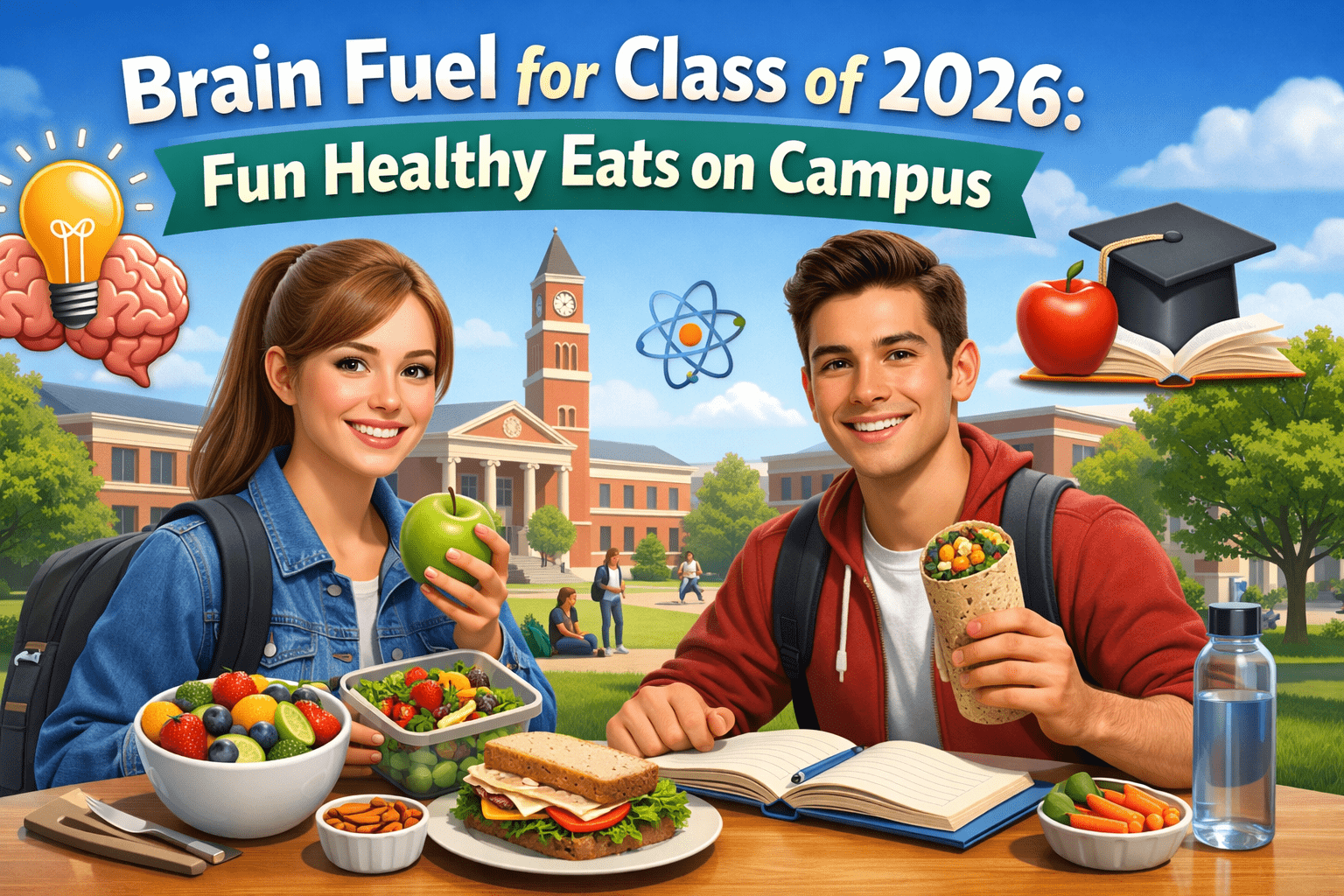
Healthy Eating for Learning
Eating well isn’t just good for you – it’s study fuel for your brain and stress buster for finals week! Aim for a balanced, colorful plate every meal. The USDA’s MyPlate advice is a great guide: fill half your plate with fruits and veggies , make half your grains whole grains, and include lean protein and healthy fats. In fact, nutrition experts agree that a diet rich in plants, whole grains and lean proteins is also brain-healthy Think spinach and kale (leafy greens full of vitamin K and lutein), berries, nuts and fish – these “heart-healthy” foods turn out to be brain-healthy too . For example, studies show blueberries and strawberries (rich in flavonoid antioxidants) can boost memory, and walnuts (full of omega-3s) help maintain sharp thinking . The bottom line: pack your plate with variety – fruits, veggies, beans, whole grains, nuts and lean protein – to keep your mind sharp.
A hearty breakfast of whole-grain oatmeal with fresh fruit (berries, bananas) or eggs + whole-wheat toast powers up your brain. Whole grains and fruit give slow-burning energy and antioxidants, while eggs or yogurt pack protein for focus
Breakfast for Brainpower: Never skip breakfast – your brain needs that morning glucose! Eating regularly stabilizes blood sugar and helps you focus in classcampushealth.unc.edu. Good starters: a bowl of oatmeal (high in fiber and magnesium) topped with berries, sliced almonds or nut butter; Greek yogurt or cottage cheese with fruit; or whole-grain toast with avocado and egg. Berries not only add flavor and fiber, they really help memory (research shows eating strawberries/blueberries can delay memory declinehealth.harvard.edu). Try to include at least two food groups: carbs (fruit, oatmeal, whole-wheat bagel), protein (egg, peanut butter, yogurt) and healthy fat (nuts, avocado). And hydrate – water in the morning wakes up your brain even better than caffeine! Keep a reusable water bottle in your dorm fridge to sip on through breakfast and between classesmyplate.govmassgeneral.org.
Lunch & Dinner: Smart Dining Hall Hacks
Hit the dining hall salad bar or campus grill with strategy: fill half your plate with veggies (raw or cooked), a quarter with lean protein, and a quarter with whole grains or starchy carbsmassgeneral.org. For example, a salad loaded with greens, tomatoes, beans and grilled chicken (or tofu) plus a side of brown rice or sweet potato makes a balanced “brain plate.”
At lunch/dinner, survey first then fill: take a lap around the dining hall stations to see what’s on offer before loading your traymassgeneral.org. Aim for a balanced plate: fill ~½ veggies (salad or cooked), ~¼ lean protein (grilled chicken/fish, beans, tofu), and ~¼ whole grains or starchy veg (brown rice, quinoa, potatoes)massgeneral.org. MyPlate encourages making half the plate fruits + veggiesmyplate.gov, and Mass General agrees – load up on salads, stir-fried veggies and mixed dishes with lots of colormassgeneral.org. Vary the veggies (grab a green and an orange, for example) to get more nutrientsmassgeneral.org. Proteins to seek: chicken breast, turkey, fish (salmon is great brain food too!), eggs, beans or nuts. Carbs to prefer: brown rice, quinoa, whole-wheat bread or pasta, potatoes (with skin on). These complex carbs fuel your brain slowly so you don’t crash. Breakfast at the hall? Pair eggs or Greek yogurt with fruit and whole-grain toast or oatmeal for a protein+fiber boostmassgeneral.orgcampushealth.unc.edu.
Campus Chain Hacks: Popular chains on or near campus can fit into a healthy plan too. At Chipotle, grab a salad or burrito bowl with brown rice or lettuce base, black beans, grilled chicken or tofu, and plenty of fajita veggies – skip extra cheese or sour cream. One student’s Chipotle veggie bowl (rice+beans+guac+veggies) hit nutrition goals and provided steady energywashingtonian.com. At Subway, the classic 6″ tuna or chicken sub on 9-grain wheat bread (no mayo, extra veggies) is a smart pick: it has ~20g protein plus fiber from the veggieswashingtonian.com. For a quick grab-and-go meal, Starbucks even has a Chicken & Black Bean Grain Bowl (chicken, quinoa, black beans, corn, greens) with a caffè latte – it was 460 calories and 34g protein, and kept a student full until dinnerwashingtonian.com. And if you swing by Panda Express, try the String Bean Chicken Breast (chicken+green beans) and Mixed Veggies with a side of brown rice – you get whole grains, lean protein and tons of veggieswashingtonian.com. A helpful rule: skip sugary drinks at meals (soda or sweet tea spike your blood sugar then drop it) and choose water or unsweetened tea whenever you canmassgeneral.org.
Snacks & Study Stress-Busters
Want an extra boost between classes or during late-night study? Keep healthy, energizing snacks on hand. Nuts and seeds (almonds, walnuts, pumpkin seeds) are awesome — they’re packed with protein, fiber and magnesium, which calms stress hormoneshealth.harvard.edu. Nuts also contain healthy fats and vitamin E. Fruits like berries, oranges or apple slices (with peanut butter) give quick energy plus vitamin C, which helps fight stresshealth.harvard.edu. In fact, Harvard notes magnesium-rich greens (spinach, chard) and nuts/seeds can help you feel calmerhealth.harvard.edu. Avocado is a superstar – it provides B vitamins and healthy fats that spur “feel-good” brain chemicalshealth.harvard.edu (and it tastes great on toast or with eggs). For a snack treat, dark chocolate has magnesium and antioxidants, so a square or two can actually be brain-healthy!
Tea or Coffee? A little caffeine is fine for focus. Green tea or coffee in moderation can boost alertness, and green tea’s L-theanine has extra memory perksdelish.comhealth.harvard.edu. But avoid late-night caffeine – UNC Health warns caffeine can ramp up anxiety and just “fix” lack of sleep instead of replacing itcampushealth.unc.edu. If you’re relying on coffee, try to cut back by the end of the day and opt for water or herbal tea to stay hydratedmassgeneral.orgcampushealth.unc.edu.
Dorm & On-the-Go Tips: Living on campus or commuting? Pack smart. The USDA suggests stashing easy, healthy snacks in your mini-fridge or bag – plain popcorn, cut-up veggies with hummus, Greek yogurt cups, whole-grain crackers, dried fruit or nutsmyplate.govmyplate.gov. Keep leftovers handy: make a big batch of chili, curry or soup on the weekend and freeze single-serve portions; you can microwave them later for a quick mealmyplate.gov. Stock your dorm or kitchen with essentials: eggs (microwavable omelets or “eggs in a mug”), quick-cook oats, canned beans, brown rice packets, nut butter and fruit. For example, a speedy breakfast can be overnight oats with fruit; lunch could be a peanut-butter-and-banana wrap on whole-wheat tortilla. Fill a refillable water bottle with lemon or mint and keep it cold in your fridge or lockermyplate.gov – you’ll drink more water that way. Even when life gets busy, don’t skip meals; eating a little every few hours keeps focus sharp and stress low campushealth.unc.edu, health.harvard.edu.
Stress Check: Remember, stress can make us reach for junk food, but healthy eating can help fight stress hormones. Experts note diets high in whole foods and complex carbs (whole grains, veggies) promote calm. Skipping meals or loading up on simple sugars can make you feel jittery or fatigued health.harvard.edu. Instead, aim to always have a balanced meal or snack on your schedule. Eat those spinach, kale, beans and nuts – they’re like nature’s chill pill. And when exams ramp up, schedule breaks for a fruit smoothie or tea break with a friend (sharing a snack or splitting dessert actually cuts extra sugar myplate.gov).
In summary: The key to “supercharging” your brain is consistency and balance – not crash diets or sugary highs. Fill your plate and water bottle, snack smart, and try new foods (yes, even that weird salad bar special!). Your future self will thank you with better focus, more energy, and maybe even lower stress scores. For more tips and recipes, check out resources like MyPlate.gov or the Dietary Guidelines; and remember, healthy eating is all about variety and enjoyment – so experiment and have fun with it. Your brain (and your GPA) will power up!
Sources: Nutritional guidelines and studies from Harvard Health and universities confirm: fruits, vegetables, whole grains and lean proteins fuel learning health.harvard.edu, health.harvard.edu. Dining halls are full of healthy options – experts advise making half your plate veggies and protein in moderation massgeneral.org, campushealth.unc.edu. MyPlate (USDA) recommends fruits/veggies on half your plate and portable snacks like nuts or popcorn myplate.govmyplate.gov. And remember: stabilize blood sugar with regular meals campushealth.unc.edu, prioritize water massgeneral.org, and include magnesium- and antioxidant-rich foods to help tame stress health.harvard.edu. These tips will keep Class of 2026 energized and ready to learn! health.harvard.edu