Scholarships to College
If you are a high school senior, scholarships are not just “extra money.” They are one of the few ways to lower the real price of college before you borrow. The latest national data show why this matters: in 2025–26, average published tuition and fees are $11,950 at public four-year colleges for in-state students, $4,150 at public two-year colleges for in-district students, and $45,000 at private nonprofit four-year colleges. When housing, food, books, transportation, and other expenses are added, average student budgets rise to about $30,990 for public four-year in-state students, $21,320 for public two-year students, and $65,470 for private nonprofit four-year students.
That is why “scholarships to college” should be understood as a full affordability strategy, not just a hunt for random outside awards. For most students, the winning formula is to combine federal aid, state aid, college-funded grants and scholarships, and private scholarships into one stack. This is especially important because the labor-market payoff of college is still significant: in 2024, workers age 25 and older with a bachelor’s degree had median weekly earnings of $1,543 and an unemployment rate of 2.5%, compared with $930 and 4.2% for workers whose highest credential was a high school diploma.
What “scholarships to college” really means
Many families use the word scholarships to mean all free college money, but the actual system is bigger than private scholarships alone. In the most recent College Board data, total federal grant aid in 2024–25 was $53.7 billion, including $38.6 billion in Pell Grants, while institutional grant aid from colleges themselves reached $85.1 billion. In 2023–24, undergraduate students received an average of $16,360 per full-time-equivalent student in aid, including $11,610 in grants, $3,900 in federal loans, $760 in tax benefits, and $90 in Federal Work-Study. The big lesson is simple: the largest pools of “free money” are often not tiny national essay contests. They are federal, state, and college-based aid programs.
That changes how smart students should search. A good scholarship plan starts with the money sources that are biggest and most repeatable. In other words, do not build your whole plan around outside scholarships only. First unlock the major gift-aid systems, then add private scholarships on top. That is the most realistic path to lowering net cost.
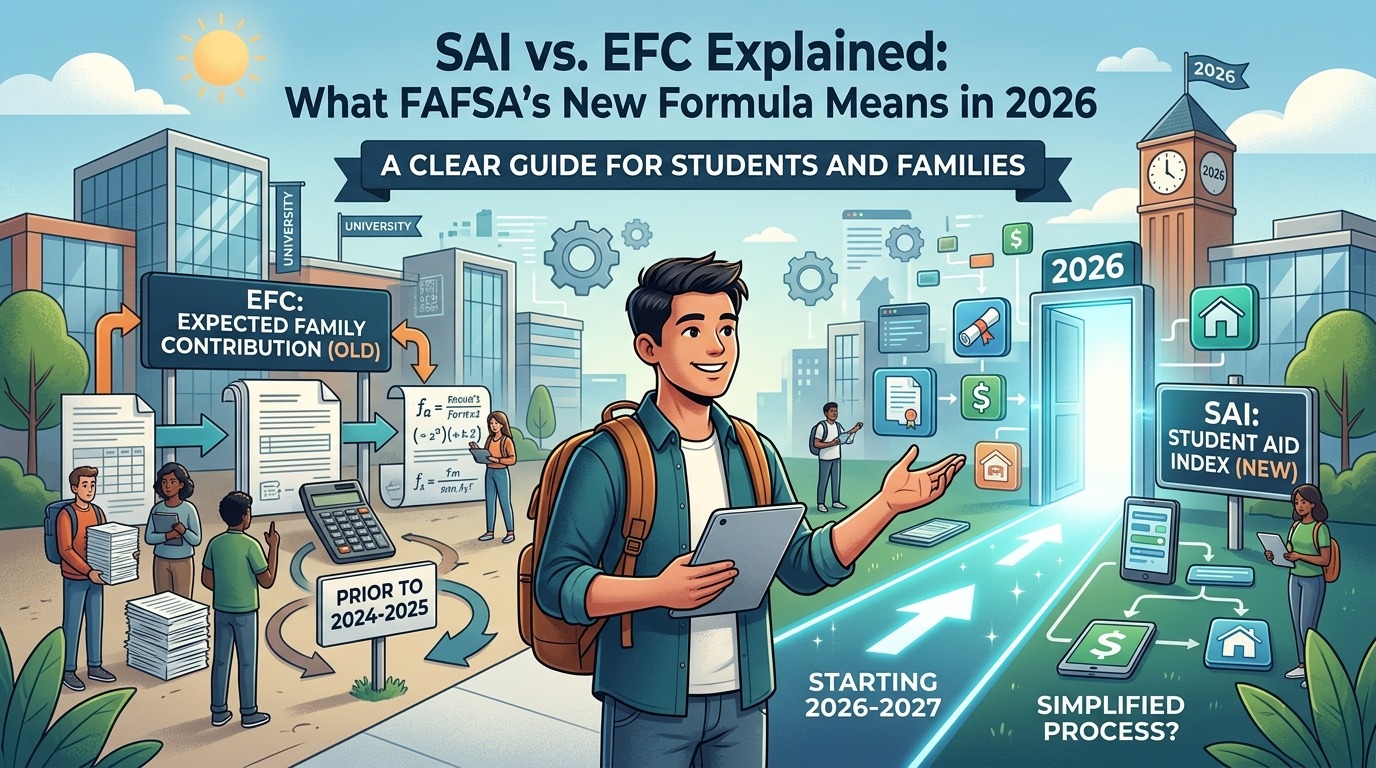
FAFSA comes first for the Class of 2026
For students graduating high school in spring 2026 and entering college in fall 2026, the key federal aid form is the 2026–27 FAFSA. The U.S. Department of Education announced that the 2026–27 FAFSA entered beta on August 3, 2025 and was ready for all students and families by September 24, 2025. USAGov lists the federal FAFSA deadline for the 2026–27 school year as June 30, 2027. But families should not wait: official FAFSA materials note that for state or college aid, deadlines can be as early as October 1, 2025.
This matters because FAFSA is not just about loans. USAGov explains that FAFSA is the gateway to grants, scholarships, work-study, and loans for college or career school. If you skip FAFSA, you may be locking yourself out of Pell, state grants, campus-based aid, and college-funded need-based awards before you even begin the scholarship search.
Federal Student Aid’s 2026–27 FAFSA checklist is clear about what students need: a StudentAid.gov account, contributor information, a federal income tax return, records of child support received, records of assets, and a list of schools you want to send the FAFSA to. Students can list up to 20 schools on the online FAFSA, and Federal Student Aid advises adding colleges even if you have not yet applied or been admitted. If your family’s finances changed after the tax year used on FAFSA, the federal guidance says you should still file the form and then ask the college financial aid office for an adjustment based on special financial circumstances or professional judgment.
Why college scholarships still matter even when grants exist
Scholarships matter because they can reduce what grants do not fully cover. College Board’s latest pricing data show that even after years of slower price growth, the full student budget remains high. At the same time, College Board reports that first-time, full-time public two-year students have, on average, been receiving enough grant aid to cover tuition and fees since 2009–10. That is a strong reminder that many students should include community college, transfer pathways, and lower-cost public options in their scholarship strategy instead of focusing only on expensive private campuses.
Scholarships also matter because they can be stacked. A student may combine Pell, a state grant, a college merit award, and one or more outside scholarships. The final stack depends on each college’s packaging rules, but the basic rule is still powerful: every legitimate scholarship dollar is a dollar that may reduce unmet need, work hours, or borrowing pressure. That is why the best scholarship plan is not “apply everywhere.” It is “build the right stack.”
The smartest scholarship strategy for high school seniors
1) Go after the biggest pools first
Because institutional grants totaled $85.1 billion in 2024–25, college-specific aid deserves a top spot in your plan. That means researching each college’s merit scholarships, honors awards, departmental scholarships, leadership awards, and need-based grants before spending all your time on random national databases.
2) Use FAFSA as your unlock key
Many students think FAFSA is only for low-income families. That is wrong. FAFSA is the common application used for federal aid and by many states and colleges to build aid packages. Even if you do not qualify for Pell, you may still qualify for state grants, institutional grants, work-study, or subsidized loans.
3) Prioritize scholarships that fit you closely
Federal Student Aid recommends looking for scholarships “everywhere,” understanding each scholarship’s criteria, and staying organized. In practice, that means targeting awards tied to your major, state, city, ethnicity, religion, employer connections, military family status, disability status, volunteer history, leadership record, sports, arts, or intended college. The closer the fit, the stronger your odds.
4) Favor renewable money over flashy one-time awards
A one-time $1,000 scholarship is helpful. But a renewable $3,000 award that lasts four years can be worth much more. Students should always check whether a scholarship is renewable, what GPA is required to keep it, whether full-time enrollment is required, and whether the award changes after freshman year. This is one of the most overlooked parts of scholarship planning.
5) Think in terms of net price, not sticker price
The smartest college choice is not always the college with the lowest published tuition. It is the college with the best net price after grants and scholarships. College Board’s net-price findings show that average net tuition and fees at public four-year colleges have fallen significantly from their earlier peak, which means published price alone can be misleading.
What a strong scholarship target looks like
A strong scholarship target usually has three features. First, you clearly match the eligibility rules. Second, the application asks for materials you can produce well, such as an essay, résumé, transcript, recommendation, or portfolio. Third, the award fits your college timeline, meaning the money will be available when tuition bills arrive. This is why organized students often outperform more talented but disorganized students: scholarship success is partly about matching and timing, not just brilliance. Federal Student Aid’s own scholarship advice emphasizes criteria awareness and organization for exactly this reason.
A realistic timeline for seniors
For the Class of 2026, the strongest scholarship season starts before graduation, not after it. By fall of senior year, students should already be filing FAFSA, identifying college merit deadlines, requesting recommendations, and building an essay bank. The ScholarshipsAndGrants.us scholarship calendar correctly emphasizes October as the moment when aid windows open and deadlines begin clustering, while official federal guidance confirms that state and college FAFSA deadlines may start as early as October 1.
A practical timeline looks like this:
Summer before senior year: build your résumé, activity list, and rough essay drafts.
Fall: file FAFSA, submit college applications, and attack merit scholarship deadlines.
Winter: keep applying to outside scholarships and update your recommendation packet.
Spring: compare aid offers by net price, appeal when family finances changed, and add late-cycle scholarships.
Summer after graduation: keep searching, because many local, community, and departmental awards are still available after college decisions are made.
Build your scholarship package once, then reuse it
One of the best ways to win more scholarships is to stop starting from zero every time. Create one master package that includes your transcript, test scores if you plan to use them, activity list, community service log, leadership examples, work experience, awards, recommendation contacts, and several essay modules. Write core paragraphs once on topics such as academic goals, obstacles overcome, leadership, community impact, career plans, and financial need. Then customize those modules for each application. This is the same logic behind good research practice: reuse the strongest verified material, then tailor it to the audience.
Mistakes that cost students real money
The first mistake is chasing only famous private scholarships while ignoring college-funded aid. The numbers make that a bad strategy because institutional grants are one of the largest gift-aid sources in the country.
The second mistake is waiting until spring to file FAFSA. Federal deadlines are late, but state and college priority deadlines often come much earlier. Students who wait can still qualify for some federal aid, but they may lose access to time-sensitive campus or state money.
The third mistake is assuming family income is “too high” for FAFSA to matter. FAFSA is used for more than Pell. It is a gateway form across the aid system.
The fourth mistake is ignoring renewal terms. A scholarship offer is not the same thing as four years of guaranteed funding. Students need to read GPA, credit-load, enrollment, SAP, and reapplication rules carefully.
The fifth mistake is paying money to get free money. The FTC’s consumer guidance is blunt: never pay to apply for a scholarship. The FTC also warns students never to share their FAFSA login credentials, and Federal Student Aid stresses that your StudentAid.gov account is legally yours and should not be shared.
Scholarship scams are part of the real college-cost problem
Scholarship scams thrive because families are stressed, deadlines are tight, and college is expensive. The FTC says a major red flag is any company promising scholarships or grants in exchange for a “processing cost,” “redemption fee,” or other upfront payment. Another red flag is pressure to act immediately or give away your FSA ID or bank details. Real scholarships do not require you to pay to be considered. And no legitimate helper should need your personal FAFSA credentials.
What high school seniors should do next
Start with the forms and deadlines that unlock the most money. File FAFSA. Compare colleges by net price, not just ranking or sticker price. Hunt for college-funded scholarships before assuming outside scholarships will solve everything. Then layer in private scholarships where your profile is a strong fit. Students who treat scholarships like a system, not a lottery ticket, usually make better college decisions.
Related reading on ScholarshipsAndGrants.us
Use these internal links to build this article into a stronger content hub:
Scholarships for College
How to Apply for a Scholarship
How to Win Scholarships
Merit Scholarships
Renewable Scholarships
Full-Ride Scholarships
Scholarship Calendar
Legit Scholarships
Federal Grants for College
Federal Pell Grant Eligibility in 2026
FAQ
Is FAFSA still worth filing if I do not think I qualify for Pell?
Yes. FAFSA is used for federal aid and by many states and colleges to determine other aid, including grants, work-study, and loans. Skipping it can shut you out of multiple aid streams at once.
Are community colleges a strong scholarship strategy?
They can be. College Board reports that first-time, full-time students at public two-year colleges have, on average, been receiving enough grant aid to cover tuition and fees since 2009–10. That makes community college plus transfer one of the most overlooked affordability plays in U.S. higher education.
What if my family income dropped after the tax year FAFSA uses?
File FAFSA anyway, then contact the college financial aid office and ask for a review based on special financial circumstances or professional judgment. Federal Student Aid specifically advises this when a family’s current finances are worse than the tax-year snapshot on the form.
Final takeaway
The best way to win “scholarships to college” is to stop thinking about scholarships as separate from the rest of financial aid. The real game is to combine FAFSA-based aid, state money, college-funded grants and merit aid, and outside scholarships into one plan that lowers net price as much as possible. Students who understand that early usually save more, borrow less, and make better college choices.