Financial Aid Appeal Letter Samples: A Complete Guide for High School Seniors
Learn when a financial aid appeal makes sense, what documents colleges want, and use copy-paste appeal letter samples for job loss, medical bills, unusual circumstances, and award reconsideration.
Don’t Accept That Aid Offer Yet | Financial Aid Appeal Letter
Paying for college is hard, and sometimes the FAFSA does not tell the whole story. A family may have lost income, faced high medical bills, gone through divorce, or dealt with a crisis after the FAFSA was filed. In those cases, students can ask a college’s financial aid office to review their file. That request is usually called a financial aid appeal, special circumstances appeal, or professional judgment review. Federal aid rules allow financial aid administrators to make case-by-case adjustments when a student’s real financial situation is not fully reflected by the original aid application.
This matters because college aid is not a tiny system. In FY 2024, Federal Student Aid processed more than 17.6 million FAFSA forms and delivered about $120.8 billion in Title IV aid to more than 9.9 million students and families. In the same fiscal year, the federal government disbursed about $33.0 billion in Pell Grants alone. College Board also reports that grant aid totaled $173.7 billion in 2024-25, with Pell recipients rising from 6.4 million to 7.3 million in one year.
Appeals are relevant because aid reaches most students. NCES reports that 87% of first-time, full-time undergraduates at 4-year institutions received some form of financial aid in 2020-21, and IPEDS shows 32.4% of undergraduates received a Pell Grant in 2023-24. That means financial aid decisions affect millions of students, and even a small adjustment can change whether a school is affordable.
What a financial aid appeal letter actually is
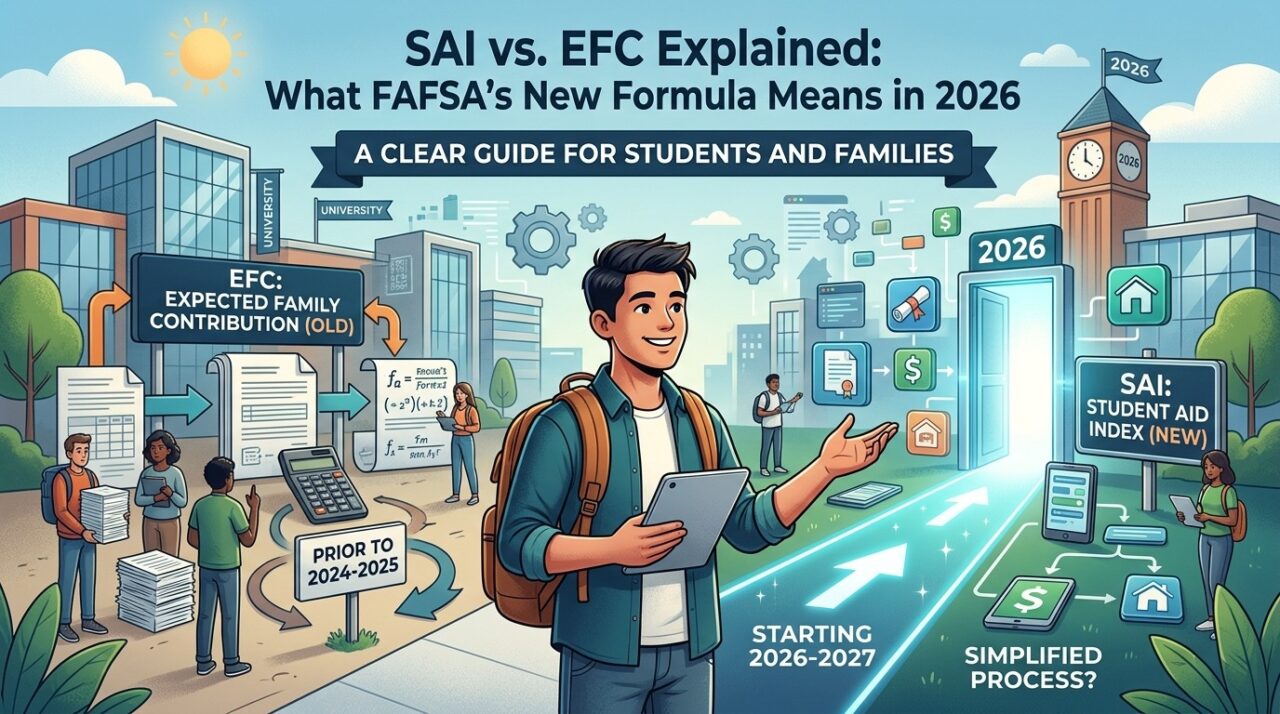
A financial aid appeal letter is a short, factual request asking a college to reconsider your aid because your FAFSA, CSS Profile, or original file no longer reflects your real ability to pay. Under federal rules, a school may use professional judgment to adjust either parts of a student’s cost of attendance or specific data used to calculate the Student Aid Index (SAI). These decisions are made one student at a time, are valid only at the school making the change, and must be supported by documentation.
The most important thing for students to understand is this: you are not appealing to the U.S. Department of Education. You are asking each college individually to review your case. The federal handbook is explicit that a financial aid administrator’s decision on a professional judgment request is final and cannot be appealed to the Department.
When a financial aid appeal makes sense
Federal guidance gives colleges a clear list of situations they may consider. These include a change in employment, income, or assets; a change in housing status such as homelessness; tuition expenses at an elementary or secondary school; additional family members enrolled in college; unreimbursed medical, dental, or nursing-home expenses; child or dependent care expenses; severe disability in the household; and other changes that affect the student’s costs or ability to pay. The list is not exhaustive, which means schools may review other serious, well-documented hardships too.
In plain English, an appeal is worth trying when your family’s finances have changed in a real, measurable way. Good examples include a parent losing a job, a major reduction in work hours, a death in the family, divorce or separation after the FAFSA year, unusually high medical bills not covered by insurance, homelessness or housing instability, or another documented event that changed what your family can contribute. Federal Student Aid also tells students to contact the school if the FAFSA no longer reflects current reality because of a layoff, incarceration, divorce, medical expenses, death, or loss of other income.
If your situation involves not being able to safely contact your parents, that may be a different kind of appeal called an unusual circumstances or dependency override request. Current federal guidance says unusual circumstances can include human trafficking, refugee or asylee status, parental abandonment or estrangement, and student or parental incarceration. Students with unusual circumstances can submit the FAFSA without parent information and then work with the college on a final determination.
When an appeal is less likely to work
A weak appeal usually sounds like this: “College is too expensive, please give me more money.” Federal rules do not let schools change aid just because someone thinks the formula feels unfair. The handbook says schools cannot change the SAI formula itself, only certain data elements or cost-of-attendance components tied to documented special circumstances. It also says schools should not make “unreasonable” judgments based on routine living costs like standard utilities, credit-card expenses, or general consumer spending.
Students should also know that schools differ on whether they will look at competing offers from other colleges. Some institutions say they will not match another school’s offer. For example, the University of Michigan says its aid cannot be appealed to request a match based on a different institution’s offer, and Tufts lists requests to match another institution’s offer among prohibited appeals. On the other hand, some colleges do allow some form of institutional reconsideration or comparison-based review, so policies vary by campus.
How the process works in real life
The usual sequence is simple. First, submit the FAFSA. Then review your FAFSA Submission Summary and your initial financial aid offer. If the numbers do not reflect your current situation, contact the financial aid office and ask about its special circumstances, appeal, or reconsideration process. Federal Student Aid specifically tells families with changed circumstances to reach out to the school after the FAFSA is submitted, and Columbia notes that families cannot apply for an appeal until after receiving the initial award letter.
Many colleges require more than just a letter. UMass says students should complete the appropriate form and include a written explanation plus supporting documentation. Boston University requires a complete appeal package and states that emailed appeals may not be reviewed if the school’s instructions require portal upload instead. Drexel also says a letter should accompany the appeal and be clear, concise, and detailed. So the smartest move is to follow the school’s exact instructions instead of sending a generic email and hoping for the best.
Timing matters too. Some colleges review appeals only before deposit or payment deadlines, and some recommend appealing soon after the initial offer arrives. BU allows one appeal per academic year before the deposit or payment deadline, and Davidson says regular-decision entering-student appeals should be submitted by April 15 to maximize the chance of a decision before May 1.
What to include in a strong appeal letter
A strong letter is not dramatic. It is organized, respectful, specific, and backed by proof. The federal handbook says documentation must substantiate the student’s individual circumstances, not a problem that affects a whole class of students. Acceptable documentation can include a documented interview with the aid office plus supporting financial information.
A strong appeal letter should include:
-
the student’s full name, student ID, and contact information
-
the academic year you are appealing
-
a clear statement that you are requesting a financial aid reconsideration or special-circumstances review
-
a short explanation of what changed
-
exact numbers when possible
-
a list of attached documents
-
a respectful closing asking the office to review your file
That structure matches what colleges themselves ask for: clear, concise details plus supporting records.
Documents that help most
The best documents are third-party and recent. Depending on the situation, students may submit termination notices, unemployment benefit records, recent pay stubs, a letter from an employer, divorce or separation records, medical bills, insurance statements, death certificates, court documents, housing records, or school-specific appeal forms. UMass, for example, lists documentation for job loss, divorce or separation, death, and medical costs, while federal guidance emphasizes documented interviews and supplementary records.
For unusual-circumstances or dependency-override requests, acceptable documentation may include a documented interview, court orders, official incarceration records, written statements from a welfare agency, an independent living case worker, a program serving abuse victims, an attorney, guardian ad litem, or TRIO/GEAR UP representative. Utility bills, health insurance records, or other documents showing separation from parents may also help.
Financial aid appeal letter samples
These samples are written in a simple style so a high school senior can actually use them. They should still be customized for the student’s facts and the school’s process.
Sample 1: General financial aid appeal for parent job loss
Subject: Request for Financial Aid Reconsideration for 2026-27
Dear Financial Aid Office,
My name is [Student Name], and I am an admitted student for the 2026-27 academic year. My student ID is [ID Number]. I am writing to respectfully request a reconsideration of my financial aid offer because my family’s financial situation has changed significantly since we completed the FAFSA.
At the time we filed, my parent/guardian was employed full time. Since then, my parent lost their job on [date], and our household income has dropped substantially. Because the FAFSA used earlier tax-year information, I do not believe my current aid offer reflects what my family can realistically afford to pay now.
I have attached documentation supporting this change, including [termination letter/unemployment statement/recent pay stubs]. I would be grateful if your office could review my file for a special-circumstances adjustment or any other aid for which I may be eligible.
Thank you for your time and consideration. I appreciate your help and would be glad to provide any additional documentation you need.
Sincerely,
[Student Name]
[Phone Number]
[Email Address]
Why this works: it identifies the changed circumstance, explains why FAFSA data may now be outdated, and points to attached proof. That aligns with federal professional-judgment rules for changed income and with college instructions that ask for a concise explanation plus documentation.
Sample 2: Appeal based on high unreimbursed medical expenses
Subject: Special Circumstances Appeal for Medical Expenses
Dear Financial Aid Office,
My name is [Student Name], and I am requesting a review of my financial aid eligibility for the [year] academic year. Since filing the FAFSA, my family has faced high medical expenses that were not fully covered by insurance.
These expenses have reduced the money my family has available for college costs. Because of that, I am asking your office to review my financial aid package and determine whether an adjustment can be made based on our current circumstances.
I have attached copies of [medical bills, insurance statements, payment records, physician letter if applicable]. Thank you for considering my request. Please let me know if there are additional forms or records I should submit.
Sincerely,
[Student Name]
Why this works: unreimbursed medical, dental, and nursing-home expenses are explicitly listed in federal guidance as the kind of special circumstance a college may consider.
Sample 3: Appeal based on divorce or separation after filing aid forms
Subject: Request for Review Due to Family Change in Circumstances
Dear Financial Aid Office,
I am writing to request a financial aid review because my family circumstances changed after we filed my financial aid forms. My parents separated/divorced on [date], and our household finances are now very different from the information originally reported.
The original FAFSA/CSS Profile no longer reflects my family’s current income, expenses, and living arrangements. I am requesting that your office review my file to see whether my aid eligibility can be recalculated based on these updated circumstances.
I have attached [divorce decree/separation statement/proof of separate households/support payment information]. Thank you for your time and consideration.
Sincerely,
[Student Name]
Why this works: divorce or separation after filing is a common appeal ground at many colleges, and schools often ask for legal or household documentation to support it.
Sample 4: Unusual circumstances / dependency override request
Subject: Request for Dependency Override Review
Dear Financial Aid Office,
My name is [Student Name], and I am requesting a review of my dependency status for financial aid purposes. I am unable to provide parent information because of unusual circumstances involving [estrangement/abandonment/abuse/incarceration/other qualifying reason].
Because of this situation, I do not have safe or reliable access to the parental information normally required for financial aid. I am asking your office to review my case for a dependency override or other determination available under your unusual-circumstances process.
I have attached documentation that supports my request, including [statement from counselor/social worker/attorney/case worker/court document/other records]. I understand your office may need additional information, and I am willing to provide it.
Thank you for reviewing my situation.
Sincerely,
[Student Name]
Why this works: current federal guidance specifically allows colleges to review unusual circumstances such as parental abandonment or estrangement, abuse, trafficking, refugee/asylee status, and incarceration, and it lists several kinds of supporting documentation schools may accept. It also says that parents refusing to help or refusing to fill out the FAFSA, by themselves, do not qualify.
Sample 5: Institutional reconsideration after receiving the award letter
Subject: Request for Aid Reconsideration
Dear Financial Aid Office,
Thank you for the financial aid offer you provided. I am very grateful to have been admitted to [College Name], and I am seriously considering enrolling. After reviewing my award and my family’s current resources, I am concerned that the remaining cost may still be more than we can manage.
I would like to respectfully ask whether my aid package can be reconsidered based on [changed financial circumstances / special circumstances not fully reflected in my application]. I have attached documentation that explains the situation and shows why the current out-of-pocket cost remains difficult for my family.
Thank you for your consideration. I appreciate any review your office can provide.
Sincerely,
[Student Name]
Why this works: many colleges define an appeal as a formal request to reevaluate the initial offer after the first award letter is issued. But students should not assume schools will match another college’s package unless the school explicitly allows that.
Mistakes students should avoid
Do not send a one-sentence email with no documents. Do not exaggerate. Do not hide the real issue in a long story. Do not argue that college is expensive for everyone. And do not ignore the school’s own form, portal, or deadline. Federal rules require documentation, and many colleges clearly say incomplete appeals or wrong submission methods can delay or block review.
Another mistake is confusing a FAFSA correction with an appeal. If something on the FAFSA was simply entered incorrectly, fix the FAFSA. If the FAFSA was correct when filed but your situation has since changed, that is when an appeal makes sense. Federal Student Aid tells students to review the FAFSA Submission Summary, make corrections if needed, and separately contact the school for special circumstances that the FAFSA does not fully capture.
Best one-paragraph formula for students
If you want the shortest usable formula, it is this:
State the problem, give the date it changed, show the financial impact with numbers, attach proof, and politely ask for a review.
That formula fits both federal rules and school-level instructions because it connects the request to a real, documented change in ability to pay.
Helpful legit links
-
Federal Student Aid: What is professional judgment? — official overview of case-by-case aid adjustments.
-
2025–26 Federal Student Aid Handbook, Chapter 5: Special Cases — the main federal guidance on special and unusual circumstances.
-
FAFSA Submission Summary: What You Need To Know — official guide to reviewing FAFSA results and next steps.
-
SwiftStudent — free tool with customizable financial aid appeal templates.
-
uAspire: How to appeal your financial aid — student-friendly nonprofit guide to the appeal process.
FAQ
Can a financial aid appeal really increase my award?
Yes, it can, but there is no guarantee. Federal rules allow schools to adjust aid on a case-by-case basis when the documentation supports the student’s situation. The final decision belongs to the school.
Should I appeal every college on my list?
Yes, if the same changed circumstance affects all of them. Professional judgment decisions are school-specific, so one college’s approval does not automatically carry to another.
Can I appeal before I get my aid offer?
Usually no. Many schools treat an appeal as a request to reevaluate an initial award, so students typically appeal after receiving the first offer.
Can I appeal just because I want less debt?
You can ask, but a stronger appeal is tied to a documented change in circumstances or a school policy that allows reconsideration. Federal guidance is about special or unusual circumstances, not simply a preference for lower borrowing.
What if my parents refuse to help me?
That alone usually does not qualify for a dependency override. Federal guidance says parent refusal to contribute or refusal to provide FAFSA information, by itself, is not enough.
What if I cannot safely contact my parents?
That may qualify as an unusual-circumstances review. Students in that situation can submit the FAFSA without parent information and work with the college on documentation and a dependency override decision.
Bottom line
A financial aid appeal letter works best when it is short, specific, and supported by proof. The goal is not to bargain. The goal is to show that the financial aid office is looking at outdated or incomplete information and that your real ability to pay is lower than the original file suggests. For students with job loss, medical bills, divorce, homelessness, estrangement, or another major hardship, an appeal can be one of the most important college-money steps they take.