FAFSA Contributor: Complete 2026–27 Guide for High School Seniors
If you are filling out the 2026–27 FAFSA, one of the most important terms to understand is FAFSA contributor. This is now a core part of the federal financial aid process, not a side detail. A contributor is a person who must enter information on your FAFSA, give consent for federal tax data use, and sign the form so your aid eligibility can be calculated. For many high school seniors, contributor issues are the main reason a FAFSA gets delayed, stuck, or submitted without full eligibility.
This matters because the FAFSA is still the gateway to Federal Pell Grants, federal student loans, Federal Work-Study, many state grants, and many college aid programs. For the 2026–27 award year, the FAFSA covers school attendance from July 1, 2026, through June 30, 2027. The federal government says the form can be submitted beginning October 1, 2025, and the federal deadline is June 30, 2027, with corrections due by September 12, 2027.
There is also a strong practical reason to learn this early: Federal Student Aid reported that by the end of December 2025, nearly 5.8 million FAFSA forms had already been submitted for 2026–27, a 78% increase over the same point in the prior cycle. That means millions of families are already moving through the same contributor workflow, and students who get parent or spouse logistics handled early are in a much stronger position to meet school and state deadlines.
What is a FAFSA contributor?
A FAFSA contributor is anyone who is required to provide information on the FAFSA form, provide consent and approval for federal tax information to be transferred from the IRS, and sign the FAFSA. Federal Student Aid says contributors can include the student, the student’s spouse, a biological or adoptive parent, or a parent’s spouse.
That definition is important because a contributor is not just “someone helping you fill out the form.” A contributor has a formal legal role in the FAFSA process. Under the current FAFSA system, the student and all required contributors must provide consent for federal tax information use; if that consent is missing, the student’s federal aid eligibility cannot be fully calculated.
What a contributor does not mean
A lot of families panic when they hear the word contributor, especially parents. The official FAFSA guidance is very clear: being a contributor does not make a parent financially responsible for paying for the student’s college costs. The contributor role is about supplying required data and signatures for aid eligibility, not promising to pay the bill.
That distinction is huge for high school seniors. A parent can still be a required FAFSA contributor even if the parent does not plan to pay tuition, cannot pay tuition, or is unwilling to contribute money. FAFSA uses family financial information to measure aid eligibility; it is not a tuition contract.
Who will usually be a contributor for a high school senior?
For most high school seniors, the answer is simple: the student is a contributor, and at least one parent will usually be a contributor as well because most seniors are treated as dependent students for FAFSA purposes. Federal Student Aid states that in most dependent-student cases, at least one parent will be identified as a contributor on the form.
If the parent who is completing the FAFSA section is married and did not file taxes jointly with their current spouse, that spouse may also become a contributor and must be invited to the form. But if a married couple filed jointly, the spouse’s information may still be reported without that spouse being separately identified as a contributor.
If the student is an independent student and is married, the spouse may be a contributor if the couple did not file a joint return. That is less common for traditional high school seniors, but it is part of the same contributor framework.
Which parent should be invited?
This is the part that confuses separated, divorced, remarried, and blended families most.
Federal Student Aid says a legal parent for FAFSA purposes is generally a biological parent, adoptive parent, or a person the state has determined to be the parent. Grandparents, foster parents, legal guardians, aunts, uncles, siblings, and widowed stepparents are not FAFSA parents unless they legally adopted the student.
If parents are divorced or separated, the FAFSA uses the parent who provided the greater share of the student’s financial support during the past 12 months. If both parents provided exactly the same amount of support, or neither supported the student financially, FAFSA uses the parent with the greater income and assets. If that parent is remarried, the current spouse’s information may also have to be included.
This is one of the biggest reasons Federal Student Aid pushes families to use the Who’s My FAFSA Parent? tool before starting. The agency says the tool usually takes less than five minutes and is especially helpful for divorced parents and families with stepparents.
How the 2026–27 contributor process works
One major improvement for the 2026–27 FAFSA is that students can invite a parent or spouse contributor using the contributor’s email address. Federal Student Aid announced that this replaced the older 2025–26 workflow that relied on personally identifiable information matching, and the system now generates a unique code that the invited contributor can use to accept the invitation.
That matters because contributor matching problems were one of the most frustrating parts of the earlier FAFSA rollout. For 2026–27, the invite system is more direct: the student enters the contributor’s email address, the contributor receives an email with an invitation link and code, and the contributor can accept through the email or through the FAFSA site’s invitation workflow.
Federal Student Aid also recommends that the student start the FAFSA first and complete the student sections before inviting contributors. The agency says this helps save time and prevent errors.
What every contributor needs before starting
Each contributor must have their own StudentAid.gov account. Federal Student Aid says contributors cannot share accounts, and the username and password serve as that person’s legal electronic signature. The agency also says an email address and phone number can be associated with only one StudentAid.gov account, which is why families should not try to reuse one login across multiple people.
For the 2026–27 process, students and contributors should gather a StudentAid.gov account, tax return access, records of child support received, and records of assets. FAFSA guidance also says additional financial questions may ask for the current value of cash, savings, checking, and the net worth of investments, businesses, and income-producing farms, where applicable.
What if a contributor does not have a Social Security number?
This is an important update for mixed-status and immigrant families. Federal Student Aid says that parent and spouse contributors without an SSN can still create a StudentAid.gov account and complete their required FAFSA sections online. In some cases, identity verification may include additional knowledge-based questions.
For students, the rule is narrower, but for parent and spouse contributors the key message is that no SSN does not automatically block contributor participation. That is one of the most useful facts families still misunderstand.
Why consent matters so much
Under the current FAFSA system, the student and all contributors must provide consent and approval for federal tax information to be transferred into the FAFSA. Federal Student Aid says this is required even if the person did not file a U.S. federal tax return or filed no tax return at all.
This is not optional. Federal Student Aid’s guidance says that if a required contributor does not provide consent and approval, the student will not be eligible for federal student aid until all required contributors do so. Entering tax information manually does not solve the legal consent requirement.
There is another advanced detail that counselors and families should know: consent and approval are generally given once per application cycle, but if the FAFSA is later corrected, a signature may be needed again. That is why families should not assume they are finished forever after one login.
What happens if a parent refuses to be a contributor?
This is where many myths begin.
If a dependent student’s parents refuse to provide information, the student can answer that the parents are refusing, but Federal Student Aid says the result is severe: the student will not be eligible for a Federal Pell Grant or most other federal student aid and may be considered only for a Direct Unsubsidized Loan, depending on the school’s determination.
That is why students should never mark parent refusal casually. Federal Student Aid specifically warns students not to confuse contributor participation with financial responsibility. A parent refusing to pay college bills is not the same as a parent refusing to provide FAFSA information.
What if you cannot safely contact a parent?
This is different from a parent simply refusing to help.
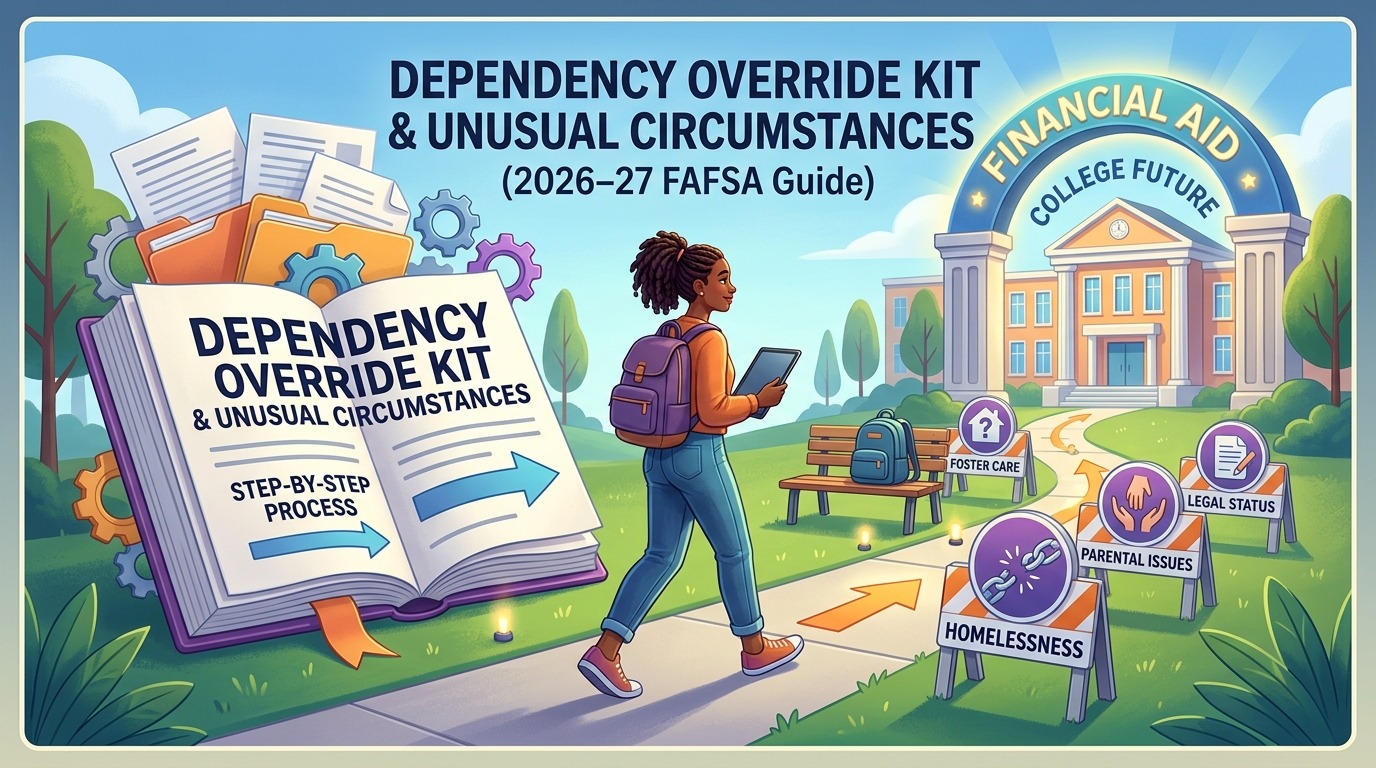
Federal Student Aid says students with unusual circumstances may be able to submit the FAFSA without parent information if they cannot contact a parent or if contacting a parent would pose a risk. In those situations, the student may proceed and then work with the financial aid office on a dependency override or related review.
This is a critical distinction. Refusal to help usually leads only to possible unsubsidized loan eligibility, while unusual circumstances can open a different pathway through the college’s financial aid office.
What happens after the student submits?
If all required contributors have finished their sections, signed, and provided consent, the FAFSA can be processed. Federal Student Aid says students usually get access to the FAFSA Submission Summary within one to three business days after a completed FAFSA is submitted and processed online.
But if contributors are still missing, the student may only see an abbreviated confirmation page after completing their own section. In other words, the student may feel “done” while the FAFSA is not actually complete enough for full processing.
Biggest FAFSA contributor mistakes to avoid
The first mistake is inviting the wrong parent. This happens most often in divorced or separated families when students invite the parent they live with instead of the parent who provided the greater financial support over the last 12 months. FAFSA rules do not always follow household intuition.
The second mistake is assuming a parent or spouse can use the student’s StudentAid.gov account. Federal Student Aid explicitly warns that every contributor must use their own account and that the student’s FAFSA is still the student’s application.
The third mistake is thinking that a contributor can skip consent but still type income information manually. Federal guidance says missing contributor consent blocks federal aid eligibility.
The fourth mistake is waiting too long to coordinate contributor access. Because schools and states often have earlier deadlines than the federal government, contributor delays can cost a student priority consideration for grants even when the federal deadline has not yet passed.
Best strategy for high school seniors
The smartest FAFSA contributor strategy is simple. First, the student should decide which parent must be invited. Second, the student and all likely contributors should create their own StudentAid.gov accounts before sitting down together. Third, the student should start the FAFSA first, then send the contributor invitation, and finally check that every required contributor has completed consent, signatures, and any requested financial details.
Students should also file as early as possible, not because June 30 is close, but because schools and states frequently run on earlier timelines and some aid is limited. A FAFSA submitted late because a contributor never finished their section can mean less grant aid even if the student remains technically eligible for federal aid.
Quick answer: who is your FAFSA contributor?
For most high school seniors, the answer is this: you are a contributor, and at least one parent is usually a contributor too. If that parent is married and did not file taxes jointly with the current spouse, the spouse may also become a contributor. Contributors must have their own StudentAid.gov accounts, must provide consent for federal tax data transfer, and must sign the FAFSA. They are helping determine aid eligibility, but they are not automatically agreeing to pay your college costs.
FAQ
Is a FAFSA contributor the same as a cosigner?
No. A contributor provides required FAFSA information, consent, and a signature. That role is for aid eligibility, not for guaranteeing a loan or agreeing to pay college bills.
Does my parent have to be a contributor if they will not pay for college?
Usually yes, if you are a dependent student and FAFSA requires parent information. Federal Student Aid says contributor status does not make a parent financially responsible for the bill.
Can my parent complete my FAFSA for me using my login?
No. Every contributor must use their own StudentAid.gov account, and the account acts as that person’s legal electronic signature.
What if my parent does not have an SSN?
A parent contributor without an SSN can still create a StudentAid.gov account and complete their FAFSA section online.
What if my parents are divorced?
Use the parent who gave more financial support over the past 12 months. If support was equal, use the parent with greater income and assets. If that parent has remarried, the current spouse may also have to be included.
What if my parent refuses to contribute?
You may lose eligibility for Pell Grants and most federal aid and be limited to Direct Unsubsidized Loan consideration only.
Official and trusted FAFSA links
Use these official resources when updating your page or helping readers take the next step:
-
FAFSA form homepage for the current 2026–27 application.
-
Filling Out the FAFSA Form for section-by-section federal guidance.
-
FAFSA Checklist: What Students Need for contributor prep, documents, and consent details.
-
Completing the FAFSA Form: Steps for Parents for parent contributor instructions.
-
FAFSA Application Deadlines for the federal deadline and correction deadline.
-
Who is considered a parent? for official parent definitions.
-
Federal Student Aid Estimator for a current-year estimate of possible federal aid.