
Natural Language Processing (NLP) & Conversational AI Scholarships
January
1) Amazon Future Engineer Scholarship
Why It Slaps: This is one of the best undergraduate entry points for students who want to move into NLP, conversational AI, or language technology through a computer science pipeline. Amazon lists majors like computer science, data science, informatics, programming, cognitive science, computer engineering, and related technical fields, which makes this a strong practical fit for students who may not have an “NLP” major title on paper. It is even stronger than many generic STEM scholarships because the program also advertises a paid internship opportunity at Amazon, which adds real-world signal beyond the money.
Amount: Up to $40,000 total in unmet need, up to $10,000 per year, renewable for up to 3 years
Deadline: January 22, 2026 (most recently posted cycle)
Apply/info: Official scholarship page
February
2) SHPE Veralto Scholarship
Why It Slaps: If you are a Hispanic student building toward NLP through computer science or computer engineering, this is a sharp fit. The Veralto scholarship page explicitly includes computer science and computer engineering among eligible majors, and it sits inside SHPE’s larger ScholarSHPE ecosystem, which is one of the strongest recurring scholarship systems for Latino students in STEM. That combination matters because it gives students a direct scholarship target plus access to a broader technical network that can keep paying off beyond one award cycle.
Amount: $10,000
Deadline: February 16, 2026 through the ScholarSHPE common application
Apply/info: Official scholarship page
3) SHPE Northrop Grumman Scholarship
Why It Slaps: This is another strong SHPE option for students entering AI, NLP, software, defense-tech, or computational language work through a traditional CS path. The official scholarship page specifically lists computer science and computer engineering among eligible majors, and SHPE’s common application window for the 2026 cycle is clearly posted. Even though the award amount is smaller than some headline scholarships, the fit is clean, the official pathway is clear, and it belongs on a serious shortlist for Hispanic students in computing.
Amount: $2,500
Deadline: February 16, 2026 through the ScholarSHPE common application
Apply/info: Official scholarship page
March
4) Quad Fellowship
Why It Slaps: This is one of the most relevant graduate-level opportunities on the board for serious future NLP and conversational AI researchers. The program is designed for master’s and doctoral students in STEM, and the official materials make clear that fields like computer science, data science, and cognitive science are in scope. That makes it especially attractive for students working at the intersection of language, AI, speech systems, human-computer interaction, or multilingual technology. It is not just about tuition help either. The network, prestige, and international positioning can matter just as much as the money.
Amount: Stipend/support for academic expenses and programming benefits
Deadline: March 3 for the most recently posted U.S.-based cycle
Apply/info: Official fellowship page
April
5) CrowdStrike Next Gen Scholarship
Why It Slaps: This is one of the cleanest direct AI-adjacent matches in the entire list because the official page explicitly says it is for students pursuing cyber security or artificial intelligence. If your version of conversational AI leans toward AI safety, secure systems, adversarial modeling, privacy, enterprise agents, or trustworthy AI deployment, this has obvious relevance. The award range is also wide enough to make it meaningful, and the page clearly posts a current deadline instead of vague “coming soon” language.
Amount: $2,500 to $10,000
Deadline: April 27, 2026
Apply/info: Official scholarship page
6) AISES ARDC Scholarship
Why It Slaps: This is one of the better Indigenous STEM options for students whose road into NLP runs through computing, information technology, web development, communications tech, or computer engineering. The official listing names electrical engineering, computer engineering, web design and development, IT, communications, math, and related fields, which gives it a strong practical overlap with NLP-adjacent technical study. It is especially useful for students who are not branded as “AI majors” but are clearly building toward language tech and computational systems.
Amount: $5,000
Deadline: April 30
Apply/info: Official AISES scholarship listing
7) AISES Indigenous Peoples Education Fund Scholarship
Why It Slaps: This is a strong foundational choice for Native students entering STEM for the first time, especially freshmen who may later specialize in machine learning, NLP, speech tech, or conversational systems. It is broader than a pure computing scholarship, but that is exactly why it is useful: students often begin in general STEM or computer science before narrowing into language technology. The flexibility makes it a practical gateway scholarship rather than a narrow niche award you can only use if your transcript already looks advanced.
Amount: $5,000
Deadline: April 30
Apply/info: Official AISES scholarship listing
8) AISES Polaris Academic Scholarship
Why It Slaps: This one deserves attention because the official listing specifically includes Digital and Information Technology alongside other STEM-related study. That makes it a very natural fit for students headed toward NLP engineering, conversational AI systems, data pipelines, applied ML tooling, or product-side AI work. It is also valuable because it does not force a narrow “artificial intelligence” label to count. Students in information systems, digital tech, or computing-heavy pathways can still make a strong case.
Amount: $5,000
Deadline: April 30
Apply/info: Official AISES scholarship listing
9) AISES RISE Scholarship
Why It Slaps: This is one of the more obviously relevant AI-adjacent awards on the AISES list because the official description names software development and technology as eligible pathways. Students building conversational AI apps, chatbot systems, prompt tooling, agent workflows, or NLP-backed software products should look closely at anything that explicitly supports software builders. It is also attractive because it does not require a hyper-specific label like “NLP major,” which most schools do not offer anyway.
Amount: $2,000
Deadline: April 30
Apply/info: Official AISES scholarship listing
10) AISES Sports and Technology Scholarship
Why It Slaps: On the surface this looks narrower, but it is still a useful fit for students who want to work on sports analytics, fan-facing conversational tools, performance data systems, voice interfaces, or applied AI products. The official listing again includes software development and technology, which keeps it squarely relevant for students using coding and data skills that can transfer directly into NLP and conversational AI work. If your profile includes both sports and tech, this is a smart differentiation play.
Amount: $2,500
Deadline: April 30
Apply/info: Official AISES scholarship listing
11) AISES Polaris Trade Scholarship
Why It Slaps: This is a good fit for students taking a more hands-on applied path into tech before or alongside traditional four-year study. The official page includes Computer Technology, Information Technology, and Cyber Security, which makes it a solid option for students interested in the infrastructure side of AI products, enterprise chatbot deployment, automation systems, or technical support pathways that can later ladder into software and language-tech roles. It is a reminder that not every useful conversational AI pathway starts in a classic research lab.
Amount: $2,000
Deadline: April 30
Apply/info: Official AISES scholarship listing
May
12) GMiS STEM Scholarships
Why It Slaps: Great Minds in STEM is one of the better-known recurring STEM scholarship ecosystems, and it remains a strong umbrella option for students in computer science, software, AI, and related technical fields even when a scholarship is not branded specifically around NLP. The 2026 cycle officially opened on March 9, 2026, and supporting documents are due May 8, 2026. For students who want reputable STEM funding with a recognizable name and a structured application process, this is a serious list-maker.
Amount: Varies; official program materials show awards ranging from $500 to $5,000
Deadline: May 8, 2026 for required documents
Apply/info: Official GMiS scholarship page
13) CLA Foundation Opportunity Scholarship Program
Why It Slaps: This is one of the strongest broad-fit scholarships for NLP-adjacent students because the official eligibility section explicitly names Computer Science, Data Science and Analytics, Cybersecurity, Human-Centered Design and User Experience, Artificial Intelligence and Machine Learning, Cognitive Science and Robotics, Communications and Digital Media, and more. That is a rare level of clarity. If your work sits anywhere between conversational AI, language UX, agent design, AI product development, or ML systems, this is an unusually good official match.
Amount: $15,000
Deadline: May 19, 2026
Apply/info: Official scholarship page
October
14) Hertz Fellowship
Why It Slaps: This is for serious future researchers, not casual applicants. If your long-term goal is advanced NLP, foundational AI, speech technology, computational linguistics, cognition-inspired systems, or deep technical research, the Hertz Fellowship is one of the most prestigious names you can put on a shortlist. The official materials state that the fellowship can provide up to five years of funding valued up to $250,000, which makes it a major career-shaping opportunity for PhD-bound students.
Amount: Up to $250,000 in funding over up to 5 years
Deadline: October 31 for the most recently posted cycle
Apply/info: Official fellowship page
November
15) GEM Fellowship Program
Why It Slaps: GEM is a standout graduate pathway for students pursuing master’s or PhD work in technical fields including computer science. For NLP and conversational AI students, that matters because the biggest funding bottleneck often appears at the graduate research stage, not the undergraduate stage. The official GEM materials list support that can include stipends, paid internships, and full tuition and fees through participating universities, which is a strong package if your goal is to move from CS into specialized language or AI research.
Amount: Varies by fellowship type; official materials include at least $16,000 stipends for Employer Fellows and PhD Fellows, plus tuition/fees support through participating GEM universities
Deadline: Second Friday in November; next cycle officially begins July 1, 2026
Apply/info: Official fellowship page
16) NSF Graduate Research Fellowship Program (GRFP)
Why It Slaps: For research-bound students, this is one of the most important funding opportunities in the country. The official GRFP materials support full-time research-based master’s and doctoral degrees in STEM, and they specifically list Computer and Information Science and Engineering among the fields with posted deadlines. If you want to study NLP, large language models, speech, multilingual systems, computational linguistics, human-AI interaction, or AI alignment in graduate school, this belongs on your serious research funding list.
Amount: $37,000 annual stipend plus $16,000 cost-of-education allowance to the institution; 3 years of support over a 5-year fellowship period
Deadline: November 12 for Computer and Information Science and Engineering in the most recently posted cycle; other STEM fields had November 13 and 14 deadlines
Apply/info: Official fellowship page
December
17) SMART Scholarship-for-Service Program
Why It Slaps: This is one of the highest-value technical funding programs on the list. The official SMART page states that it can cover full tuition, annual stipends that range from $30,000 to $46,000, summer internships, and civilian employment with the Department of Defense after graduation. It explicitly includes disciplines such as computer science and engineering, data science and analytics, information sciences, software engineering, and cognitive, neural, and behavioral sciences. For students who want major funding and can live with the service commitment, it is a heavyweight option.
Amount: Full tuition plus annual stipend of $30,000 to $46,000, plus internships and post-graduation civilian employment
Deadline: First Friday in December each year
Apply/info: Official scholarship page
18) Microsoft Research Fellowship
Why It Slaps: This is a serious research fellowship for PhD-level work, and that makes it especially relevant for advanced NLP, conversational AI, responsible AI, and language-model research. The official Microsoft Research materials show region-based fellowship funding and a clear proposal process, which is useful for students who are already moving beyond coursework into publishable research. This is not a beginner scholarship. It is for people who want to build a research profile and work closely in an advanced academic environment.
Amount: Region-based award amounts; the official page lists $47,000 for the U.S. and Canada, $27,000 for Europe, and $17,000 for many other regions
Deadline: December 16, 2025 for the most recently posted cycle (the 2026 cycle shown on the official page is closed)
Apply/info: Official fellowship page
How to Use This List Smartly
If you are serious about NLP and conversational AI, do not search only for the phrase “NLP scholarship.” That is too narrow. Search and apply across these buckets:
- Computer science scholarships
- Artificial intelligence and machine learning scholarships
- Data science scholarships
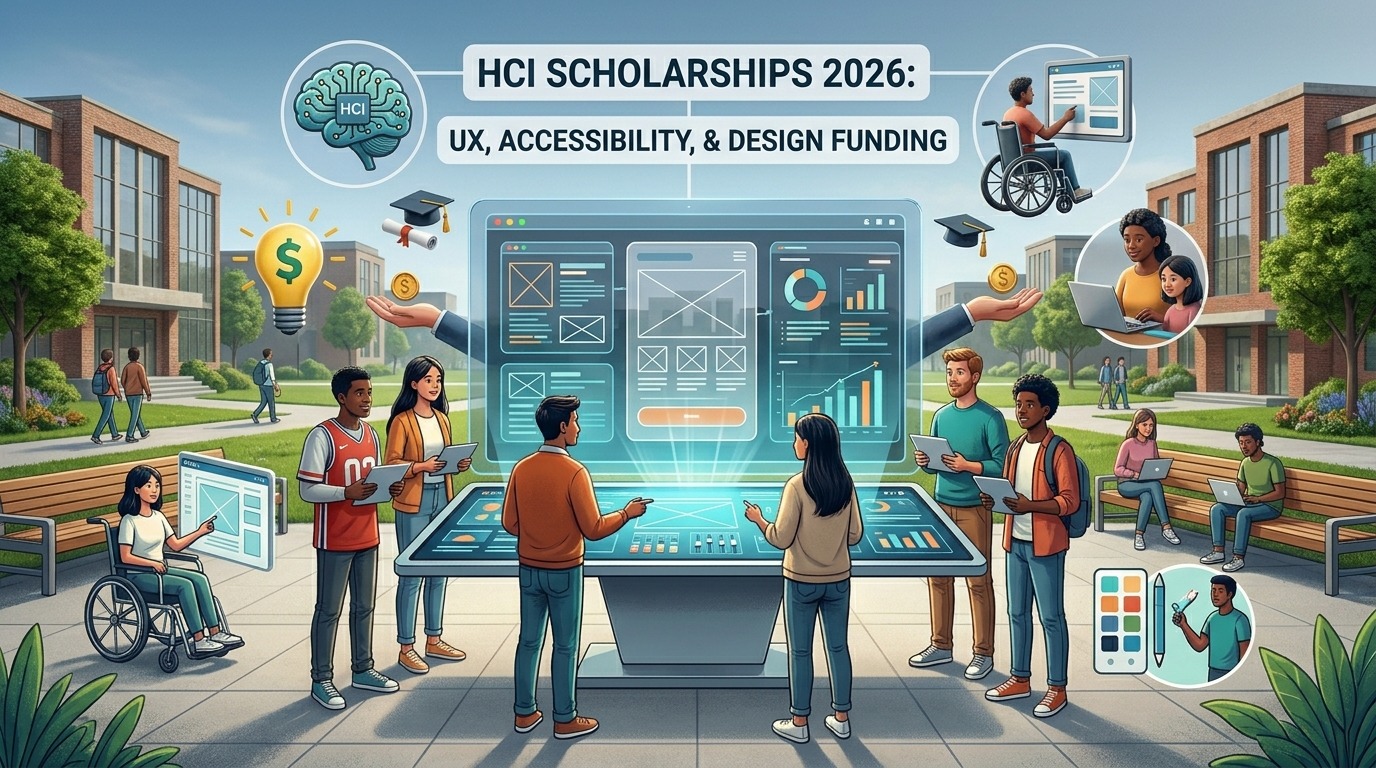
- HCI and UX scholarships
- Software engineering scholarships
- STEM fellowships for graduate research
- Identity-based STEM scholarships that explicitly include CS or IT
That is how you find the real money in this space.
FAQs
Are there many scholarships that say “NLP” in the title?
No. Most students interested in NLP and conversational AI win funding through broader categories like computer science, AI, machine learning, data science, information technology, software engineering, cognitive science, or STEM research.
Does my major need to literally say “Natural Language Processing”?
No. In fact, most colleges do not offer NLP as a standalone major. Computer science, data science, AI, information science, cognitive science, linguistics plus computing, and HCI can all be strong fits.
Are fellowships worth including in an NLP scholarship guide?
Yes. NLP is a field where major opportunities often show up at the graduate research stage, so leaving out fellowships would make the guide weaker and less useful.
I’m a high school student. Which types of programs here fit me best?
Focus first on undergraduate scholarships and broad STEM funding. Graduate fellowships are excellent long-term targets, but most high school seniors should prioritize scholarships tied to undergraduate enrollment, STEM identity programs, and large national tech scholarships.
What if the official page says the cycle is closed?
Keep it on your radar anyway. Strong scholarship programs often reopen on a similar timeline each year. Build a shortlist now, then check the official page again when the next cycle opens.
Should I skip a scholarship if I’m in computer science instead of AI?
No. For NLP and conversational AI, computer science is often the main feeder path. Many of the best opportunities in this space are housed under CS, software, data, and broader STEM labels.