Pell Grant Funding Gap 2026–2027: What the $17 Billion Shortfall Means for High School Seniors
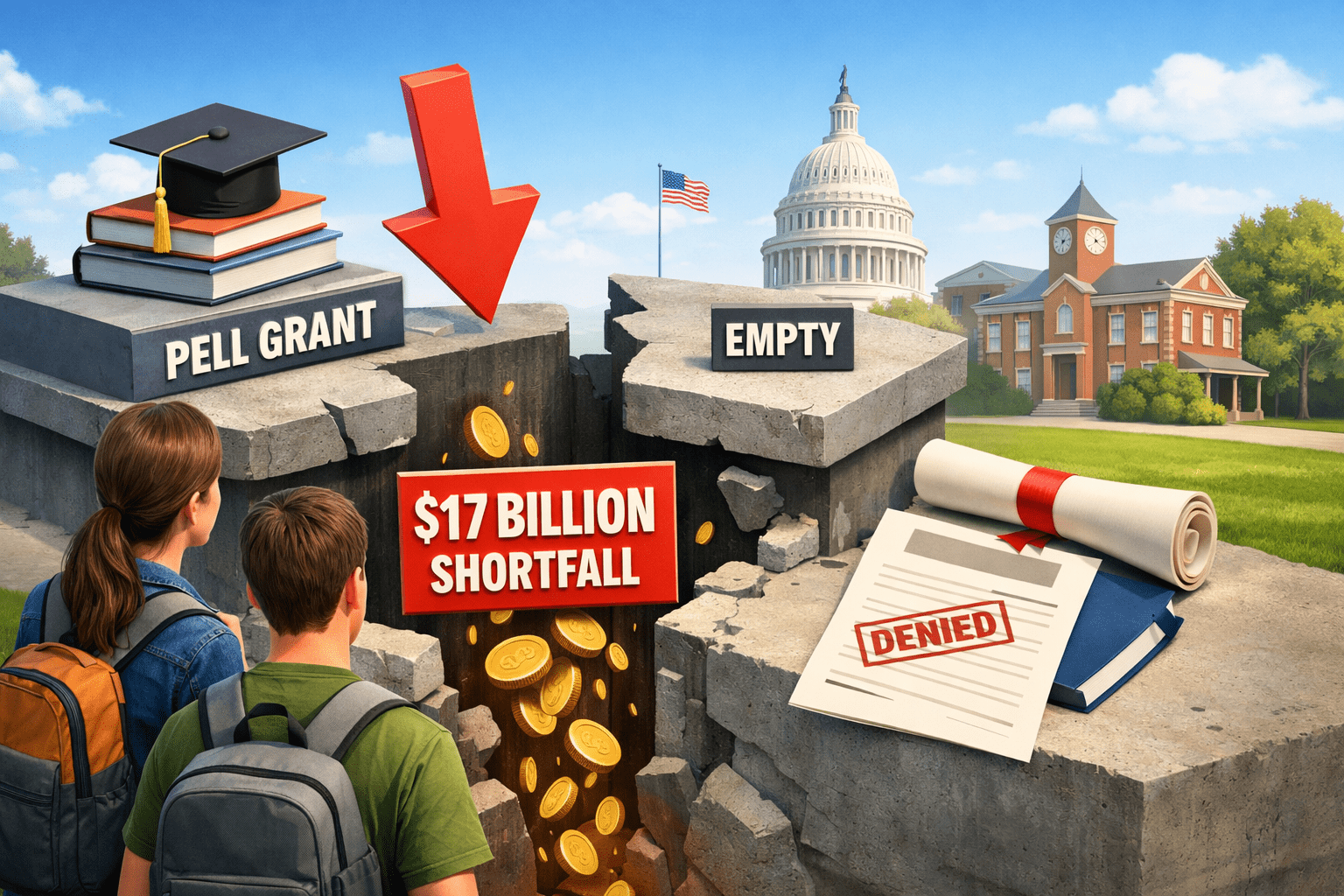
The biggest national college-aid story right now is the Pell Grant funding gap. On March 16, NASFAA said it joined a Student Aid Alliance letter urging Congress to “protect and maintain” federal student-aid funding for FY 2027 and, above all, cover the projected Pell Grant shortfall. The coalition letter cites a $17 billion Pell gap, and Inside Higher Ed reports that the estimate is being discussed as roughly $5.5 billion for FY 2026 plus $11.5 billion for FY 2027. Some coverage rounds the FY 2026 figure to $5.4 billion, but the policy fight is essentially over the same combined problem: about $17 billion.
For high school seniors, this matters because Pell is the foundation of federal grant aid for college. The U.S. Department of Education says Federal Student Aid disbursed about $33.0 billion in Pell Grants in FY 2024, averaging $5,218 to more than 6.3 million students. College Board reports Pell spending rose to $38.6 billion in 2024-25, and NCES says 32.4% of undergraduates received a Pell Grant in 2023-24. In other words, Pell is not a niche program. It is one of the biggest affordability tools in American higher education.
What the Pell Grant is
The Pell Grant is federal grant aid for undergraduate students with financial need. For the 2026–27 award year, Federal Student Aid has published a maximum Pell Grant of $7,395 and a minimum Pell Grant of $740, effective July 1, 2026, through June 30, 2027. Federal Student Aid also says those amounts could be revised if Congress later changes the maximum award.
That date matters because the Pell debate is happening in federal fiscal years, while students experience aid in award years. Inside Higher Ed notes that FY 2026 ends on September 30, 2026, while Federal Student Aid defines the 2026–27 Pell award year as July 1, 2026 to June 30, 2027. That is why a budget fight in Washington can affect the same college-going period that seniors are planning for now.
Why there is a shortfall
The shortfall is not happening because Pell suddenly became unimportant. It is happening because Congress expanded the program’s reach and demand rose faster than funding. NASFAA wrote in February that the Congressional Budget Office projected an annual FY 2027 shortfall of nearly $11.5 billion and noted that Congress had flat-funded Pell for four consecutive years. Inside Higher Ed added that since 2020 Congress has worked to expand Pell access, simplify the application process, and increase the maximum award by about $1,000, but without providing enough additional funding to match the new demand.
Another key reason is FAFSA simplification. The U.S. Department of Education says the redesigned FAFSA means 665,000 more students will receive Pell Grants and more than 1.7 million more students will receive the maximum Pell Grant. A 2021 NCSL summary of the law also said the changes could make another 555,000 students newly eligible. The Student Aid Alliance’s March 13 letter repeats that same broad story: the bipartisan FAFSA Simplification Act expanded maximum-Pell eligibility by 1.7 million additional students and widened access for more than 555,000 students.
That means the Pell funding gap is partly the result of a policy success. More students qualify. More students can access aid. But a program that serves more people costs more money. That is why Pell has moved to the center of college-aid coverage this month.
Why Pell is dominating the headlines
Pell is dominating because it touches millions of students and because Congress is being asked to solve both the current-year hole and the next-year hole at the same time. Inside Higher Ed reports that the FY 2027 appropriations discussion now includes the $5.5 billion deficit for FY 2026 plus the projected $11.5 billion shortfall for FY 2027. The Student Aid Alliance letter frames that as a $17 billion shortfall and calls Pell the top priority in the FY 2027 funding debate.
Inside Higher Ed also reports that many higher-ed policy experts would like lawmakers to provide about $40 billion total for Pell in the upcoming fiscal year: roughly $22.5 billion to keep baseline funding flat, plus $5.5 billion to cover the FY 2026 deficit, plus $11.5 billion for the projected FY 2027 increase in demand. That number sounds much larger than $17 billion because it includes the normal annual Pell funding plus the extra money needed to fill the gap.
What Congress is being asked to do
The Student Aid Alliance letter does not ask Congress only to “save Pell.” It asks Congress to fully fund the Pell shortfall and keep the broader student-aid system stable. In addition to covering the Pell gap, the coalition says it would support a $200 inflationary increase to the maximum Pell award. The same letter also requests higher FY 2027 funding for FSEOG ($966.26 million), Federal Work-Study ($1.31 billion), TRIO ($1.3 billion), GEAR UP ($410 million), and GAANN ($28.6 million).
That broader list matters for seniors because Pell is often only one part of a financial-aid package. Campus-based grants, work-study, and college-access programs such as TRIO and GEAR UP can make the difference between “admitted” and “able to enroll.”
What this means for high school seniors right now
The most important thing to understand is this: the published 2026–27 Pell schedule still exists today. Federal Student Aid says the current published maximum for 2026–27 is $7,395, and all 2026–27 Pell awards are to be based on those amounts unless Congress changes them and the Department publishes a revision. So the headline right now is not “Pell is canceled.” The headline is that Congress must decide how to finance Pell at current or higher levels.
Students should still complete the FAFSA. The Department of Education says the FAFSA is the application students and families must complete to apply for federal student aid, including grants, work-study, and loans, and that completing it is free. Even in a tense budget year, skipping the FAFSA is the fastest way to lose access to Pell and other aid you may already qualify for.
Families should also understand that Pell alone rarely covers the full cost of attendance. The Student Aid Alliance letter says the current maximum Pell award covers only about 16% to 62% of average tuition, fees, housing, and food, depending on institution type. That is another reason this story is so important: Pell is essential, but it already stretches only partway across the real price of college.
A simple way to explain the story to students
Here is the clearest student-friendly version:
Pell is growing because more students qualify for it. Congress made it easier for low-income students to get aid, but funding did not keep up. Now Washington has to decide whether to add enough money to keep the current Pell structure intact. As of today, the official 2026–27 Pell maximum is still $7,395, but the budget debate around that number is the biggest federal financial-aid story in the country.
FAQ
Is the Pell Grant going away?
No official source says Pell is going away. Federal Student Aid has already published 2026–27 Pell award amounts, including the $7,395 maximum, while also noting that Congress could later modify those amounts and trigger a revised publication.
Why do some reports say $5.4 billion and others say $5.5 billion?
That appears to be a rounding difference in coverage of the FY 2026 estimate. NASFAA’s February news summary referenced $5.4 billion, while Inside Higher Ed described the FY 2026 hole as $5.5 billion. Both are being used inside a wider conversation about an approximately $17 billion combined problem.
Why is Pell such a big deal compared with other aid programs?
Because Pell reaches a very large share of students. Federal Student Aid says it served more than 6.3 million students in FY 2024, College Board puts 2024–25 Pell spending at $38.6 billion, and NCES says about 32.4% of undergraduates received Pell in 2023–24.
Does this affect only four-year colleges?
No. Pell supports students across postsecondary education, and the Department of Education has also proposed rules for Workforce Pell, which would let students starting in July 2026 use Pell for eligible short-term workforce programs as short as 8 weeks. That does not create the current shortfall by itself, but it shows why policymakers are watching Pell costs even more closely.
Bottom line
The Pell Grant funding gap is the biggest national student-aid headline because it combines three things at once: a huge federal grant program, millions of students, and an immediate budget deadline. NASFAA’s March 16 action, the Student Aid Alliance’s March 13 letter, and Inside Higher Ed’s March 17 reporting all point to the same reality: Congress is being pushed to protect FY 2027 student aid and solve a Pell problem now estimated at about $17 billion across FY 2026 and FY 2027. For seniors, the current official Pell schedule is still in place, but this is the budget fight that could shape how stable federal grant aid looks heading into the 2026–27 college year.
Official and credible sources to cite in WordPress
Official federal sources: U.S. Department of Education FAFSA explainer ; Federal Student Aid 2026–27 Pell award letter ; Federal Student Aid FY 2024 annual report ; U.S. Department of Education Workforce Pell proposal
Higher-ed policy sources: Student Aid Alliance FY 2027 funding letter ; NASFAA budget and appropriations update ; NASFAA Pell shortfall analysis
Data and reporting: Inside Higher Ed shortfall explainer ; College Board Trends in Student Aid highlights ; NCES Pell participation data