Federal TRIO Talent Search Competition Opens for FY 2026: What High School Seniors, First-Generation Students, and College-Access Programs Need to Know
The biggest federal college-access grant story today is that the U.S. Departments of Education and Labor officially issued the FY 2026 Talent Search competition on March 17, 2026. In the same announcement, the agencies said this is the first grant competition under their postsecondary education partnership and that it starts the 2026 Federal TRIO competition cycle, with more TRIO competitions expected later this spring and summer. The notice also says awards will be issued on the Department of Labor’s GrantSolutions platform.
For students and families, the most important thing to understand is this: Talent Search is not a direct cash grant students submit on Grants.gov for themselves. It is a federal competitive grant for colleges, school systems, nonprofits, community-based organizations, and other eligible entities that run outreach programs for students. In other words, the federal government is funding the programs that help students, not opening a new Pell-style application for individual seniors.
What happened today
Today’s announcement matters because Talent Search is one of the Federal TRIO programs, and TRIO is one of the federal government’s main college-access systems for students from disadvantaged backgrounds. The Department of Education describes Talent Search as one of eight TRIO programs and says its purpose is to identify students from disadvantaged backgrounds who have the potential to succeed in higher education, give them academic, career, and financial counseling, and help them move from middle school or high school into postsecondary education.
The March 17 press release also shows a broader policy change: Education and Labor are now coordinating the competition together. The agencies said Labor will handle the awards through GrantSolutions and help manage grant funds, provide technical assistance, and connect postsecondary programs more closely with workforce development efforts. The press release specifically says the Talent Search grant is aimed at helping students pursue high-quality postsecondary education or training, including Registered Apprenticeships.
Why this is a big story for first-generation and low-income students
Talent Search sits at the point where college access becomes real. Under federal regulations, applicants for Talent Search funding must assure the government that at least two-thirds of the individuals served by a proposed project will be low-income individuals who are potential first-generation college students. That is why this competition matters so much for first-generation and low-income students: the program is legally structured to prioritize them.
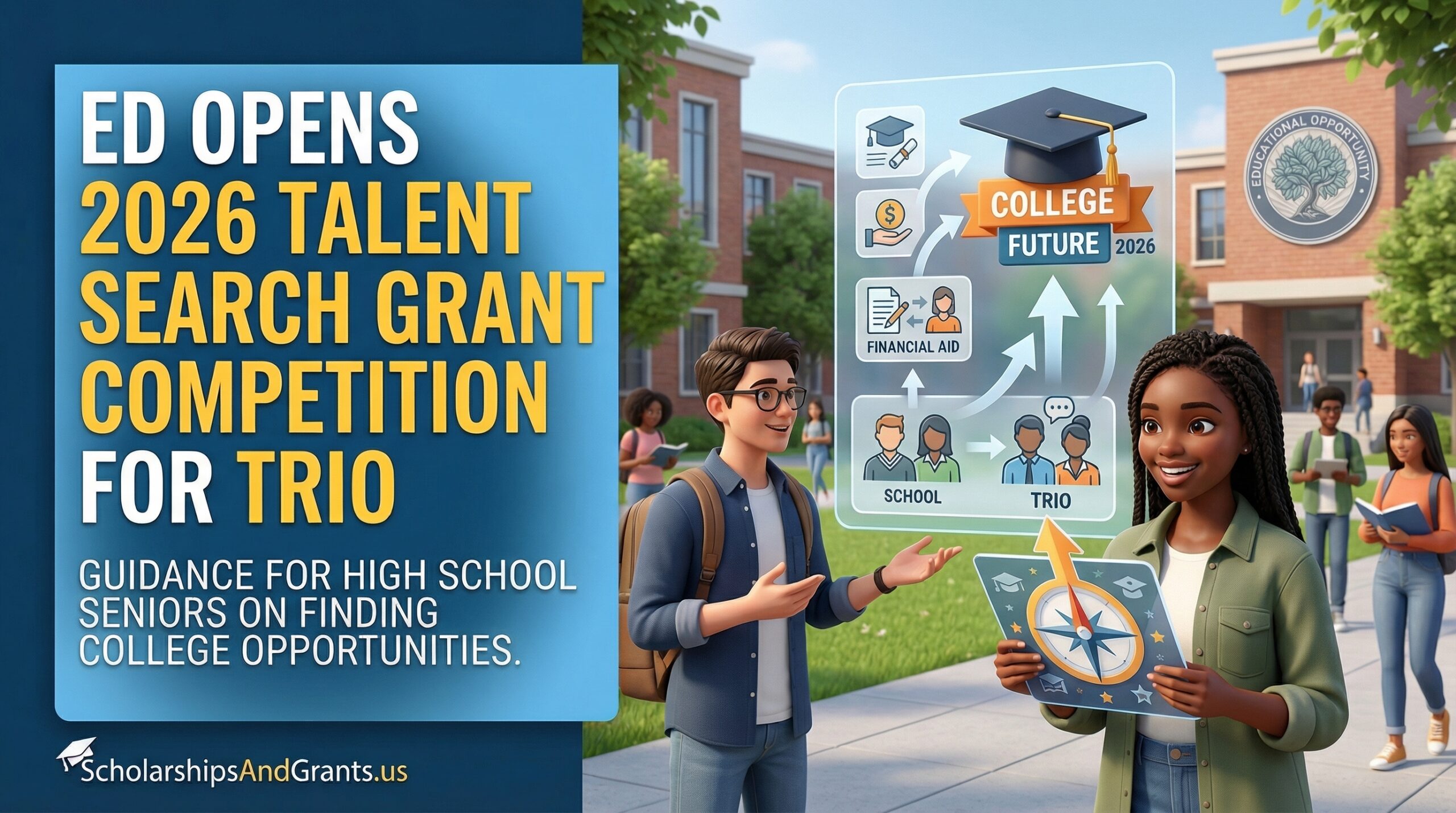
The program’s required services are also closely tied to the steps that determine whether a student actually makes it to college. Federal rules require Talent Search projects to provide or connect students to tutoring, advice on course selection, help preparing for college entrance exams, help completing college admission applications, information about Pell Grants and other aid, and assistance completing financial aid applications, including the FAFSA. Projects also must connect participants to financial and economic literacy services.
That means this is not a symbolic federal competition. It is a funding cycle for programs that often help students with the exact tasks that block college entry: choosing the right classes, understanding aid, filling out forms, visiting campuses, and staying on track to graduate.
Who the program is meant to serve
Federal rules say an individual may participate in Talent Search if the person meets citizenship or eligible residency rules, is generally at least 11 and not more than 27 years old, and is enrolled in or has dropped out of grades 6 through 12, has graduated from secondary school, or has undertaken but is not currently enrolled in postsecondary education. The rules also allow certain veterans and some older participants in limited cases. In plain English, Talent Search is mainly built for middle school and high school students, but it can also support some people trying to reenter education.
The Education Department also says Talent Search projects can be specially designed for students who are limited English proficient, traditionally underrepresented in postsecondary education, students with disabilities, homeless youth, foster youth, and other disconnected students.
Who can apply for the FY 2026 federal grant
The official program page says eligible applicants include institutions of higher education, public and private agencies and organizations including community-based organizations with experience serving disadvantaged youth, combinations of those entities, and, where appropriate, secondary schools. If the applicant is a college or university, federal rules also say the project cannot be used as part of that institution’s recruitment program.
That applicant list is the clearest proof that students are beneficiaries of the competition, not direct applicants to it. High school seniors should think of Talent Search as a local support program they may be able to join through a school, community organization, college-access nonprofit, or nearby college—not as a direct scholarship portal.
FY 2026 Talent Search competition: key facts
The live Grants.gov opportunity lists the competition as 84.044 – TRIO Talent Search. Grants.gov shows it was posted March 17, 2026, updated the same day, and says there is no cost-sharing or matching requirement. Grants.gov also lists a current closing date of May 1, 2026, an estimated total program funding amount of $175,152,359, an award ceiling of $10,000,000, and an award floor of $250,000.
The Department of Education’s standing Talent Search page still displays an older timeline that says “Current competition: FY 2021,” but the March 17, 2026 press release and the current Grants.gov listing confirm that the FY 2026 competition is now open. Readers should treat the live March 17 press release and the active Grants.gov opportunity as the most current sources.
How large the Talent Search program already is
This is a major federal program, not a niche pilot. The Education Department’s Talent Search funding-history document shows that in FY 2024 the program had 545 awards, served 341,744 participants, and had $196,166,197 in funding allocation, with an average award of $359,938.
The Department’s current funded-project list for the 2025-26 project year shows 517 projects, 322,445 participants, and $181,904,346 in FY 2025 funding, with data current as of January 2026. That scale helps explain why today’s announcement matters nationally: when Talent Search competitions open, they affect a very large college-access network.
Federal regulations also say a Talent Search project period is five years, which means these competitions shape student-support infrastructure for several years at a time, not just for one semester.
What this means for high school seniors
For a high school senior, today’s news does not mean there is a new one-day-only federal student grant to claim. It means the federal government has opened the competition that funds local programs which may help students with admissions, FAFSA filing, scholarship search, college planning, and sometimes career or training pathways.
If you are a first-generation student, from a low-income family, or attend a school that faces college-access gaps, this is especially relevant because local Talent Search projects are built to support students like you. Even though the grant application is for institutions, students may benefit once projects are funded or continued in their area.
What schools, colleges, and nonprofits should watch next
Because the agencies said this announcement begins the 2026 Federal TRIO competition cycle, organizations that depend on TRIO should expect more competition notices later this spring and summer. For grant applicants, today’s announcement also signals an operational change: the competition is being run under the Education-Labor partnership, and awards are being issued through Labor’s GrantSolutions platform.
Applicants should also pay close attention to the live Grants.gov record rather than relying only on older standing program pages, since the main Education Department Talent Search page still shows archived FY 2021 competition language even though the FY 2026 competition is now live.
Bottom line
Yes, this is one of the most important federal college-access developments of the day. The government has officially opened the FY 2026 Talent Search competition, begun the year’s TRIO competition cycle, and tied the process to the Education-Labor postsecondary partnership. Because Talent Search is designed to support low-income and potential first-generation students through advising, FAFSA help, admissions support, and college-access services, today’s announcement matters far beyond grant offices. It matters to the students those programs are built to serve.
Official source links
U.S. Department of Education press release announcing the FY 2026 Talent Search competition:
Official Talent Search program page from the U.S. Department of Education:
Live Grants.gov opportunity for FY 2026 TRIO Talent Search:
Official federal regulations on participant eligibility:
Official federal regulations on required services, including FAFSA help and financial aid information:
Official Talent Search funding history:
Official FY 2025 funded-project list:
FAQ
Is this a grant I can apply for as a student?
No. The FY 2026 competition is for eligible institutions and organizations, not individual students. Students benefit by joining local Talent Search projects run by funded grantees.
Does Talent Search help with FAFSA?
Yes. Federal rules require Talent Search projects to provide information about federal student aid and help students complete financial aid applications, including the FAFSA.
Is Talent Search only for high school seniors?
No. The rules mainly cover students in grades 6 through 12 and some people reentering education, generally within the program’s age and eligibility rules.
Who is the program mainly designed to help?
Applicants must assure that at least two-thirds of the people they plan to serve will be low-income individuals who are potential first-generation college students.
How long do Talent Search grants last?
Federal regulations say the Talent Search project period is five years.