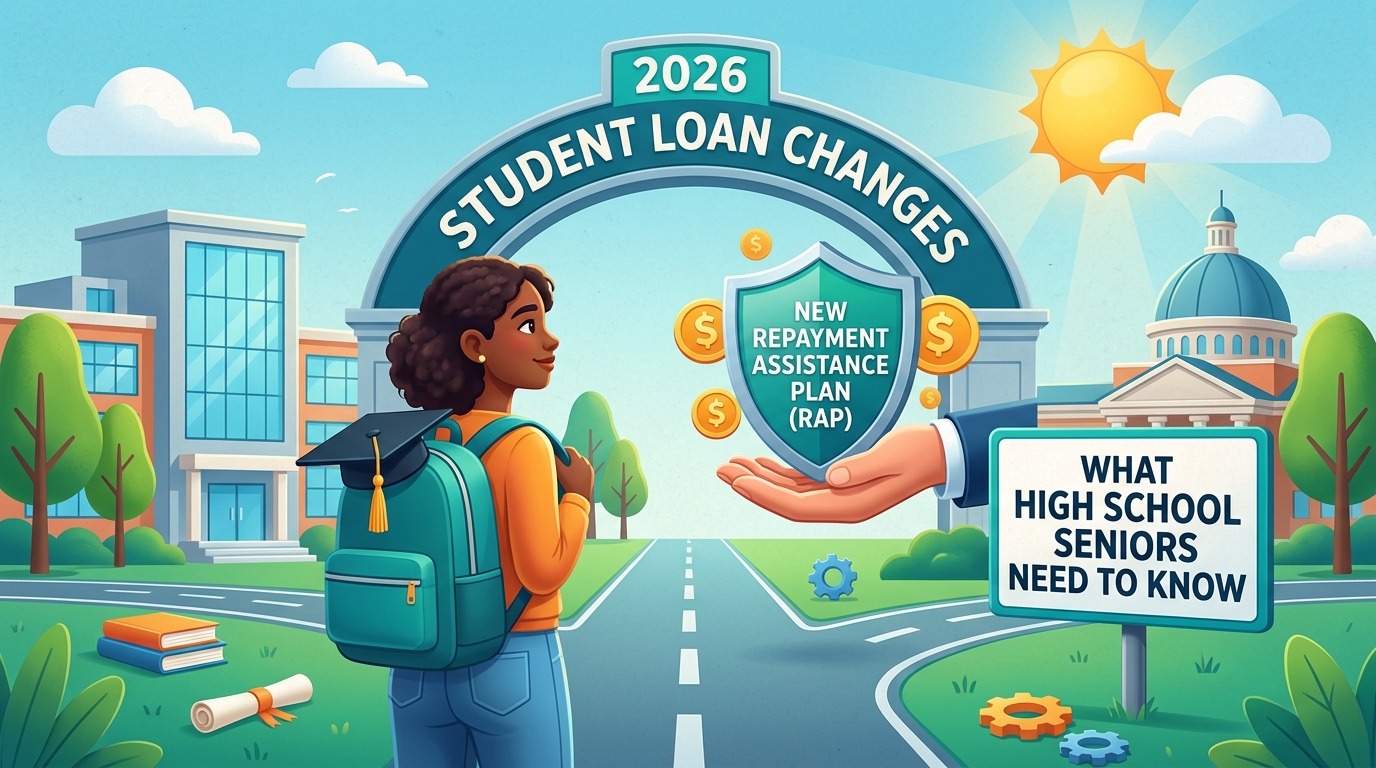
Student Loans Texas: Complete Guide for High School Seniors
If you are a Texas student, there are really three different loan worlds you need to understand: federal student loans, Texas-run state loan programs, and private student loans. The smartest order is usually grants and scholarships first, federal loans second, Texas specialty loans third, and private loans last. That order matters because federal loans have fixed rates and stronger repayment protections, while private loans usually depend more on credit and generally offer fewer borrower protections.
Texas also tries to keep debt “manageable.” The Texas Higher Education Coordinating Board says manageable debt means monthly loan payments below 10% of projected earnings five years after completion, and its current statewide reporting says more than 95% of bachelor’s graduates from Texas four-year public institutions had no debt or manageable debt five years after graduation. That is a good target for students planning how much to borrow.
What “student loans in Texas” really means
For most Texas seniors, paying for college should happen in this order:
-
File the FAFSA first, or TASFA if you are not eligible for FAFSA. Texas requires high school students to complete the FAFSA, complete the TASFA, or officially opt out. FAFSA opens the door to federal, state, and school aid; TASFA can help with state aid only. For the 2026–27 year, the FAFSA can be submitted no earlier than October 1, 2025, and the federal deadline is June 30, 2027, but school and state deadlines can be much earlier.
-
Use grants before loans. In Texas, the main state grant buckets are:
-
TEXAS Grant for eligible students at Texas public universities,
-
TEOG for eligible students at Texas public two-year colleges,
-
TEG for eligible students at nonprofit private Texas colleges and universities.
All three programs say funding is limited, so applying early matters.
-
-
Use federal Direct Loans next. These are usually the safest loans for undergraduates because they are part of the federal system.
-
Use Texas state loan programs only if there is still a real gap. The main Texas loan programs most students should know are the College Access Loan (CAL) and the FORWARD Loan.
-
Use private loans last. Private loans are offered by banks, credit unions, state agencies, or schools, and they are not part of the federal program. They often depend heavily on credit and can carry fewer flexible protections than federal loans.
Federal student loans for Texas students
For undergraduates, the main federal loans are Direct Subsidized Loans and Direct Unsubsidized Loans. For loans first disbursed from July 1, 2025 to June 30, 2026, the undergraduate rate is 6.39% fixed. Dependent undergraduates can generally borrow up to $5,500 in year one, $6,500 in year two, and $7,500 in year three and beyond, with a $31,000 total undergraduate limit; higher limits apply to independent students and some dependent students whose parents cannot get PLUS loans. These loans also currently carry a 1.057% loan fee, and subsidized/unsubsidized loans generally come with a six-month grace period after you graduate, leave school, or drop below half-time enrollment.
Here is the simple version:
-
Subsidized = better for students with financial need, because the government covers the interest while you are in school at least half time, during the grace period, and during some deferments.
-
Unsubsidized = available more broadly, but interest starts building right away.
Parents of dependent undergraduates can also use Parent PLUS Loans. For PLUS loans first disbursed from July 1, 2025 to June 30, 2026, the interest rate is 8.94% fixed. For PLUS loans first disbursed from October 1, 2025 to September 30, 2026, the loan fee is 4.228%. PLUS loans require a credit check and the borrower cannot have an adverse credit history.
Texas grants that can reduce how much you borrow
A lot of students search for “Texas student loans” when what they really need first is Texas grant money.
TEXAS Grant is for students with financial need at eligible Texas public universities and health-related institutions. Students must be Texas residents, show financial need, be at least three-quarter time, and meet other rules. Priority may be given to students who apply by the January 15 priority deadline, though schools can have their own submission rules.
TEOG is for students with financial need at eligible Texas public two-year colleges. It is aimed at students who are at least half time and have not attempted more than 30 semester credit hours excluding dual credit or exam credit.
TEG is for students with financial need at eligible nonprofit private Texas colleges and universities. To qualify, a student must be a Texas resident, have financial need, be at least three-quarter time, and attend an eligible nonprofit private institution in Texas. Priority may also be given to students who apply by January 15.
The big lesson is simple: Texas has grant programs for public universities, public two-year colleges, and private nonprofit colleges. A student who skips FAFSA or TASFA can miss the cheapest money on the table.
Texas state loan programs: CAL and FORWARD
1) College Access Loan (CAL)
The College Access Loan is Texas’s main state-run education loan for students who still have a gap after other aid. It is for Texas residents enrolled at least half time at eligible Texas institutions. Students can borrow from $100 up to cost of attendance minus other financial resources, and Texas says the amount of federal aid a student is eligible for must be deducted when determining the CAL amount. Since September 1, 2023, Texas also calculates the final CAL amount using a “manageable debt” standard for the borrower’s program.
Important CAL facts:
-
Fixed rate: 6.30%
-
No origination fee
-
Simple interest
-
Interest is not subsidized
-
Interest is not capitalized
-
Six-month grace period
-
Up to 10 years to repay balances under $30,000
-
Up to 20 years to repay balances of $30,000 or more
-
0.25% rate reduction with ACH autopay.
The biggest warning for high school seniors is the credit requirement. CAL requires the borrower to pass a favorable credit evaluation or use a cosigner. Texas says the borrower or cosigner must generally have an Experian VantageScore of 650 or higher, at least four credit trade lines excluding student loans or authorized-user accounts, and no defaults on federal or private education loans. Cosigners are equally responsible if the student does not pay.
2) FORWARD Loan
The FORWARD Loan is a more specialized Texas loan for students in certain high-demand fields such as nursing/patient care, teaching, technology, transportation/logistics, and energy. It is designed for students who can finish the eligible program in two years or less. If the student is in a degree program, they must already have completed at least 50% of the required coursework before getting the loan.
Important FORWARD facts:
-
Fixed rate: 4.30%
-
No origination fee
-
Simple interest
-
Six-month grace period
-
Up to 10 years repayment
-
0.25% rate reduction with ACH autopay.
FORWARD is narrower than CAL, but for the right student it can be cheaper than CAL because the current rate is lower.
Why Texas residency matters so much
Texas residency affects both tuition and state financial aid. The Texas Higher Education Coordinating Board says a school must classify you as a Texas resident to qualify for in-state tuition, and Texas state aid programs require Texas residency. For 2025–26, the basic nonresident tuition rate at Texas public universities and health-related institutions is $455 per semester credit hour, plus designated tuition and other applicable charges. That means getting residency right can make a very big difference in total borrowing.
Texas also offers an official Net Price Calculator tool so students can estimate costs including tuition, fees, books, room and board, and other expenses before borrowing. That is one of the best planning tools a senior can use before accepting any loan.
When private student loans make sense, and when they don’t
Private loans are sometimes used after a student has already used grants, scholarships, federal loans, and other safer options. But students should understand the trade-off: private loans are offered by private lenders, they may have variable rates, pricing is based mainly on credit history or score, and they generally do not offer the same flexible repayment terms and borrower protections as federal loans. A cosigner can improve the rate, but the cosigner also becomes financially responsible for the debt.
That is why the best Texas borrowing strategy is usually:
FAFSA/TASFA → grants and scholarships → federal Direct Loans → Texas state loans if necessary → private loans last.
Simple advice for a Texas high school senior
Borrow only for a school and major that give you a realistic path to graduation and work. Use the net price calculator before applying. If family income has dropped, still file the FAFSA and then ask the financial aid office for a professional judgment review. Federal Student Aid specifically says students with a major income change should still complete the FAFSA first and then contact the school.
A good stress test is this: if you need more than the normal federal undergraduate loan limits plus reasonable family cash and grants, stop and compare lower-cost options like a community college transfer path, a different Texas public university, or a school that offers more aid. Texas’s own policy goal is not “borrow as much as you can”; it is graduate with no debt or manageable debt.
Links
-
FAFSA — official federal aid application.
-
FAFSA Checklist — what students and parents need before starting.
-
Texas Application for State Financial Aid (TASFA) — for Texas residents who are not filing FAFSA.
-
Texas Student Financial Aid Programs — official Texas overview.
-
College Access Loan (CAL) — official Texas state loan page.
-
FORWARD Loan — official Texas high-demand field loan page.
-
TEXAS Grant — public university grant information.
-
TEOG — public two-year college grant information.
-
TEG — nonprofit private Texas college grant information.
-
Texas Net Price Calculator — estimate your real cost before borrowing.
-
Texas Residency Information — official residency rules overview.
-
Loan Simulator article — official federal repayment-planning tool info.
Bottom line
For a Texas senior, the safest borrowing plan is not “find the biggest loan.” It is “lower the net price first, use grants first, use federal loans before private loans, and keep total debt in a range that matches expected earnings.” Texas gives students more than one path to do that, but only if they start with FAFSA or TASFA and understand the difference between federal loans, Texas-run loans, and private loans.