Parent PLUS vs. New Loan Caps & SAI Strategies: What Families Need to Know for 2026–27
If you are a high-school senior or a parent trying to close a college affordability gap, this is one of the most important money topics in the 2026–27 cycle. Right now, Parent PLUS loans still work as a major “gap-filler” because they let eligible parents borrow up to the school’s cost of attendance minus other financial aid. But federal law and U.S. Department of Education implementation guidance are moving the system toward tighter Parent PLUS limits for periods of enrollment beginning on or after July 1, 2026. At the same time, families still need to understand how the FAFSA calculates the Student Aid Index, or SAI, because better FAFSA accuracy can reduce the amount a family feels pressured to borrow.
The short version is this: Parent PLUS is still available now, but it is no longer safe to build a college plan around the assumption that parents will always be able to borrow “whatever is left.” Federal guidance tied to the 2026 changes says the modified loan limits take effect July 1, 2026, and the Department has already scheduled system updates for April 26, 2026, so schools can process the new rules in the 2026–27 cycle. That means families choosing colleges this spring need to think not only about this year’s gap, but about whether the plan still works after the new caps are live.
Before getting into strategy, it helps to understand what Parent PLUS is today. A Direct PLUS Loan for parents is a federal loan made to the parent of a dependent undergraduate student. The parent, not the student, is legally responsible for repayment. A credit check is required, and if the borrower has adverse credit history, there are still pathways that may keep the loan possible, including an appeal or an endorser. For Direct PLUS loans first disbursed between July 1, 2025, and June 30, 2026, the interest rate is 8.94%, and the fee for Direct PLUS loans first disbursed on or after October 1, 2020, is 4.228%.
Another detail families often miss is repayment timing. Parent PLUS does not function like a student loan where many borrowers assume repayment is a problem for “future me.” If a parent does not request deferment, payments generally begin after the loan is fully disbursed. Parent borrowers can request deferment while the student is enrolled at least half time, and for up to six months after the student leaves half-time enrollment, but interest still accrues during that period. In plain English, Parent PLUS can help a family enroll, but it is not free breathing room. It is real debt with real carrying cost.
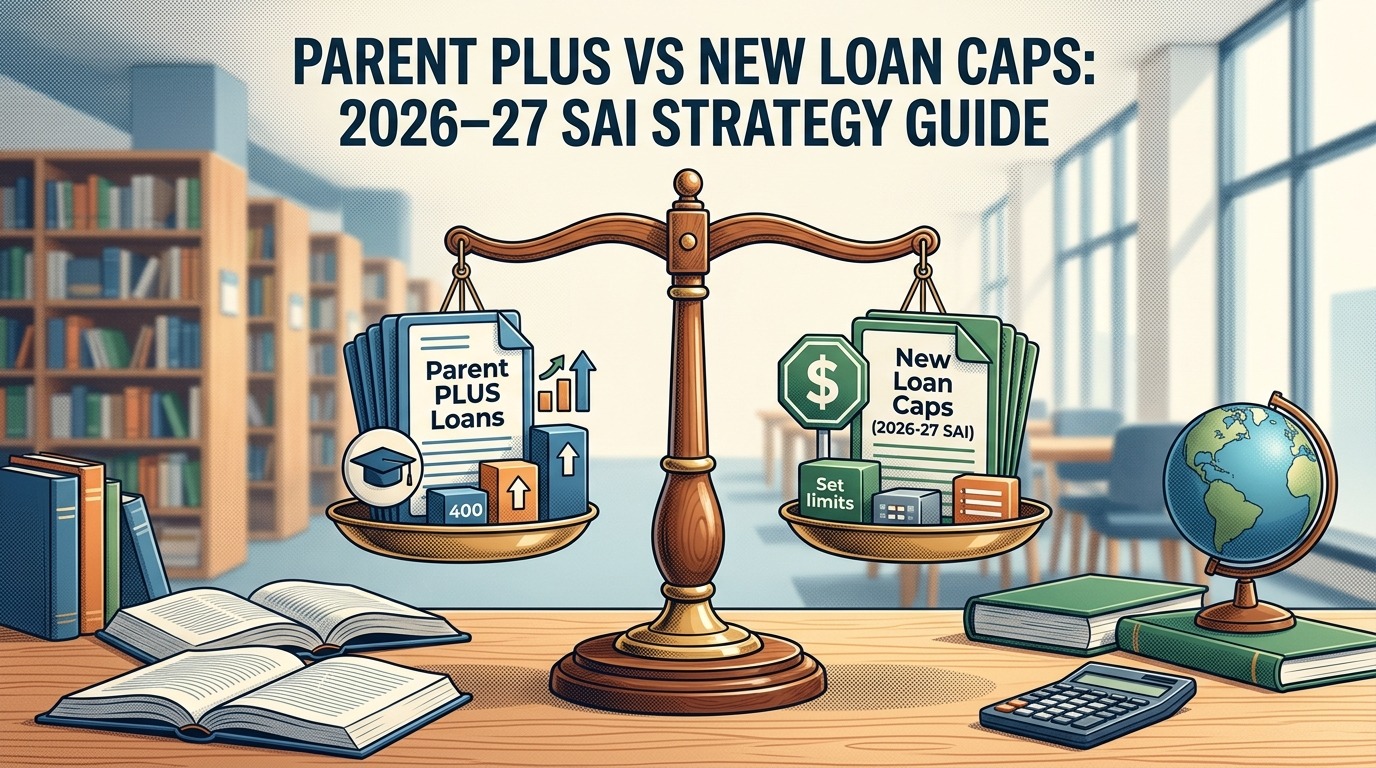
That brings us to the major change families are hearing about. Under the Department’s 2026 proposed regulations implementing the new law, Parent PLUS loans for periods of enrollment beginning on or after July 1, 2026, would no longer function as unlimited borrowing up to cost of attendance. Instead, the annual Parent PLUS limit would be $20,000 per dependent student, minus other financial assistance, and the aggregate Parent PLUS limit would be $65,000 per dependent student, without regard to amounts repaid, forgiven, canceled, or discharged. That is the headline change most families need to plan around.
There is also an important transition issue. The Department’s proposal describes an exception for some continuing students already enrolled in a program as of June 30, 2026, if there was earlier federal borrowing for that same program before July 1, 2026. The practical takeaway is simple: some continuing families may not be thrown immediately into the new cap structure, but new borrowers and new borrowing periods face a much tighter framework. Because this phase-in depends on enrollment continuity and prior borrowing history, families should not assume they are protected. They should ask the financial aid office how the school is applying the July 1, 2026 rules to that student’s specific program.
So what does “Parent PLUS vs. new loan caps” really mean in real life? It means families should stop thinking only in terms of “Can we get in?” and start thinking in terms of “Can we finish?” A freshman-year affordability plan that works only because Parent PLUS is effectively unlimited can fall apart when sophomore or junior year borrowing hits the new federal ceiling. This matters because college prices remain high. NCES reports that in 2022–23 the average total cost of attendance at public four-year institutions was about $27,800 for students living off campus but not with family and about $27,100 for students living on campus, while College Board’s 2025 report shows published prices remain materially higher in many sectors, especially private nonprofit four-year colleges.
That is why SAI strategy matters so much. The Student Aid Index is not a bill, not a promise, and not the amount your family is expected to pay. Federal Student Aid states clearly that SAI is an eligibility index number schools use to determine aid, and that it is not your financial aid offer. A lower SAI generally signals higher need, which can improve eligibility for need-based aid, especially Pell Grant consideration. For 2026–27, the maximum Pell Grant remains $7,395 under current continuing appropriations, and applicants with an SAI at or above $14,790 are generally not Pell-eligible unless a special rule applies.
The most important SAI strategy is also the least glamorous: accuracy. Families lose aid all the time not because they are wealthy, but because they misunderstand who must be reported, what counts as an asset, or when a school can adjust the FAFSA data through professional judgment. On the 2026–27 FAFSA, the parent’s marital status must be reported as of the day the form is filed, even if that is different from the 2024 tax filing situation. At the same time, FAFSA still uses prior-prior year tax information, which for 2026–27 means 2024 tax data. That mismatch between “today’s household” and “2024 taxes” is where many families make avoidable mistakes.
A second big strategy point is choosing the correct parent contributor. If parents are divorced, separated, or never married and not living together, the FAFSA parent is the one who provided more than 50% of the student’s financial support during the last 12 months. If neither parent provided more than half, then the FAFSA uses the parent with greater income and assets. This rule can materially change SAI. Families should not guess, and they definitely should not use the parent the student “lives with” unless that is also the correct support-based parent under FAFSA rules.
A third strategy point is contributor completion. Students and contributors must provide consent and approval for IRS tax information transfer, even if they did not file taxes. Federal Student Aid says plainly that if the student or contributors do not provide that consent and approval, the student is not eligible for federal student aid. In practice, that means some families think they “filed FAFSA,” but what they really did was start it and leave it incomplete. A half-finished FAFSA is not a strategy. It is a self-inflicted delay.
A fourth strategy point is understanding what helps SAI and what does not. One of the biggest FAFSA simplification changes is that number in college no longer automatically lowers a student’s SAI. The question still appears on the form, but the 2026–27 FSA Handbook says it is not used in SAI calculation. However, schools can use that information in a special circumstance review. So if you have two children in college at the same time, do not assume the FAFSA formula will give you the break older formulas often gave. Instead, file accurately and then ask the financial aid office whether it will consider a professional judgment review because of multiple students enrolled.
A fifth strategy point is asset accuracy. The FAFSA asks about cash, savings, checking, investments, businesses, and farms, but not everything counts. The 2026–27 FAFSA instructions say investments do not include the home you live in, the value of life insurance, ABLE accounts, retirement plans such as 401(k)s and pensions, or cash already reported in the separate cash/checking/savings question. Small businesses with 100 or fewer full-time or equivalent employees are excluded, and the value of the family farm on which the family resides is excluded as well. Families should neither underreport nor overreport. Overreporting can raise SAI just as surely as underreporting can create verification trouble.
College savings plans are another place where details matter. For a dependent student, 529 plans and Coverdell accounts are generally reported as parent assets, not student assets, when parent information is required. But UGMA and UTMA accounts are treated as the student’s assets. That distinction is important because student assets are typically assessed more heavily in the aid formula than parent assets. This is not a trick. It is just a reminder that the form asks for very specific categories, and families should classify accounts exactly the way federal instructions say.
There is also a powerful asset-reporting strategy that is completely legitimate because it is built into the law. Some applicants are exempt from asset reporting altogether. For dependent students, that can happen if the student qualifies for a maximum Pell Grant, or if the parents’ 2024 combined AGI is under $60,000 and they did not file the disqualifying schedules listed in the handbook, or if the student or parent received a means-tested federal benefit during 2024 or 2025. The handbook says the same general structure applies to many independent students. That means families should answer the federal-benefits questions carefully. Those are not throwaway boxes. They can affect whether assets are counted at all.
For 2026–27, the federal benefits question includes programs such as earned income credit, federal housing assistance, free or reduced-price school lunch, Medicaid, SNAP, SSI, TANF, and WIC. If a family received one or more of these benefits during 2024 or 2025, that can matter for FAFSA processing and asset exclusion. Families should not skip the question, and they should not assume only “cash welfare” counts. The actual list is broader.
Another high-value SAI strategy is knowing when the FAFSA is technically correct but financially outdated. Federal Student Aid tells families to complete the FAFSA using the required tax year, then contact the school if income has changed materially. The FSA Handbook says schools cannot rewrite the formula just because someone dislikes the result, but they can use professional judgment to adjust specific FAFSA data elements or cost-of-attendance components when the family has special circumstances. Valid examples include loss of employment or pay cuts, unusually high medical expenses, or family savings already spent because of illness. The handbook also warns schools not to make “unreasonable” adjustments for normal consumer expenses like utilities, credit cards, or vacations.
This matters enormously in a Parent PLUS conversation because many families do the steps in the wrong order. They see a large balance, assume Parent PLUS is the solution, and borrow before fully pursuing an aid adjustment. The better order is this: file FAFSA accurately, review the Submission Summary, compare aid offers, request reconsideration if income or family circumstances changed, ask whether the school will review multiple children in college as a special circumstance, and only then decide how much loan borrowing is still necessary. Federal Student Aid’s consumer guidance specifically points families toward contacting the aid office when aid is not enough and when financial circumstances changed.
Families should also know the backup plan if Parent PLUS is denied because of adverse credit. Federal Student Aid says a denied parent borrower may pursue an endorser, file an appeal based on extenuating circumstances, or in some cases unlock higher unsubsidized federal student loan limits for the dependent student. Current federal student loan tables show that a dependent undergraduate whose parent cannot obtain PLUS can be treated like an independent student for annual unsubsidized limit purposes, which raises first-year annual borrowing from $5,500 to $9,500, second-year from $6,500 to $10,500, and third-year-and-beyond from $7,500 to $12,500. That does not solve every affordability gap, but it can reduce the amount a family needs from other sources.
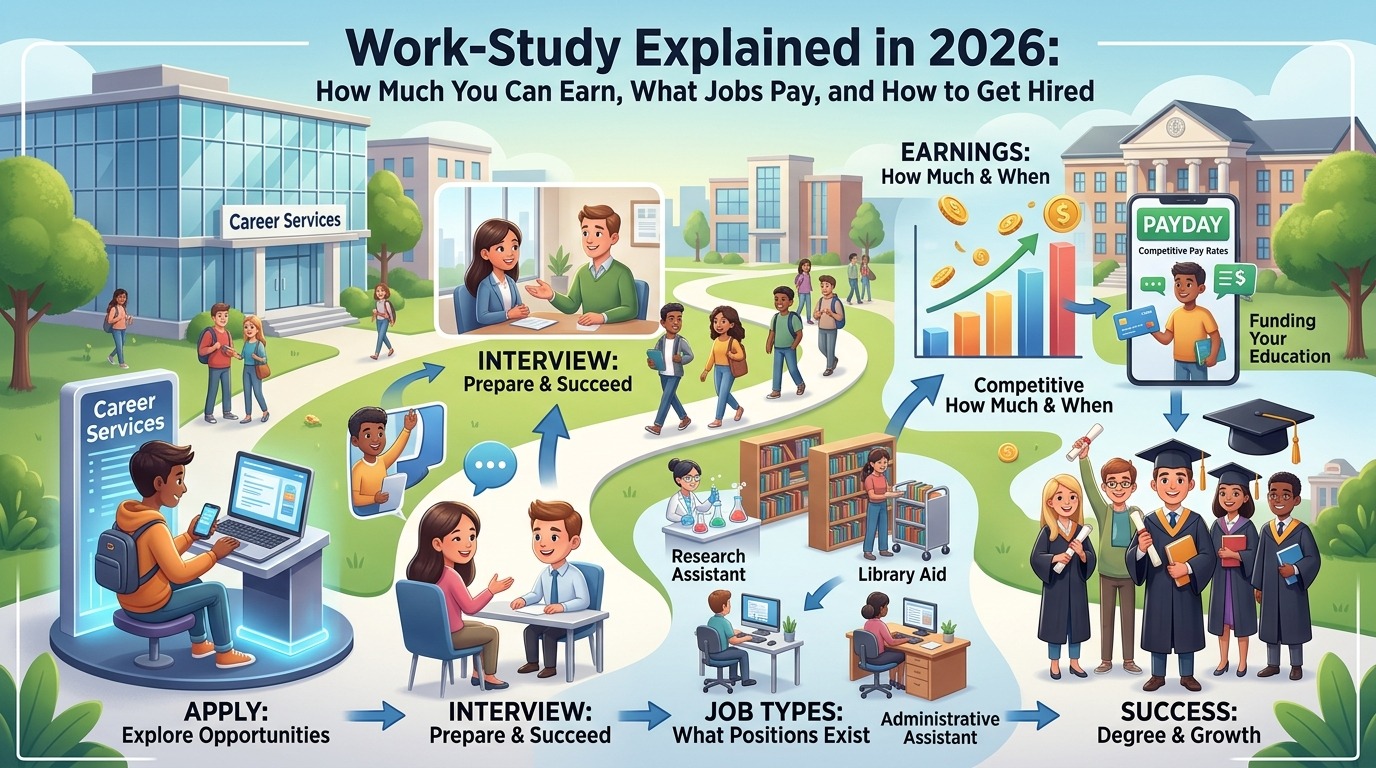
Now for the practical advice that matters most: if your college choice only works with very large Parent PLUS borrowing, that is a warning sign. A safer plan is usually built in layers. First use grants and scholarships. Then use the student’s federal subsidized and unsubsidized loans. Then use work-study if offered and realistic. Then compare schools based on net price, not brand name. Only after those layers should a family evaluate Parent PLUS, and even then, it should be evaluated against the new 2026 structure, not the old “borrow the gap” mindset. Federal Student Aid’s aid-offer guidance stresses comparing offers carefully and understanding that PLUS loans carry the highest interest rates among federal student loans.
The smartest 2026–27 SAI strategy is not “How do I game the FAFSA?” The smartest strategy is “How do I make the FAFSA reflect reality as accurately as possible, then use the school’s review process when reality has changed?” That means using the correct parent, the correct marital status, the correct asset categories, the correct benefit flags, and the correct appeal path when 2024 taxes no longer describe the family’s life. In a year when Parent PLUS borrowing is becoming less open-ended, FAFSA precision is not paperwork. It is affordability strategy.
What students and parents should do next
- Complete the FAFSA accurately and make sure every required contributor finishes consent, approval, and signature steps.
- Review the FAFSA Submission Summary and fix errors quickly.
- Ask each college for a full aid-offer breakdown and compare net price, not just the “remaining balance.”
- If your family had job loss, reduced income, medical shocks, or multiple students in college, request a special-circumstances review from the aid office.
- If your college plan depends on large Parent PLUS borrowing after July 1, 2026, ask the school now how it is handling the new caps and any continuing-student exception.
Official resources
Use these official resources in the post as active links for readers:
- 2026–27 FAFSA form
- Parent PLUS loan information
- Federal Student Aid Estimator
- How to review and correct your FAFSA form
- What to do if a PLUS loan is denied
- How to evaluate aid offers
FAQ
Is Parent PLUS gone in 2026–27?
No. Parent PLUS is still part of federal aid, but the Department’s 2026 implementation guidance and proposed regulations set new caps for periods of enrollment beginning on or after July 1, 2026.
What is the new Parent PLUS cap?
The new framework sets an annual Parent PLUS limit of $20,000 per dependent student, minus other financial aid, and an aggregate limit of $65,000 per dependent student.
Does SAI tell me what my family must pay?
No. SAI is an aid eligibility index used by schools. It is not your bill, not your final aid offer, and not a promise of what your family will owe.
Does having two kids in college lower SAI automatically?
Not anymore. The 2026–27 handbook says number in college is not used in SAI calculation, although schools may consider it through special-circumstance review.
What assets do not count on FAFSA?
Examples include the home you live in, retirement plans, life insurance value, ABLE accounts, certain small businesses, and the value of the family farm on which the family resides.
What if my family income dropped after 2024?
File the FAFSA with the required 2024 tax data, then ask the school for a professional judgment or aid adjustment review.
What if Parent PLUS is denied?
A parent may appeal, use an endorser, or the student may become eligible for additional unsubsidized federal loan amounts, depending on grade level and school processing.
Suggested Internal Links
- Your FAFSA 2026–27 complete guide
- Pell Grant Changes for 2026–27
- How to Evaluate Financial Aid Offers
- Dependency Overrides and Unusual Circumstances
- Work-Study Explained for 2026