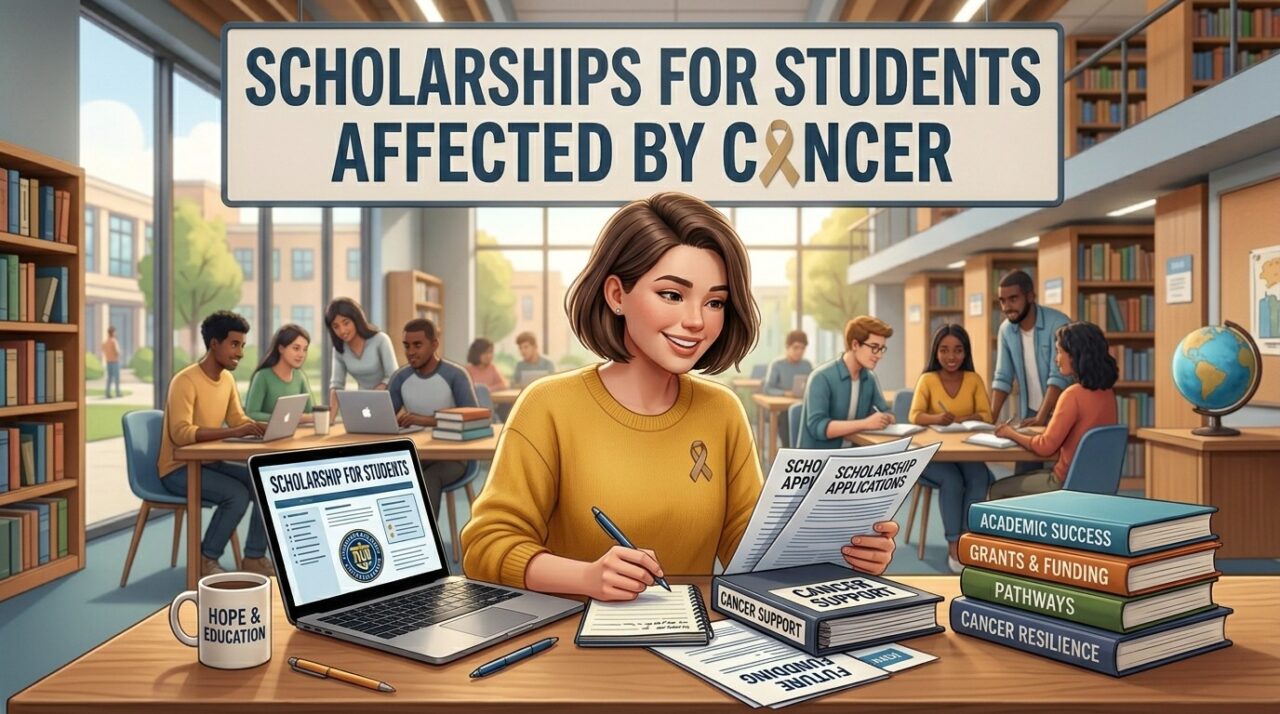
Scholarships for Students Affected by Cancer: 18 Verified Scholarships for 2026
January deadlines
1) Cancer for College Scholarships
Why It Slaps: This is one of the strongest national scholarships in this space because it is built specifically for students who have personally had cancer, not just students with a general hardship story. It is also unusually flexible on school type, since it covers accredited U.S. colleges, universities, trade schools, and certificate programs. Another big plus is that Cancer for College runs a broad scholarship ecosystem, so students can get matched to multiple opportunities through the program rather than chasing one tiny award at a time. For a student whose family finances were hit by treatment costs, missed work, or long recovery, this is one of the first applications worth doing.
Amount: Varies
Deadline: January 31 each year
Apply/info: Cancer for College Available Scholarships
2) Blood Cancer United Educational Scholarships
Why It Slaps: This one stands out because it supports both survivors of childhood cancer and their siblings, which is rare. The award is also renewable, which matters because cancer-related financial stress usually lasts longer than one semester. If a family’s budget was stretched by treatment, travel, caregiving, or lost wages, this scholarship recognizes that the impact hits the whole household, not just the patient. It is one of the better early-year programs to bookmark if blood cancer or childhood cancer shaped your education path.
Amount: $5,000, renewable
Deadline: End of January each year
Apply/info: Blood Cancer United Scholarships & Education
3) My Hometown Heroes Scholarship
Why It Slaps: This is a strong option for young adult cancer survivors because it is not limited to one narrow college path. The program is open to students heading to a university, community college, or trade school, which makes it more practical than scholarships that only fit traditional four-year students. The award range can also be meaningful, with scholarships that go well beyond the token $500–$1,000 level. For survivors trying to rebuild momentum after treatment or disruption, that makes this a high-value January target.
Amount: $1,000 to $10,000
Deadline: January 31, 2026
Apply/info: My Hometown Heroes 2026 Scholarship
February deadlines
4) Northwestern Mutual Childhood Cancer Survivor Scholarship
Why It Slaps: This is one of the biggest brand-name national programs for childhood cancer survivors, and it is a serious one, not a random marketing scholarship. The award is renewable, and the program has historically funded multiple recipients each year, which gives applicants better odds than one-winner contests. It is especially useful for students who are still early in their college path, since it targets high school seniors, graduates, and current undergrads age 25 and under. For many families, this is a priority application because the eligibility is clear and the support can continue beyond year one.
Amount: $5,000, renewable for one additional year
Deadline: February 2, 2026
Apply/info: Northwestern Mutual Childhood Cancer Survivor Scholarship
5) Northwestern Mutual Childhood Cancer Sibling Scholarship
Why It Slaps: This is one of the best scholarships in the country for siblings of children affected by cancer. That matters because siblings often get overlooked even though cancer can reshape their schooling, mental bandwidth, transportation, family time, and finances. Like the survivor version, this scholarship is renewable and backed by a major national program with straightforward rules. If cancer hit your family through a brother or sister and college planning got harder because of it, this is one of the clearest fits on the list.
Amount: $5,000, renewable for one additional year
Deadline: February 2, 2026
Apply/info: Northwestern Mutual Childhood Cancer Sibling Scholarship
6) MaryEllen Locher Scholarship Fund
Why It Slaps: This is a strong regional scholarship for students whose lives were shaped by a parent’s breast cancer. It is not national, but it is one of the better verified local programs because it has been running for years and the official application is live. The program specifically serves students within the Chattanooga-area footprint and supports children of parents who are survivors, in treatment, or deceased. If you are in that region, this is exactly the kind of local scholarship that can outperform broad national lists because the fit is tighter and the applicant pool is narrower.
Amount: Varies
Deadline: February 20, 2026
Apply/info: MaryEllen Locher Scholarship Application
7) Ty Eschenbaum Foundation Survivor Scholarships
Why It Slaps: This is a very strong state-specific option for South Dakota students because the foundation is explicitly focused on cancer survivors and the total scholarship pool is substantial. The program is also refreshingly clear about who qualifies: students diagnosed with cancer at any point in life, tied to South Dakota high school graduation and fall enrollment. Local or state-based survivor scholarships like this can be far more realistic to win than giant national programs. If you qualify geographically, this should be near the top of your February stack.
Amount: Up to $25,000 in total scholarships awarded for the 2026 cycle
Deadline: February 15, 2026
Apply/info: Ty Eschenbaum Foundation Survivor Scholarships
March deadlines
8) Children’s Cancer Cause College Scholars Program
Why It Slaps: This is one of the most credible survivor-focused scholarships on the list because it is tied to a long-running national childhood cancer advocacy organization. It is also more flexible than many people expect, since eligible students can attend not only four-year colleges but also community colleges, trade schools, and certificate programs. The scholarship amount is meaningful, and the program also adds an advocacy component, which can help students build leadership experience on top of funding. For pediatric and adolescent cancer survivors, this is one of the best March deadlines to hit.
Amount: $1,500 to $5,000
Deadline: March 10, 2026
Apply/info: Children’s Cancer Cause 2026 Scholarship Application
9) Beyond the Cure Ambassador Scholarship Program
Why It Slaps: This is one of the best-known scholarships for childhood cancer survivors, and it has scale. The National Children’s Cancer Society posts a large number of awards each year, which makes it more attractive than tiny one-recipient scholarships. It is also built specifically for survivors diagnosed before age 18, so the fit is much tighter than broad hardship scholarships. If your college story was shaped by surviving childhood cancer, this belongs on your shortlist every year.
Amount: $3,500
Deadline: March 31, 2026
Apply/info: Beyond the Cure Ambassador Scholarship
10) Patient Advocate Foundation Scholarship for Survivors
Why It Slaps: This one is valuable because it covers students who have been diagnosed or treated for cancer within the last five years, and it has both undergraduate and graduate pathways. The yearly award is solid, and the undergraduate track can continue across multiple years, which is a big deal for students managing long-term financial fallout from illness. It is not cancer-only, but cancer clearly fits the eligibility. For students who want a national program with more than one educational level covered, this is one of the better options on the board.
Amount: Undergraduate: $3,000 per year, up to $12,000 total; Graduate: $3,000 per year, up to $6,000 total
Deadline: March 5, 2026
Apply/info: Patient Advocate Foundation Scholarship for Survivors
11) Ruth Cheatham Foundation Scholarship
Why It Slaps: This scholarship is tightly targeted to young people who are cancer survivors or currently in treatment, which makes it more relevant than generic medical-hardship programs. It also includes different award levels and allows students attending undergraduate programs, universities, and trade pathways. The age-based focus makes it especially useful for traditional college-age applicants who want a program centered on their lived experience. If you fit the age range and want a survivor-first scholarship with clear rules, this is a strong March application.
Amount: $2,000, $3,500, or $5,000
Deadline: March each year
Apply/info: Ruth Cheatham Foundation Scholarship
12) Sofia Blanco College Scholarship for Childhood Cancer Survivors
Why It Slaps: Sofia’s Hope is a standout because it makes the eligibility plain and offers more than just cash for first-time recipients. The scholarship supports childhood cancer survivors and adds a laptop or tablet for new awardees, which is practical help students actually use. The program is also set up through a live scholarship portal with a clear annual calendar, which makes it easier to trust than many vague nonprofit pages. For students who want a clean, survivor-specific March application, this is a strong pick.
Amount: $2,000 plus a laptop or tablet for first-time awardees
Deadline: March 15, 2026
Apply/info: Sofia’s Hope Scholarship Portal
13) Gabriela Blanco College Scholarship for Siblings of Childhood Cancer Patients or Survivors
Why It Slaps: This is one of the rare scholarships that explicitly centers siblings, including siblings of childhood cancer survivors, current patients, and even those who did not survive. That makes it unusually compassionate and realistic about how cancer changes an entire household. Like the survivor scholarship on the same portal, it also includes a laptop or tablet for first-time awardees, which boosts the practical value. If your family’s cancer journey disrupted your school plans even though you were not the patient, this is one of the best true-fit scholarships to pursue.
Amount: $2,000 plus a laptop or tablet for first-time awardees
Deadline: March 15, 2026
Apply/info: Sofia’s Hope Scholarship Portal
14) Stephen T. Marchello Scholarship Foundation
Why It Slaps: This is a strong regional scholarship for Colorado and Montana students who had childhood cancer, and it is more serious than a generic memorial fund. The eligibility is tightly tied to recent high school graduates, which means the pool is narrower and more targeted. It also asks for strong supporting materials, including medical verification and academic records, so students who have real documentation and a solid story can stand out. If you are in Colorado or Montana and fit the childhood-cancer-survivor criteria, this is absolutely worth the effort.
Amount: Varies
Deadline: March 15 each year by 5:00 p.m.
Apply/info: Stephen T. Marchello Scholarship Application
15) Mesothelioma.com Scholarship
Why It Slaps: Even though the site name makes this look ultra-niche, the scholarship is broader than that. It supports students whose lives were impacted by cancer, including those affected through a parent, sibling, grandparent, or their own diagnosis. That makes it a useful family-impact scholarship, especially for students who do not qualify for survivor-only programs. It is also open across a wide range of postsecondary options, including graduate study, which expands the fit.
Amount: $4,000
Deadline: Next posted cutoff is March 31, 2027; the next cycle opens November 1, 2026, or closes earlier if 500 applications are reached
Apply/info: Mesothelioma.com Scholarship
April deadlines
16) Simon Greenstone Panatier Scholarship
Why It Slaps: This is one of the better family-impact cancer scholarships I found because the official page is unusually detailed. It serves Dallas County students affected by cancer in several ways: their own diagnosis, a current diagnosis in an immediate family member, or the death of an immediate family member from cancer within the past two years. The total annual award pool is meaningful, and previous recipients can reapply. If you are a graduating senior in Dallas County, this is a very real, very targeted scholarship to prioritize.
Amount: Multiple one-year scholarships totaling $50,000 annually
Deadline: April 1, 2026
Apply/info: Simon Greenstone Panatier Scholarship
May deadlines
17) National Collegiate Cancer Foundation Survivor Scholarship
Why It Slaps: This is a solid national option because it is specifically built for students who are current cancer patients or survivors and it does not force a narrow college model. The program accepts students headed to accredited colleges, vocational schools, and certificate programs, which makes it useful for readers who are not following the traditional four-year path. It also targets young adults in a realistic age range for college entry and continuation. For many students affected directly by cancer, this is one of the cleaner, easier-to-understand applications on the list.
Amount: $1,000
Deadline: May 22, 2026
Apply/info: National Collegiate Cancer Foundation Scholarships
18) National Collegiate Cancer Foundation Legacy Scholarship
Why It Slaps: This is one of the few verified scholarships here that clearly supports students who lost a parent or guardian to cancer. That matters because many “cancer scholarships” focus only on survivors, while grief, caregiving, and financial instability can hit children of cancer patients just as hard. The program is also tied to the same live NCCF application system as the survivor scholarship, which makes it easy to trust and easy to plan around. If cancer changed your college path through the loss of a parent or guardian, this is one of the best May deadlines to target.
Amount: $1,000
Deadline: May 22, 2026
Apply/info: National Collegiate Cancer Foundation Scholarships
September deadlines
19) Blood Cancer United Scholarship for Blood Cancer Survivors
Why It Slaps: This is one of the strongest scholarships for students specifically affected by blood cancer because the award can go much higher than many national nonprofit scholarships. It also works across vocational, trade, two-year, and four-year undergraduate programs, which gives it real flexibility. The age-at-diagnosis rule makes it especially relevant for students whose cancer experience started young and continued shaping their finances and education. If blood cancer is part of your story, this is one of the best late-year deadlines to keep on your calendar.
Amount: Up to $7,500
Deadline: September 30, 2026
Apply/info: Blood Cancer United Scholarship for Blood Cancer Survivors
October deadlines
20) John Foy & Associates Strong Arm Leukemia Scholarship
Why It Slaps: This one is not a giant national nonprofit program, but it is still worth including because it has a live official page and it serves students personally affected by leukemia or affected through a loved one. That makes it broader than survivor-only lists and useful for families whose college plans were disrupted by cancer treatment, caregiving, or loss. It is also open to both undergraduate and graduate students, which makes it more flexible than many youth-only awards. For leukemia-affected students, this is a practical extra application to stack on top of the bigger programs.
Amount: $1,000
Deadline: October 15, 2026
Apply/info: Strong Arm Leukemia Scholarship
FAQ
Are there scholarships here for students whose parent, sibling, or other close family member had cancer, not just students who had cancer themselves?
Yes. Strong verified examples include the Northwestern Mutual Childhood Cancer Sibling Scholarship, MaryEllen Locher Scholarship Fund, Gabriela Blanco Scholarship, NCCF Legacy Scholarship, Simon Greenstone Panatier Scholarship, and Mesothelioma.com Scholarship.
Are any of these scholarships open to community college, trade school, or certificate students?
Yes. Several verified programs explicitly include nontraditional college paths, including Cancer for College, Children’s Cancer Cause, NCCF Survivor Scholarship, and the Blood Cancer United Scholarship for Blood Cancer Survivors.
Are there scholarships for students who are currently in treatment, not only survivors?
Yes. Verified examples include My Hometown Heroes, Ruth Cheatham Foundation, NCCF Survivor Scholarship, and Simon Greenstone Panatier for students under a current diagnosis and/or treatment.
What documents should students expect to prepare?
Expect a mix of essays, transcripts, recommendations, and, in some cases, medical verification or proof tied to the cancer impact. For example, the Simon Greenstone Panatier Scholarship requires recommendation letters and an essay, while the Stephen T. Marchello program asks for academic records and doctor’s verification.
What is the smartest way to use this list?
Start with the scholarships that match your story most tightly: survivor, current patient, sibling, or loss of a parent/guardian. Then apply first to local and regional programs where you qualify, because those usually have smaller applicant pools than broad national lists. After that, stack the national survivor programs with the family-impact programs so you are not relying on one deadline or one organization.
Related Links
- Scholarships for Students With Chronic Illnesses: Verified 2026 Scholarships and Application Links
- College & Scholarships for Students with Disabilities (Class of 2026)
- Need-Based Grants for U.S. College Students
- FAFSA 2026–27: Complete Guide for High School Seniors
- Compare Financial Aid Offers: Complete 2026 Guide for High School Seniors
- How to Read a Financial Aid Offer (and Appeal It)