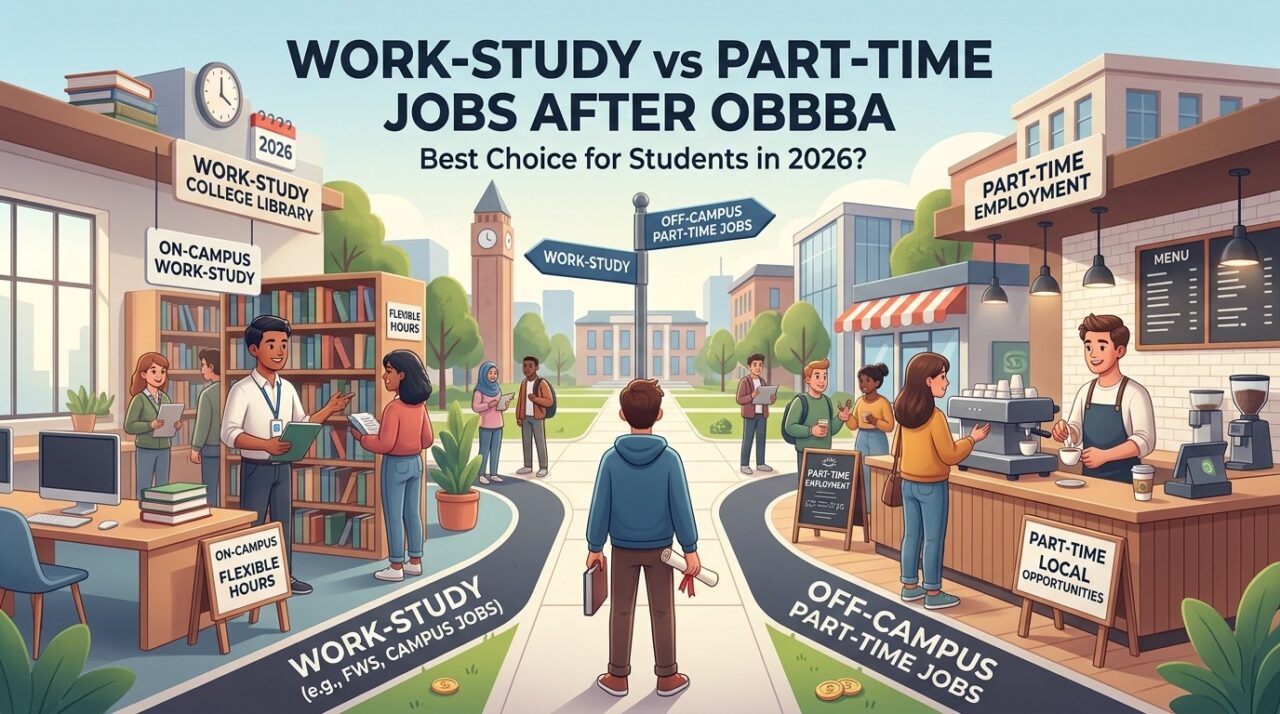
Work-Study vs. Part-Time Jobs After OBBBA: What High School Seniors Should Do in 2026
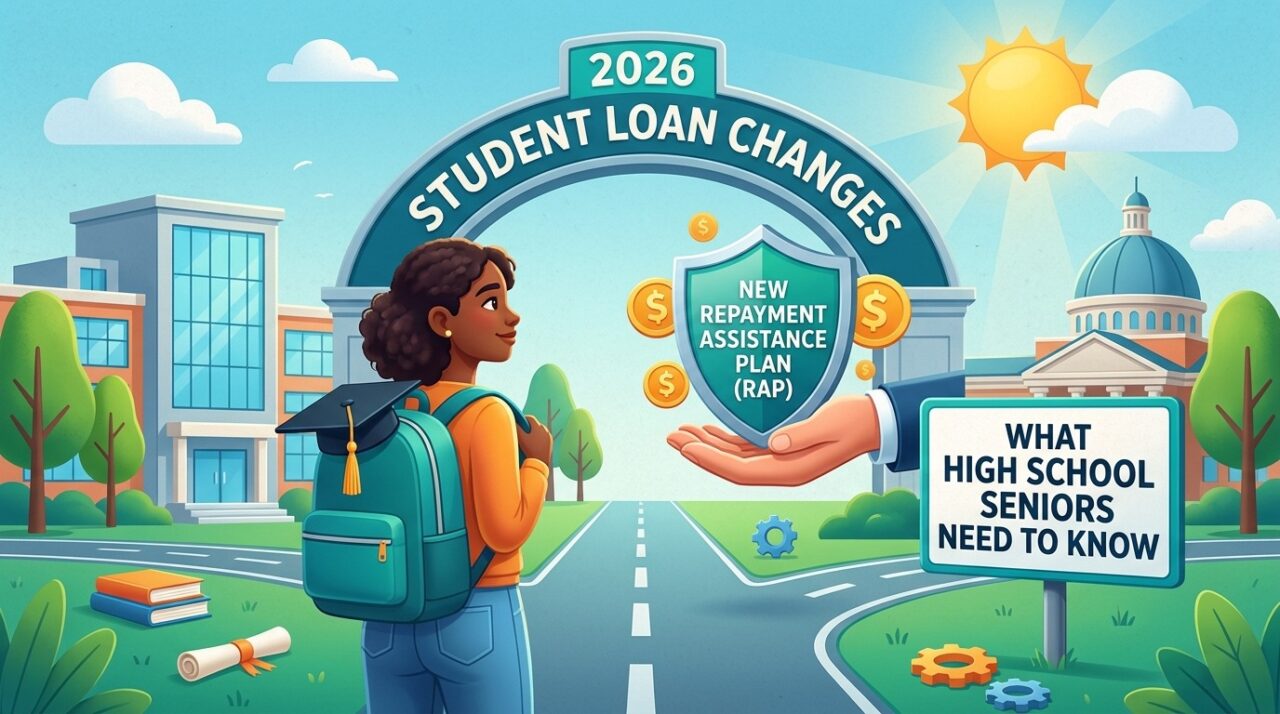
For students starting college in the 2026–27 school year, the question is no longer just, “Should I work while I’m in school?” The better question is, “What kind of work helps me pay for college without quietly making the rest of my financial plan worse?” That question matters more now because the One Big Beautiful Bill Act, usually shortened to OBBBA, was signed into law on July 4, 2025, and most of its higher education changes take effect on July 1, 2026. In plain English, borrowing is getting tighter for many families, especially through Parent PLUS, and loan amounts for students enrolled below full-time will now be prorated by enrollment intensity.
That means student earnings matter more than they used to. If your family cannot simply borrow around a funding gap, the job you choose can affect your daily cash flow, your academic schedule, and even how much aid you keep in future years. Federal Work-Study and regular part-time jobs are not the same thing, even when both pay hourly wages. The differences show up in FAFSA treatment, scheduling, job availability, and how closely the work fits your college life.
The short answer is this: after OBBBA, Federal Work-Study is usually the better first option for students who qualify and can get it, because its earnings are treated more favorably in the aid formula and because it is designed around school. A regular part-time job can still be the right choice, especially if you do not receive Work-Study or need more cash than your award provides, but it should now be chosen more carefully.
First, what OBBBA changed for college families
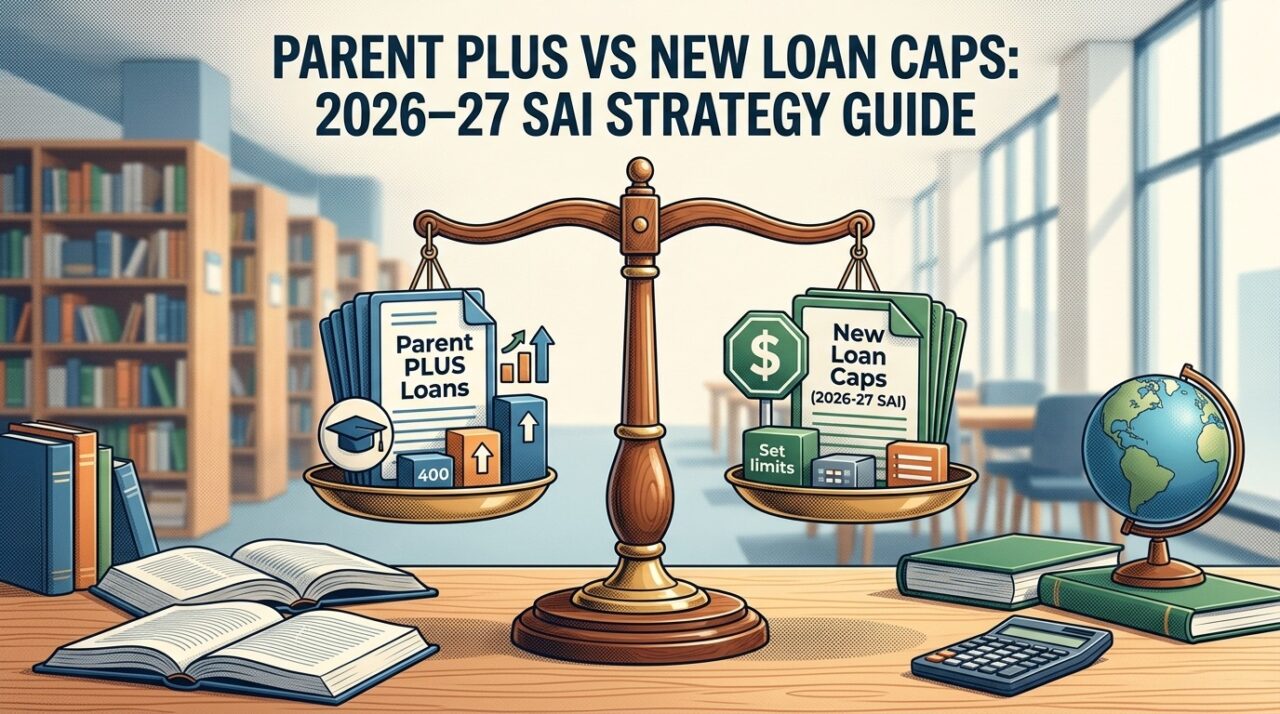
OBBBA did not mainly target student employment. Its biggest higher education effects were aimed at loans and repayment. Current guidance from colleges tracking implementation says undergraduate subsidized and unsubsidized annual loan limits stay the same, but students enrolled below full-time will have loan amounts prorated based on enrollment level. Schools are also warning families that new Parent PLUS borrowing is capped at $20,000 per year per dependent student and $65,000 total per dependent student in the 2026–27 academic year, while new repayment options are narrower than before.
That is a big deal for high school seniors because Parent PLUS used to function as a pressure valve for families who had already maxed out grants, scholarships, savings, and student loans. Starting with the 2026–27 year, that valve is much tighter. If your college costs more than your grants, scholarships, student loans, family cash, and savings can cover, you may need earnings to fill the gap instead of simply expecting a parent loan to do it.
There is another important change in the background. Schools are also telling students that undergraduate loan limits still remain at the familiar $5,500 to $12,500 annual range, depending on year in school and dependency status, and the familiar aggregate range still applies, but those loans now sit inside a broader post-OBBBA borrowing framework. In other words, the law did not make student jobs mandatory, but it made smart cash-flow planning more important.
What Federal Work-Study actually is
Federal Work-Study is a federal aid program accessed through the FAFSA. The 2026–27 FAFSA form explicitly says students use the FAFSA to apply for grants, work-study, and loans, and Federal Student Aid says the FAFSA is the only way to be considered for Federal Work-Study. The same guidance also says students who file early usually have a better chance of receiving Work-Study funds because jobs and funding are limited.
That “limited” part matters. Work-Study is not an entitlement. Even if you have financial need, you are not automatically guaranteed a Work-Study slot every year. Federal Student Aid says awards depend on factors such as financial need, whether you had Work-Study in a prior year, and how much Work-Study funding your school has available. So Work-Study is best understood as a potentially excellent tool, not as something you can safely assume will always be there.
Work-Study jobs are supposed to be part-time. Federal Student Aid says schools set the number of hours you can work, and supervisors are supposed to build the work schedule around your classes. The Federal Student Aid Handbook adds that schools should consider your financial need, the number of hours you can work, your wage rate, and your academic progress when assigning the job. The handbook also says there is no strict statutory hourly cap, but the program is designed for part-time work and students should not often work more than 40 hours in a week.
Pay rules are also more structured than many students realize. Federal Student Aid says Work-Study is paid through a regular paycheck, usually at least monthly, and undergraduate students are paid by the hour. The FSA Handbook says employers must pay at least the federal minimum wage, and if state or local law requires a higher wage, the student must receive that higher amount.
Work-Study money is usually intended for day-to-day expenses like food, transportation, and supplies, although Federal Student Aid says some schools allow students to apply those earnings directly to billed charges such as tuition, fees, or housing with proper authorization. That makes Work-Study especially useful for students who need steady weekly or monthly support rather than one large aid credit at the beginning of the term.
What a regular part-time job is
A regular part-time job is simply employment that is not funded and packaged through the Federal Work-Study system. It might be off campus at a restaurant, retail store, tutoring center, hospital, warehouse, office, or local business. It might also be an on-campus job that is not designated as Work-Study. The major point is that the job is not tied to a federal campus-based aid allocation. Because Work-Study positions are limited and FAFSA-based, regular jobs can widen your options when campus aid runs out or your school never offered you Work-Study in the first place.
Regular jobs also tend to be less structured by the financial aid office. That can be good or bad. It can be good because the employer may offer different shifts, more openings, or work during school breaks. It can be bad because the employer is not required to package the job around your aid award, and the job may not be designed with academic progress as the central priority. By contrast, Federal Student Aid explicitly describes Work-Study as a program intended to help students succeed and says employers and aid offices build schedules around classes.
The biggest financial difference is FAFSA and SAI treatment
This is the most important section in the whole article.
Federal Student Aid says earnings from a Federal Work-Study job are not included as part of your total income when your school calculates your future aid offer. In the 2026–27 Student Aid Index handbook, Work-Study earnings are specifically listed as an income offset for parents, students, and independent students. That is a major advantage because the formula makes room for Work-Study earnings in a way that ordinary taxable wages do not receive by name.
The same handbook also shows why ordinary student earnings matter. For dependent students, the formula provides income allowances and then assesses the student’s available income at 50 percent. In the 2026–27 SAI guide, the dependent student income protection allowance is $11,770 before the formula reaches the student contribution from income step, and the handbook states that once available income is determined, it is multiplied by 50 percent. That means a regular job does not automatically destroy aid, but it can begin to raise the student side of the aid formula once earnings move beyond the protected amounts and other allowances.
That nuance matters. Many students hear “job income can hurt financial aid” and panic. The better statement is this: modest earnings from a regular job may have little or no effect once allowances are applied, but Work-Study earnings are treated more favorably because they are explicitly offset in the federal formula. So when two jobs pay the same amount, Work-Study is usually the more aid-efficient form of student labor.
This is exactly why OBBBA changes the calculation in a practical way even though it did not directly rewrite Work-Study eligibility. When borrowing space tightens, families should care more about whether a dollar earned today also protects tomorrow’s aid offer. Current school guidance says the new law does not change how students qualify for Federal Work-Study, and Work-Study remains tied to financial need and school packaging policies. In the post-OBBBA environment, that unchanged benefit becomes more valuable.
The second biggest difference is how the job fits college life
Federal Student Aid says Work-Study jobs are intended to be part time, your school sets your allowed hours, and the schedule is built around classes. For a first-year student still learning college rhythms, that design matters. A student who commutes, is adjusting to college writing loads, or is taking gateway STEM courses may benefit from a job structure that is specifically meant not to overrun academics.
Regular part-time jobs can still work well, especially for students with strong time management or a clear need for evening, weekend, or holiday hours. But they can also bring longer commutes, less academic flexibility, and more schedule volatility. Federal Student Aid does not promise that Work-Study is easy, but it does present it as a school-centered program, not just a paycheck. That design difference is one reason Work-Study often fits freshmen better than a random outside job, even when the hourly wage looks similar.
So which is smarter after OBBBA?
For most high school seniors who receive a Federal Work-Study offer, the smartest order of operations is this: take Work-Study first, then add a regular job only if you still have a real gap after reviewing your aid offer, family contribution, and living costs. That strategy makes sense because Work-Study preserves future aid treatment better, is built around school, and gives you earnings without increasing dependence on a tighter post-OBBBA loan environment.
If you did not receive Work-Study, a regular part-time job is still a completely rational move. In fact, for some students it will be necessary. The mistake is not taking a regular job. The mistake is taking one without checking three things first: how many hours you can realistically handle, whether transportation will eat the paycheck, and whether your college’s final aid offer leaves a gap that really needs wage income rather than a cheaper school choice. Federal Student Aid says your official aid offer is your best source of truth because it shows the exact aid types and amounts you were offered.
When Work-Study is probably the better choice
Work-Study is usually the better choice if you are a first-year student, have significant financial need, want a job that is more likely to respect your class schedule, and expect to rely on aid heavily in future years. It is also especially attractive if your family may be squeezed by the new Parent PLUS caps or if you are not sure you will stay full-time every term, since OBBBA-linked guidance says loans for students below full-time will be prorated. In those cases, preserving aid efficiency matters more.
Work-Study is also strong for students who want lower-friction employment. Federal Student Aid notes that some Work-Study jobs are community-based, and the FSA handbook shows that schools devote part of their Work-Study framework to community service jobs such as reading tutoring and family literacy projects. That can produce a job that is closer to service, campus life, or future professional goals than a random off-campus shift job.
When a regular part-time job may be the better choice
A regular part-time job may be the better choice if your school did not offer Work-Study, if Work-Study jobs are already gone, or if the available Work-Study hours are too limited to cover your real needs. Federal Student Aid is clear that jobs are limited and funding is not guaranteed each year. So even though Work-Study is attractive on paper, it is not always available in the real world.
A regular job may also be the better choice if you can keep earnings modest, stay under a manageable hour level, and need more control over where or when you work. Because the 2026–27 dependent student income protection allowance is $11,770 before the 50 percent assessment step, some students can earn a reasonable amount from regular work before seeing meaningful FAFSA pressure, especially after other allowances. That does not eliminate the aid issue, but it does mean the right answer is not always “never take a normal job.”
The best hybrid strategy for many students
For many students, the best answer is not Work-Study or a regular job. It is Work-Study first, regular job second, but only in a controlled way.
A smart hybrid approach looks like this: accept Work-Study if offered, use it for predictable weekly expenses, keep hours at a level that protects grades, then add seasonal or low-hour regular work only if your budget still does not balance. That lets you capture the aid advantage of Work-Study while still acknowledging that Work-Study awards and campus hours are often too small to solve the entire college affordability problem.
This hybrid model also lines up with how real college budgets work. Federal Student Aid says Work-Study pay is usually for day-to-day needs such as food, transportation, and supplies. That means you should not confuse a Work-Study award with a giant tuition solution. It is a support stream, not magic. If your family still faces a major gap after grants, scholarships, the student loan, savings, and Work-Study, the deeper question may be whether the college is financially realistic.
Mistakes students should avoid in 2026
The first mistake is treating Work-Study as guaranteed money before you actually secure a position. A Work-Study line on an offer is not the same as having a job in hand. Federal Student Aid says students often still need to find, apply, and interview for positions on their own.
The second mistake is assuming any job that pays more per hour is automatically better. A higher hourly wage can still be the wrong financial move if the commute is expensive, the job disrupts coursework, or the earnings treatment is less favorable for future aid than Work-Study. This is exactly why the Work-Study versus regular-job question should be treated as a total-aid strategy question, not just a wage question.
The third mistake is failing to file the FAFSA early because you assume your family will not qualify for much aid. The 2026–27 FAFSA form applies to grants, work-study, and loans, and Federal Student Aid says students who file early usually have a better chance of receiving Work-Study funds. For fall 2026 enrollment, the form opened October 1, 2025.
The fourth mistake is making the job decision without first reading the actual aid offer. Federal Student Aid says the aid offer is the best source of truth because it shows the exact aid you are being offered by that school. Families should compare colleges using the real offer, not hope.
Practical action plan for high school seniors
If you are choosing colleges for fall 2026, file the FAFSA, review whether Work-Study appears in your package, and ask each college’s financial aid office these questions: Did I receive Federal Work-Study? How much is the award? How do I secure an actual position? What is the typical hourly pay? Can earnings be applied to my student account? What happens if I do not find a Work-Study job immediately? Those are better questions than simply asking, “Do you have jobs?” because they force the school to explain the real structure.
Then build a simple budget. Put tuition and billed housing on one side. Put grants and scholarships on the other. Add the federal student loan only if needed. Add Work-Study as living-expense support, not as guaranteed upfront tuition coverage. If a large gap remains and your family was counting on Parent PLUS, remember that current guidance says new Parent PLUS borrowing is capped at $20,000 per year and $65,000 per student starting in 2026–27.
Finally, be honest about academic bandwidth. A job is only helpful if it does not turn your first year into a recovery project. Federal Student Aid explicitly ties Work-Study scheduling to academic progress and says students must keep up satisfactory academic progress to remain eligible. That is one more reason Work-Study is often the safer starting point for new college students.
Final verdict
After OBBBA, Federal Work-Study is usually the stronger first choice for high school seniors who qualify, because it is FAFSA-based, built around school, and treated more favorably in the federal aid formula. A regular part-time job is still useful and sometimes necessary, but it should now be viewed as a secondary tool, not the default winner. The tighter Parent PLUS environment and proration of less-than-full-time borrowing make aid-efficient earnings more valuable than they were before.
The smartest sentence for 2026 is this: if you can get Work-Study, start there; if you cannot, take a regular job carefully and keep your eyes on the full aid picture.
FAQ
Does OBBBA eliminate Federal Work-Study?
No. Current school guidance says the new law does not change how students qualify for Federal Work-Study, and Work-Study remains tied to FAFSA-based financial need and institutional packaging.
Do Work-Study earnings count against future aid?
Federal Student Aid says Work-Study earnings are not included as part of total income when your future aid is calculated, and the 2026–27 SAI handbook lists Work-Study as an income offset in the formula.
Can a regular part-time job still make sense?
Yes. If you do not receive Work-Study, or if your Work-Study award is too small, a regular part-time job can still help. The key is to keep hours manageable and remember that regular student earnings can matter in the aid formula after allowances are applied.
Do I need the FAFSA to get Work-Study?
Yes. Federal Student Aid says the FAFSA is the only way to be considered for Federal Work-Study.
What is the most important document when comparing schools?
Your actual financial aid offer. Federal Student Aid says it is your best source of truth because it shows the exact aid types and amounts being offered by that school.
Official Links for Readers
- 2026–27 FAFSA Form
- Federal Student Aid: 8 Things You Should Know About Federal Work-Study
- FSA Handbook: Federal Work-Study Program
- How to Evaluate Your Aid Offers
- Student Aid Estimator
- StudentAid.gov OBBBA Updates
Suggested Internal Links for ScholarshipsandGrants.us
- Parent PLUS vs. New Loan Caps & SAI Strategies
- Pell Grant Changes for 2026–27: What Students Need to Know
- FAFSA Delays & College Deposit Deadlines
- How to Appeal Your Financial Aid Offer: Templates & Deadlines (2026)
- Satisfactory Academic Progress (SAP): How to Keep Your Aid in 2026