How Much Financial Aid Can I Get? Complete 2026 Guide for High School Seniors
If you are asking, “How much financial aid can I get?” the honest answer is this: there is no single number. Some students get only a federal loan offer. Some get a Pell Grant plus state aid. Others get large college grants and scholarships that cut the price dramatically. Your final amount depends on your college’s total cost, your FAFSA information, your Student Aid Index (SAI), whether your school gives its own grant money, whether you qualify for state aid, and whether you win outside scholarships. Federal Student Aid also says there is no flat income cutoff for federal student aid, and your actual aid offer from each college is the document that tells you what you can really get.
Quick answer: the main federal numbers for a typical first-year student
For a high school senior starting college in the 2026–27 school year, the biggest federal aid numbers look like this:
- Federal Pell Grant: up to $7,395 for 2026–27.
- Federal Supplemental Educational Opportunity Grant (FSEOG): $100 to $4,000 per year at participating schools, with priority often going to students with exceptional need.
- Federal Work-Study: no fixed national maximum; the amount varies by school, you earn at least the current federal minimum wage, and you cannot earn more than your work-study award.
- Federal Direct Loans for first-year undergraduates: up to $5,500 for dependent students and up to $9,500 for independent students, with only part of that amount allowed to be subsidized.
That means the FAFSA does not automatically hand every student a giant check. In real life, a package might be Pell + state grant + school grant + work-study + a federal loan, or it might be only a loan, or it might be mostly college scholarship money. Federal Student Aid defines an aid package as the mix of federal, state, private, and school aid in your offer.
What students actually face by college type
The most useful way to think about aid is not just “How big is the award?” but “How much of the full cost does it cover?” College Board’s 2025–26 data show very different price levels across sectors:
- Public two-year colleges: average full student budget $21,320; average grant aid $5,340; estimated average net cost of attendance $15,980. On average, first-time full-time students at public two-year colleges have been receiving enough grant aid to cover tuition and fees since 2009–10.
- Public four-year in-state colleges: average full student budget $30,990; average grant aid $9,650; estimated average net cost of attendance $21,340; average net tuition and fees about $2,300.
- Private nonprofit four-year colleges: average full student budget $65,470; average grant aid $28,090; estimated average net cost of attendance $37,380; average net tuition and fees about $16,910.
The big lesson is simple: sticker price is not the real price. A college with a high published price can still become affordable if it gives strong grant aid. A college with lower tuition can still feel expensive once housing, food, transportation, books, and other expenses are added. Federal Student Aid and NCES both push students to focus on net price, not just the published price.
What the national data say students actually receive
IPEDS data for 2022–23 help show what first-time, full-time students were getting across different sectors:
- At public four-year colleges, 85.3% of first-time, full-time students received some financial aid. Among recipients of each aid type, the average federal grant was $5,546, the average state/local grant was $5,026, the average institutional grant was $6,652, and the average student loan was $7,643.
- At private nonprofit four-year colleges, 89.8% received some aid, and 84.1% received institutional grants or scholarships. Among those institutional-grant recipients, the average award was $26,000.
- At public two-year colleges, 81.2% received some aid, and 57.2% received federal grants. Among those federal-grant recipients, the average federal grant was $5,203.
This is why the college itself matters so much. At some schools, the school’s own grant money is the biggest part of the package. FAFSA opens the door, but college grant policy often determines whether a school feels affordable or not.
How colleges figure out your number
Here is the simplest way to understand the system.
First, you file the FAFSA. Federal Student Aid says colleges use your FAFSA data to determine your federal aid eligibility, and many states and colleges also use FAFSA data to award their own aid. After you submit, you receive a FAFSA Submission Summary.
Second, your FAFSA creates a Student Aid Index (SAI). The SAI is a formula-based number that ranges from -1500 to 999999. Federal Student Aid is very clear that SAI is not the dollar amount of aid you will receive, not a bill, and not your final aid offer. In general, a lower SAI means a higher likelihood of need-based aid, including a stronger chance of qualifying for the maximum Pell Grant if the rest of the rules are met.
Third, colleges build an aid package using their own costs and policies. Your aid offer can include grants, scholarships, work-study, and loans. Federal Student Aid says your aid offer is your best source of truth because it shows the exact amounts and types of aid a school is offering you.
The 5 biggest factors that change how much aid you get
1) Your college’s cost of attendance
Aid amounts are measured against the school’s total budget, not just tuition. That budget can include tuition, fees, housing, food, books, supplies, transportation, and personal expenses.
2) Whether the college gives its own grant money
This is a huge factor, especially at private nonprofit colleges, where institutional grants are common and often large.
3) Your FAFSA results
Income matters, but so do family size, tax filing status, dependency rules, and other formula details. Federal Student Aid says there is no universal income cutoff for federal aid.
4) Whether you file early and meet every deadline
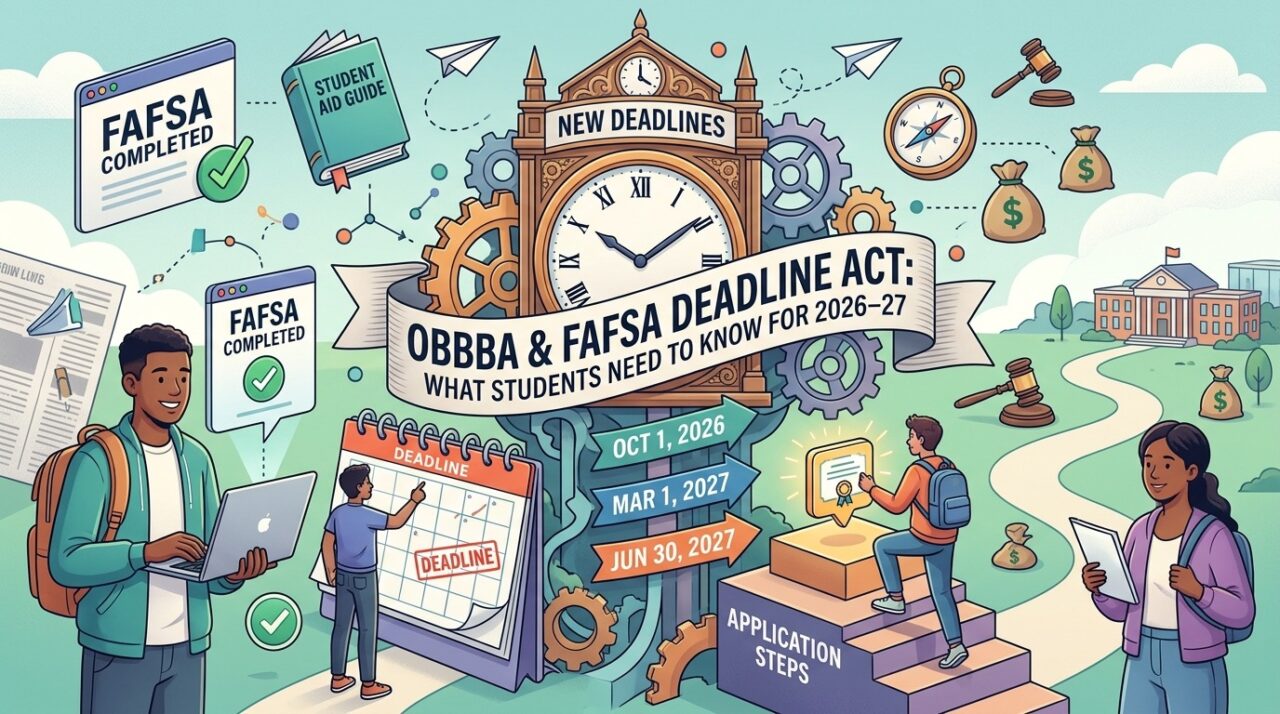
For the 2026–27 FAFSA, the federal deadline is June 30, 2027, but state and school deadlines can be much earlier. Federal Student Aid repeatedly recommends filing as early as possible because some aid is limited.
5) Whether you complete every required step
Federal Student Aid says each required contributor must provide information, consent and approval for tax data transfer, and a signature. If required consent is missing, the student is not eligible for federal aid.
How to estimate your own financial aid before offers arrive
The smartest way to predict your real number is to do these steps in order:
Step 1: File the FAFSA early
Use the official FAFSA application and watch the official FAFSA deadlines page. Filing early matters because many states and colleges do not wait until the federal deadline to run out of money.
Step 2: Use each college’s net price calculator
NCES says Title IV colleges that enroll first-time, full-time undergraduates are required to post a net price calculator, and net price is defined as cost of attendance minus grants and scholarships.
Step 3: Check College Scorecard
The official College Scorecard can show average annual cost and net price estimates by family income, which helps you compare colleges on a more realistic basis.
Step 4: Compare your actual aid offers by net price
Federal Student Aid says to compare net price, not just the size of the scholarship line. A school that offers a bigger scholarship headline is not automatically cheaper.
Step 5: Appeal if your family’s situation changed
If the income on your FAFSA no longer reflects your family’s current reality because of job loss, pay cuts, divorce, death in the family, or major medical costs, StudentAid.gov says you can contact the financial aid office and request an aid adjustment, often called professional judgment.
Common mistakes students make
Students often make four mistakes that cost them money.
The first is treating loan eligibility like free money. Grants and scholarships usually do not have to be repaid. Loans do. Work-study is earned through a job, not handed to you upfront like a grant.
The second is comparing colleges by tuition only instead of the full cost of attendance. That leaves out housing, food, books, transportation, and other costs that can change the budget by thousands of dollars.
The third is filing FAFSA late and missing limited state or institutional aid. Federal Student Aid explicitly warns that state and school deadlines can arrive much sooner than the federal deadline.
The fourth is assuming family income alone decides everything. Federal Student Aid says it does not. There is no flat federal income cutoff, and other formula inputs matter.
FAQ
Is there a maximum income to qualify for financial aid?
No single federal income ceiling applies to everyone. Federal Student Aid says there is no income cutoff for federal student aid. Income matters, but so do family size, tax filing status, dependency rules, and the school’s cost.
Does FAFSA tell me exactly how much money I will get?
No. FAFSA helps determine eligibility, and you will then receive a FAFSA Submission Summary. Your college’s aid offer is what tells you the actual amounts that school is offering.
Can federal aid alone cover everything?
Sometimes it can cover a large share, especially at lower-cost public two-year colleges where grant aid has covered tuition and fees on average. But at many four-year schools, federal aid alone does not cover the full cost of attendance, so students often still need school grants, state aid, scholarships, savings, earnings, or carefully limited borrowing.
Do I need to file FAFSA every year?
Yes. Federal Student Aid says students should apply for federal student aid before each year of college or career school.
Can Pell Grant money be used in summer?
Sometimes, yes. Federal Student Aid says some students may receive up to 150% of their yearly Pell Grant award if they attend an additional term, such as summer.
Bottom line
The best answer to “How much financial aid can I get?” is not one magic number. For 2026–27, the federal Pell ceiling is $7,395, first-year federal loans are capped, work-study varies, and the rest of the story depends heavily on the college, the state, and whether the school gives strong institutional grant aid. The smartest students do three things: file FAFSA early, run each school’s net price calculator, and compare actual aid offers by net price, not sticker price.
Official resources
- FAFSA application
- 2026–27 FAFSA deadlines
- Federal Pell Grant information
- Federal student loan limits
- Federal Work-Study information
- College Scorecard
- NCES Net Price Calculator Center
- Net Price Calculator information from NCES
Related articles on ScholarshipsAndGrants.us
These related ScholarshipsAndGrants.us pages were live at the time of drafting and fit naturally as internal links for this topic.
- What Is Financial Aid? Complete 2026 Guide for High School Seniors
- FAFSA 2026–27: What You Need On (or Before) Release Day
- Student Aid Index (SAI) in 2026: The New Backbone of Need-Based College Aid
- Financial Aid for College: Complete Guide for High School Seniors
- Compare Financial Aid Offers: Complete 2026 Guide
- What Is Need-Based Financial Aid? Complete 2026 Guide
- Difference Between Grants and Scholarships (2026 Guide)
- FAFSA Contributor: Complete 2026–27 Guide for High School Seniors