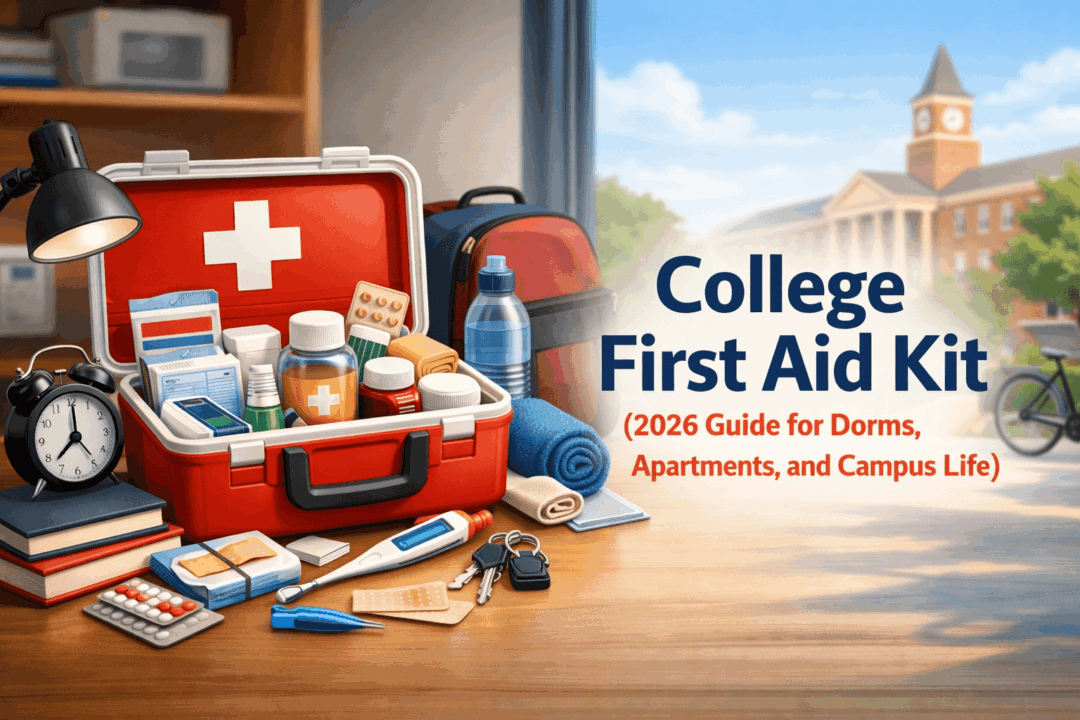
College First Aid Kit (2026 Guide for Dorms, Apartments, and Campus Life)
A college first aid kit is one of the smartest things a student can pack before move-in day. It is not just for cuts and scrapes. A well-built dorm kit helps with minor injuries, fever, sore throat, dehydration, allergy flare-ups, stomach bugs, nosebleeds, and other common campus problems that often happen at night, during exams, or when the nearest pharmacy is not convenient. The American Red Cross specifically recommends a college first aid kit customized with personal medications, over-the-counter medicines, emergency phone numbers, and provider-recommended items.
College students live in close quarters, share bathrooms, touch many common surfaces, and often try to “wait things out” when they feel bad. That is why a small, organized kit matters. CDC says handwashing is one of the most effective ways to prevent the spread of germs, and respiratory viruses still cause millions of illnesses and thousands of hospitalizations and deaths in the United States each year. A first aid kit does not replace a clinic, but it does buy time, reduce stress, and help a student respond fast and safely.
Medication safety is also a big reason to take this seriously. CDC notes that every year, two million people end up in the hospital because of drug-related injuries, including medication errors, allergic reactions, adverse reactions, and overdoses. Poison Control’s national resource also reports that medications make up the largest poison category in its case data. In other words, a college first aid kit is not just about having supplies. It is about storing, labeling, and using medicine correctly.
What a good college first aid kit should do
The best college first aid kit has three jobs.
First, it should handle minor wound care: cuts, blisters, scraped knees, shaving nicks, or small kitchen burns.
Second, it should cover basic symptom relief: fever, headache, allergies, upset stomach, cough, or sore throat.
Third, it should support personal health needs: prescription medications, an inhaler, contact lens supplies, glucose tablets, an epinephrine auto-injector, or anything else a student’s clinician says they should always keep nearby. The Red Cross says a college kit should be personalized with prescription medicines, over-the-counter medicines, emergency numbers, and other provider-recommended items.
The essential college first aid kit checklist
For most students, a medium zip pouch or small handled case is enough. Start with these essentials:
1) Wound and injury basics
-
Adhesive bandages in assorted sizes
-
Sterile gauze pads
-
Gauze roll or roller bandage
-
Medical tape
-
Antibiotic ointment packets or small tube
-
Antiseptic wipes
-
Non-latex disposable gloves
-
Elastic bandage for sprains
-
Instant cold pack
-
Tweezers
-
Small scissors
These are consistent with the Red Cross general first aid kit recommendations and the Red Cross college-student checklist.
2) Illness and symptom tools
-
Digital thermometer
-
Hand sanitizer with at least 60% alcohol
-
Disposable masks
-
Hydrocortisone cream for minor itching or rash
-
Saline or basic eye drops if a student commonly uses them
-
Tissues
The Red Cross includes a thermometer, hand sanitizer, masks, hydrocortisone cream, and common illness-support items in its college checklist, and CDC says soap-and-water handwashing is best, but when that is not available, an alcohol-based sanitizer with at least 60% alcohol is appropriate.
3) Over-the-counter medicine module
A student should bring only medicines they understand how to use and will actually need. Strong categories for a dorm medicine module include:
-
pain relief/fever reducer
-
antihistamine for allergies
-
cold or cough medicine
-
anti-diarrheal medicine
-
throat lozenges
-
any clinician-recommended personal medicine
The Red Cross specifically names pain relief, anti-diarrhea, cold/cough medicines, and antihistamines as useful college first aid kit additions.
4) Personal health items
Depending on the student, this section may be the most important part of the entire kit:
-
prescription medicines
-
rescue inhaler
-
epinephrine auto-injector
-
migraine medicine
-
glucose tablets or gel
-
menstrual products
-
spare glasses or contact lens case/solution
-
a written list of allergies, medications, and emergency contacts
The Red Cross advises including personal medications, emergency phone numbers, and other items recommended by a health care provider.
5) Information tools
-
a simple first aid guide card
-
the campus health center phone number
-
campus security number
-
local urgent care address
-
health insurance card copy or photo
-
roommate or parent emergency contact
-
Poison Control number and website
-
988 and 911 information
The Red Cross includes emergency instructions in a standard first aid kit and recommends learning how to use the supplies, not just packing them.
The smartest way to organize the kit
A college first aid kit works best when it is divided into small sections instead of one messy pouch.
Use one section for wounds and bandages, one for medicines, and one for personal prescriptions and emergency info. This reduces mistakes when a student is tired, sick, or helping a roommate. That structure is a practical dorm-friendly way to apply Red Cross guidance to customize a kit with both first aid supplies and personal medical items.
Medicine safety rules every student should know
This is where many students get sloppy, and it matters.
CDC recommends storing prescription medicine in its original packaging with the safety lock tightened and secured. MedlinePlus, from the National Library of Medicine, also says to keep medicine in the original container and notes that heat, air, light, and moisture can damage medicine. It specifically warns that bathrooms can be a poor storage location because heat and moisture may reduce potency or make medicines go bad faster.
That means a dorm first aid kit should not become a random bag of unlabeled pills. Keep tablets and capsules in their original bottles or blister packs whenever possible. Do not mix medicines together “to save space.” Keep the medicine section dry, cool, and easy to identify.
Students should also check expiration dates. The Red Cross says first aid kits do expire because creams, gels, oral medications, and even sterile supplies can lose effectiveness or integrity over time. Adhesives weaken, gloves and bandages degrade, and sterile packaging can fail.
A special warning about acetaminophen
One of the easiest college mistakes is doubling up on cold medicine and pain medicine without realizing both contain acetaminophen. FDA warns that taking too much acetaminophen can cause overdose and severe liver damage, and that students should not take more than the label says or combine multiple acetaminophen-containing products carelessly. This matters because acetaminophen is found in many cold, cough, and flu products.
For a college first aid kit, the safe rule is simple: read every label every time. If a medicine says “acetaminophen” on the front or drug facts panel, count it. Do not guess.
Dorm-friendly infection and illness add-ons
A modern college first aid kit should do more than treat wounds. It should help reduce spread in shared living spaces.
CDC recommends staying up to date on immunizations, practicing good hygiene, cleaning commonly touched surfaces, and staying home and away from others when sick with a respiratory illness. CDC also says clean hands are one of the best ways to avoid getting sick and prevent spreading germs to others.
That is why a student kit should include:
-
hand sanitizer
-
tissues
-
masks
-
a thermometer
-
surface wipes or a small cleaning item stored separately from medicine
This part of the kit is especially useful during flu season, move-in season, and finals week, when students often keep pushing through symptoms.
What not to put in a college first aid kit
A strong kit is not the same as an oversized one. Avoid packing:
-
expired medicines
-
damaged medicines that changed color, smell, or texture
-
loose unlabeled pills
-
large quantities of medicine you do not normally use
-
supplies you do not know how to use safely
-
anything stored in a damp bathroom cabinet for months
MedlinePlus advises not to use damaged medicine and warns that heat and moisture can damage medications. The Red Cross also says out-of-date contents should be replaced.
How to maintain the kit during the semester
A college first aid kit is not a one-time packing task. It needs maintenance.
Check it at move-in, fall break, winter break, and spring break. Replace used bandages, expired creams, empty sanitizer, and out-of-date medicines. The Red Cross recommends checking kits regularly and replacing used or expired contents. FDA says the best way to dispose of most expired or unused medicines is through a drug take-back program or mail-back option.
If a student has controlled medications or narcotic prescriptions, CDC recommends securing them carefully, ideally in a locked drawer or cabinet. That is especially wise in shared housing.
When self-care is enough, and when it is not
A college first aid kit is for minor problems and short-term support. It is appropriate for simple cuts, blisters, mild cold symptoms, minor headache, a basic stomach issue, or a small sprain while the student decides whether they need the campus clinic.
It is not enough for severe allergic reactions, chest pain, difficulty breathing, major bleeding, suspected broken bones, confusion, severe dehydration, overdose, or mental health crisis. Poison Control says if someone collapses, has a seizure, has trouble breathing, or cannot be awakened, call 911 immediately. The 988 Lifeline says students can call, text, or chat 24/7/365 for mental health struggles, emotional distress, or substance use concerns.
The best official websites to link in your article
These are solid, trustworthy resources to include in a WordPress post:
These links point to national organizations and official health authorities with current public guidance.
Copy-paste summary for the end of the post
A college first aid kit should be small, organized, and built for real campus life. The best version includes bandages, gauze, tape, gloves, antibiotic ointment, antiseptic wipes, an elastic bandage, instant cold pack, thermometer, hand sanitizer, masks, basic over-the-counter symptom relief, and any personal prescription items a student needs. Medicines should stay in original containers, be stored in a cool dry place, and be checked for expiration every semester. Expired or unused medicines should be disposed of through take-back or mail-back programs when possible. For poisoning help, use Poison Control. For mental health crisis support, use 988. For severe emergencies, call 911.
Bottom line
For a high school senior heading to college, a first aid kit is not a “nice extra.” It is basic readiness. It helps students handle small problems early, avoid medication mistakes, respond faster in a shared living environment, and know when to escalate to professional care. The best college first aid kit is simple, labeled, personalized, and actually maintained.