College Financial Aid Requirements: Complete Guide for High School Seniors
Paying for college starts with understanding the rules. The good news is that most students are not shut out of aid. In 2023–24, 85.1% of full-time, first-time undergraduates received some form of financial aid. The bigger issue is usually not whether aid exists, but whether a student meets the requirements, files the right forms on time, and responds quickly when a college asks for more information.
That matters because college costs are still significant even after grants. NCES reports that in 2021–22 the average net price for first-time, full-time students was about $15,200 at public four-year institutions and $29,700 at private nonprofit four-year institutions. College Board also reports that average aid per full-time-equivalent undergraduate student in 2024–25 was $16,810 from grants, loans, tax benefits, and work-study combined. In other words, financial aid is not a side issue. It is a core part of how families make college affordable.
What “college financial aid requirements” really means
When students search for college financial aid requirements, they are usually talking about five separate things:
-
Federal eligibility rules for grants, work-study, and federal loans.
-
FAFSA filing requirements, including deadlines, contributor rules, and consent for tax-data transfer.
-
State aid requirements, which may include earlier deadlines or separate state applications.
-
College-specific requirements, such as the CSS Profile, IDOC uploads, or school forms.
-
Ongoing eligibility requirements after enrollment, such as satisfactory academic progress.
A student can qualify for aid in theory and still lose money in practice by missing just one of those steps. That is why families should think of financial aid as a process, not a single form.
Requirement #1: Meet the basic federal student aid eligibility rules
To receive federal student aid, a student generally must meet several baseline rules. The most important ones are these: the student must be a U.S. citizen or eligible noncitizen, have a valid Social Security number unless they are from the Freely Associated States, be enrolled or accepted for enrollment in an eligible degree or certificate program, maintain satisfactory academic progress, provide consent and approval for federal tax information transfer into the FAFSA, sign the certification statement, and show they are qualified to pursue postsecondary education by having a high school diploma, GED or other recognized equivalent, approved homeschool completion, or an ability-to-benefit alternative.
For immigration status, the federal rule is strict: students who are not U.S. citizens or eligible noncitizens are not eligible for federal student aid. Federal guidance also notes that students with DACA or certain visa categories still may want to complete aid applications because they can sometimes qualify for state or institutional aid, even though they cannot receive federal aid.
This is the first major point families should understand: meeting admissions requirements for college is not the same thing as meeting aid requirements. A student can be admitted to a school but still need to satisfy a separate set of federal, state, and school financial aid rules.
Requirement #2: Submit the FAFSA correctly and on time
For most U.S. high school seniors, the FAFSA is the main gateway to aid. The 2026–27 FAFSA is used for college attendance between July 1, 2026 and June 30, 2027. Federal Student Aid says students can submit it as early as October 1, 2025. The federal deadline is June 30, 2027 at 11:59 p.m. Central Time, and corrections or updates must be submitted by September 12, 2027.
Waiting that long is usually a mistake. The FAFSA form itself explains that state and college deadlines may be as early as October 1, 2025, and some states award aid while funds last. Federal Student Aid also warns that missing a state or school priority date can reduce eligibility for grants and campus-based aid, even if the student is still on time for federal aid.
The FAFSA is also free. Families should never pay a company just to submit it. Official FAFSA help is available through Federal Student Aid and school financial aid offices at no charge.
Requirement #3: Every required contributor must participate
One of the most important FAFSA rules today is the contributor system. A contributor is a person who must provide information, consent to tax-data transfer, and sign part of the FAFSA. Depending on the student’s situation, that can include the student, the student’s spouse, a biological or adoptive parent, or a parent’s spouse. Each contributor needs their own StudentAid.gov account. Accounts cannot be shared.
Federal Student Aid is unusually clear on the consent rule: if the student or required contributors do not provide consent and approval for federal tax information transfer, the student will not be eligible for federal student aid. The FAFSA is not considered complete until all required contributors provide their information, consent, approval, and signatures.
For dependent students, choosing the right parent matters. Federal Student Aid provides a Who’s My FAFSA Parent? tool because divorced, separated, remarried, and blended-family situations are common sources of error. The student invites one parent first; that parent may then be prompted to invite the other parent or spouse if needed.
For most high school seniors, dependency status is simple: they are usually dependent unless they meet an independent-student condition such as active-duty military service, veteran status, supporting children or other dependents, foster care history, orphan/ward-of-court status, legal emancipation, legal guardianship, or certain homelessness or unusual-circumstances findings. Those categories are listed directly on the 2026–27 FAFSA.
Requirement #4: Be ready with the right documents
The FAFSA is easier when families gather documents first. Federal Student Aid’s current checklist says students need:
-
A StudentAid.gov account for the student, plus one for each required contributor.
-
The student’s and contributors’ federal income tax information, generally using 2024 tax data for the 2026–27 FAFSA.
-
Records of child support received, if applicable.
-
Information on cash, checking, and savings.
-
Information on certain investments and business/farm assets.
-
A list of the colleges the student may attend.
The asset section is especially important in 2026–27 because the FAFSA rules changed. The current FAFSA form says students and parents should not report the value of a family-owned business with 100 or fewer full-time or equivalent employees, a family farm on which the family resides, or a family-owned commercial fishing business and related expenses. That is a meaningful simplification for many small-business and farm families.
Students also should understand what is not treated like an asset in the FAFSA cash-and-investment questions. The form instructions say not to include student aid, retirement accounts, or the home you live in in those specific asset fields.
Requirement #5: Understand how the Student Aid Index works
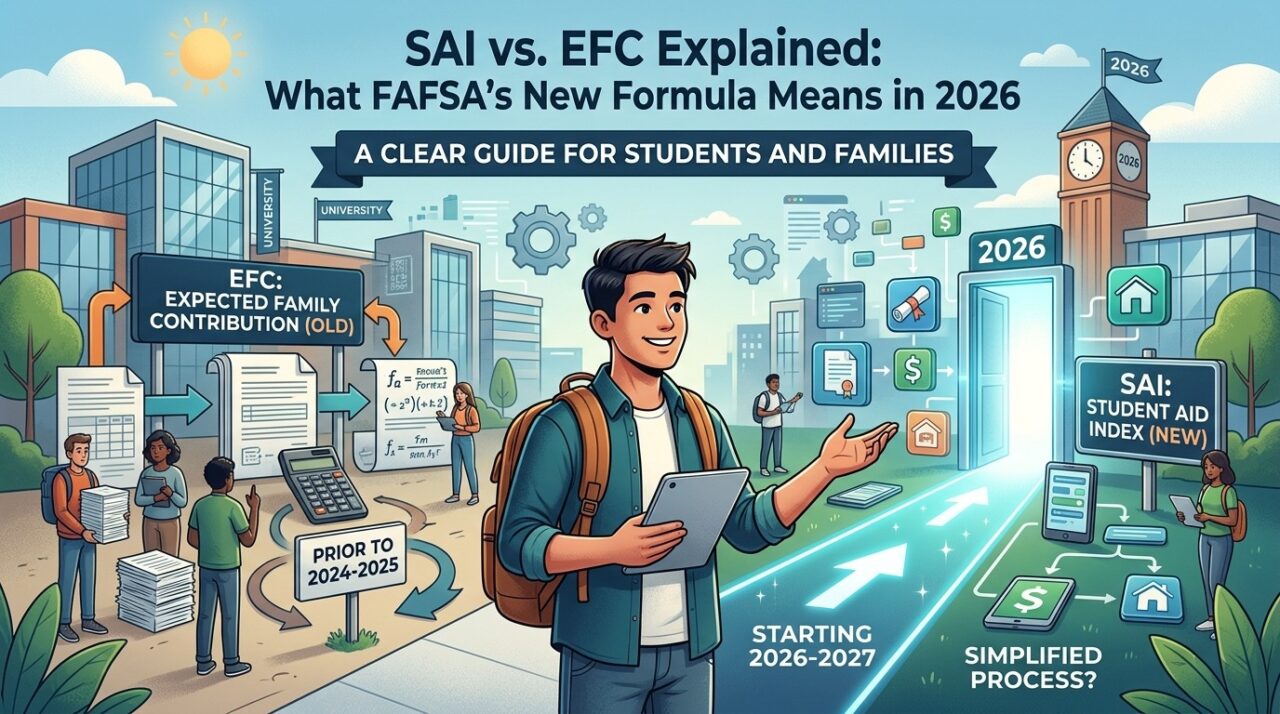
The FAFSA now produces a Student Aid Index (SAI), which schools use to determine aid eligibility. Federal Student Aid says financial need is the difference between a school’s cost of attendance and the student’s SAI. A lower or even negative SAI reflects greater financial need, but the SAI is not the amount the family must literally pay.
This matters because families often misread the number. The SAI is an index used to build an aid package. It is one input, not a final bill. Colleges can still offer different grant amounts because each school has its own cost of attendance and its own institutional aid policies.
For students hoping for Pell, the Pell program remains a major federal grant source. Federal Student Aid states that the maximum Pell Grant for 2026–27 is $7,395.
Requirement #6: Complete any extra state or college forms
The FAFSA alone is not always enough. Many states use FAFSA data for their own grant programs, but some require a separate state application. Federal Student Aid explicitly advises students to complete any state-specific step after submitting the FAFSA.
Many colleges, especially private colleges that award their own institutional need-based aid, also require the CSS Profile. College Board describes the CSS Profile as the application used by colleges and scholarship programs to award non-federal institutional aid.
The CSS Profile has its own requirements. Students generally need the most recent federal tax returns, W-2s, records of current-year income, untaxed income and benefits, assets, and bank statements. Some colleges also require documents through IDOC, where families upload financial documents for participating schools.
For divorced or separated families, some colleges require information from both the custodial and noncustodial parent through the CSS Profile process. That is different from the FAFSA and catches many families off guard.
Cost can matter too. College Board says the CSS Profile costs $25 for the initial application to one institution and $16 for each additional institution, but domestic undergraduates may qualify for a fee waiver, including many students with family adjusted gross income up to $100,000.
Requirement #7: Respond after you file
Filing the FAFSA is not the finish line. After submission, students should expect several follow-up steps.
First, the FAFSA is usually processed quickly. Federal Student Aid says the FAFSA Submission Summary is typically available one to three business days after a completed online submission is processed. Students should read it carefully because it shows the official SAI, alerts them to issues, and lists next steps.
Second, a student may be selected for verification. Federal Student Aid says verification is the process schools use to confirm that FAFSA information is accurate. It does not mean the student did something wrong. Schools may select students randomly, or they may verify all students.
Third, colleges may ask for extra documentation tied to special situations. Examples include proof related to homelessness, unusual circumstances, identity, dependency questions, tax corrections, or other eligibility issues. Aid can be delayed if students ignore those requests.
Requirement #8: Know that special circumstances can change the result
A FAFSA uses tax data from an earlier year, so it does not always capture what a family is living through right now. Federal Student Aid recognizes this. It lists examples such as job loss, pay cuts, private K–12 tuition, and high medical or dental expenses as special financial circumstances that may justify a review by the college financial aid office.
The federal term for that review is professional judgment. Federal Student Aid says financial aid administrators have discretion on a case-by-case basis and with adequate documentation. Students who believe the FAFSA does not reflect their real financial situation should contact the college’s financial aid office and ask about a special circumstances appeal.
Requirement #9: Keep meeting the rules after you enroll
Getting aid as a freshman is only part of the picture. Students usually must reapply each year and continue to meet academic and enrollment rules. Federal Student Aid says schools use satisfactory academic progress standards to decide whether a student is meeting educational requirements strongly enough to remain eligible for aid.
That means a student can lose aid even after receiving it once. Low completion rates, failing grades, or taking too long to finish a program can affect eligibility depending on the school’s policy. Students should read the college’s SAP policy as carefully as they read the admissions materials.
Simple checklist for high school seniors
Use this sequence to stay on track:
-
Create your StudentAid.gov account early, and make sure each required contributor has their own account too.
-
Figure out which parent belongs on the FAFSA before you start.
-
Gather tax records, child-support information, asset information, and your college list before opening the form.
-
Submit the FAFSA as close to opening day as possible, not near the federal deadline.
-
Check whether your colleges also require the CSS Profile, IDOC, or a school form.
-
Review your FAFSA Submission Summary, fix mistakes, and respond to every school request.
-
Use each college’s net price calculator before committing, because sticker price is not the same as net price. Federal law requires many Title IV institutions serving first-time, full-time undergraduates to provide a net price calculator.
Official links students should use
Bottom line
The real requirements for college financial aid are not mysterious, but they are layered. A student usually must meet federal eligibility rules, file the FAFSA correctly, include the right contributor information, provide tax and asset data, complete any extra state or college forms, answer follow-up requests, and keep meeting academic standards after enrollment. Families who do those things early are in a much stronger position to win grants and reduce borrowing.