College Financial Aid Advisor: Complete Guide for High School Seniors (2026 Update)
If you are a high school senior, a college financial aid advisor is the person who helps you understand how to pay for college without guessing. That can mean helping you complete the FAFSA, understand the CSS Profile, compare financial aid offers, look for grants and scholarships, estimate your real out-of-pocket cost, and decide how much student loan borrowing is reasonable. The most important thing to know is this: for most students, the best first advisor is free. Your college financial aid office, your high school counselor, a TRIO program, or a nonprofit college-access adviser is usually the smartest place to start.
College costs are high enough that getting good advice matters. College Board reports that average 2025–26 published tuition and fees are $11,950 at public four-year in-state colleges, $31,880 at public four-year out-of-state colleges, $4,150 at public two-year colleges, and $45,000 at private nonprofit four-year colleges. At the same time, grant aid changes what many families actually pay: the average net tuition and fees for first-time full-time in-state students at public four-year institutions fell to an estimated $2,300 in 2025–26 after grant aid.
Financial aid is not a niche issue. NCES reports that 85.5% of full-time, first-time students at degree-granting institutions received some financial aid in 2023–24. College Board also reports $53.7 billion in federal grant aid in 2024–25, including $38.6 billion in Pell Grants, while the average amount borrowed by 2023–24 bachelor’s degree recipients who borrowed was $29,560. That is why a good advisor can save a student real money, real stress, and sometimes even change which college is affordable.
What a college financial aid advisor actually does
A good financial aid advisor helps you answer six practical questions:
-
What forms do I need to complete?
-
What aid am I likely to qualify for?
-
What is each college really going to cost me after grants and scholarships?
-
What deadlines matter most?
-
Can I ask for an aid adjustment if my family’s finances changed?
-
Which borrowing choices are safe, and which are risky?
On a college campus, this role is handled by the financial aid administrator and the financial aid office. NASFAA describes financial aid administrators as professionals who help students obtain and receive grants, loans, and student employment funding. In high school, the role may also be supported by a school counselor or a college-access adviser.
A strong advisor also helps you translate confusing language. Many students see the words grant, scholarship, work-study, subsidized loan, and unsubsidized loan on an offer letter and assume all aid is equally good. It is not. Grants and scholarships are gift aid. Loans must usually be repaid. Work-study is an opportunity to earn wages, not a discount automatically applied to your bill. CFPB specifically warns students to make sure they know whether an offer includes grants, scholarships, work-study, or loans before comparing colleges.
The most important truth: free help comes first
For most families, the smartest order is:
first: the college’s own financial aid office
second: your high school counselor
third: a nonprofit or public college-access program
fourth: only then consider paid private help, and only if you understand exactly what you are buying
That order matters because only the college’s own financial aid office has authority to review your file for an aid adjustment or professional judgment decision. Federal Student Aid says professional judgment is discretion given to a financial aid administrator on a case-by-case basis with documentation. In plain English, a private consultant may help you get organized, but they cannot officially change your FAFSA-based aid eligibility or your college’s final package; only the school can do that.
This is especially important because access to free counseling is uneven. ASCA says the recommended student-to-school-counselor ratio is 250:1, but the national average for 2024–25 was 372:1. That gap helps explain why students often feel lost during financial aid season and why it is useful to know about other free options such as TRIO and college-access nonprofits.
Who can be your financial aid advisor?
1) Your college financial aid office
This is the most important advisor once you are admitted or even seriously applying. The office can explain your aid offer, tell you what documents are missing, clarify deadlines, and review special circumstances such as job loss, divorce, unusually high medical expenses, or other major financial changes. Federal Student Aid says that if your current financial situation is different from what the FAFSA shows, you should still submit the FAFSA and then contact the financial aid office to request an aid adjustment.
2) Your high school counselor
A school counselor is often the first adult who can help you build a college list, understand deadlines, and decide what kind of aid help you need. But because counselor caseloads are high nationally, many students need additional support from other legitimate sources.
3) TRIO and other public/nonprofit college-access programs
The U.S. Department of Education says Educational Opportunity Centers (EOCs) provide information on financial and academic assistance, help with admission and financial aid applications, and offer financial literacy counseling. College Advising Corps also places near-peer advisers in under-resourced high schools to help students reach college and career goals. These are strong options when your school cannot provide enough one-on-one time.
4) Private consultants
Some families use private advisors for organization, strategy, or application coaching. That can be helpful, but only if expectations are realistic. A private advisor should never promise guaranteed scholarships, guaranteed grants, or a “special” FAFSA shortcut. The FTC says those claims are classic scam signals.
What a good advisor helps you do in 2026
The 2026–27 FAFSA is the form for college attendance between July 1, 2026, and June 30, 2027, and the federal application deadline is June 30, 2027. Federal Student Aid says the 2026–27 FAFSA is available now, but state and college deadlines can be much earlier, sometimes as early as the fall or winter before you enroll. Good advisors push students to file early because some aid is limited or prioritized.
A good advisor will also make sure you understand the newer FAFSA process. Federal Student Aid says each FAFSA contributor needs their own StudentAid.gov account, and a contributor is someone required to provide information, sign the form, and consent to transfer federal tax information from the IRS. For dependent students, that usually means at least one parent. Federal Student Aid also says being a contributor does not make that person legally responsible for paying your college bill.
Your advisor should help you gather the right materials before you start. Federal Student Aid lists the main items as your StudentAid.gov account, contributor information, federal tax return information, child support records if applicable, asset records, and your school list. The online FAFSA lets you include up to 20 colleges.
FAFSA, Pell, CSS Profile, and net price calculators
A financial aid advisor should help you keep these tools separate:
FAFSA
This is the main federal form. It determines eligibility for federal grants, federal loans, work-study, and often state and institutional aid. Federal Student Aid says you will not receive federal student aid without filing the FAFSA. For the 2026–27 award year, the maximum Pell Grant is $7,395.
Student Aid Index (SAI)
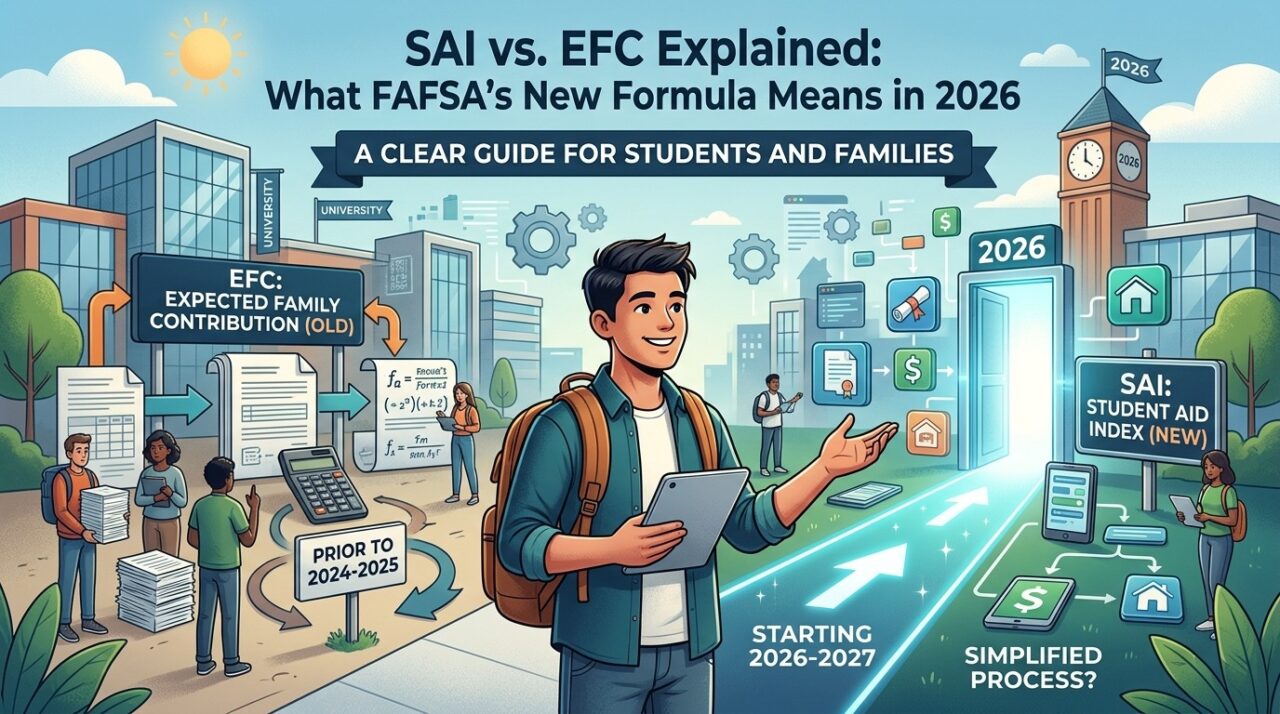
The FAFSA produces your Student Aid Index, which is not a bill and not your final aid offer. It is a formula-based number schools use as part of determining aid eligibility. The Student Aid Estimator can give you an early, nonbinding estimate of federal aid before you file.
CSS Profile
Some colleges and scholarship programs use the CSS Profile for their own nonfederal institutional aid. College Board says the CSS Profile is used to award non-federal institutional aid, and many students complete it during senior year starting October 1. College Board also says families should check whether each college requires it and submit by the earliest priority date.
Net price calculator
A real advisor will tell you not to look only at sticker price. The U.S. Department of Education explains that a net price calculator estimates what students like you paid after grant and scholarship aid. This is one of the best tools for building a realistic college list before you commit emotionally to a school that may be unaffordable.
What your advisor should teach you to compare
When comparing aid offers, do not ask only, “Which college gave me more aid?” Ask, “Which college leaves me with the lowest net cost and the safest debt?”
A strong advisor will walk you through:
-
total cost of attendance
-
grants and scholarships
-
work-study
-
federal loans
-
any remaining gap you would need to cover with savings, income, payment plans, or private loans
CFPB says students should compare college costs and financial aid offers carefully because different aid packages can shape long-term financial outcomes. Its student loan guidance also tells students to make sure they know whether a package includes gift aid or loans.
That matters because borrowing still has consequences. College Board reports that parents and students borrowed $102.6 billion in federal and nonfederal loans in 2024–25, and the average borrowed by 2023–24 bachelor’s degree recipients who borrowed was $29,560. A good advisor is not just trying to help you enroll; they are trying to help you graduate without dangerous debt.
When you should ask for an aid adjustment
One of the biggest myths in college financing is that the FAFSA result is final. It is not always final.
Federal Student Aid says if your family’s finances changed after the tax year used on the FAFSA, you should still complete the FAFSA and then contact the financial aid office to request an aid adjustment. Examples can include job loss, income reduction, divorce, death in the family, incarceration, or unusually high medical expenses. The school may ask for documentation, and the decision belongs to the school.
For dependency issues, the rules are also more nuanced than many families realize. Federal guidance says a financial aid administrator can make a dependency override in cases of unusual circumstances on a case-by-case basis, but a parent simply refusing to help is not automatically enough. That is another reason the school’s own financial aid office matters more than outside advice.
How to tell whether an advisor is legitimate
A legitimate advisor will do the following:
They will explain the difference between grants, scholarships, work-study, and loans. They will encourage you to file the FAFSA early. They will show you how to use official tools like StudentAid.gov, College Scorecard, and net price calculators. They will tell you to verify every deadline directly with the college. They will never promise a specific scholarship or guarantee a certain amount of aid.
A scammy advisor usually sounds magical. FTC warns students to avoid claims such as “the scholarship is guaranteed,” “you can’t get this information anywhere else,” “we’ll do all the work, you just pay a fee,” or “give me your bank account or card number to hold this scholarship.” FTC also says students may be able to get the same help for free from a guidance counselor or financial aid advisor.
Federal Student Aid and FTC both reinforce another key rule: never pay someone to fill out or process your FAFSA. Your StudentAid.gov account is your legal signature, and Federal Student Aid says you should not share it with anyone, including family members.
Best questions to ask a college financial aid advisor
When you talk to a financial aid advisor, ask:
What is my net price after grants and scholarships, not just total cost?
How much of my offer is gift aid, and how much is loans?
Do I need to complete the CSS Profile or any school-specific forms?
What is the priority deadline for institutional aid?
If my family income changed, what is your professional judgment or aid appeal process?
Are the grants renewable each year, and what GPA or enrollment rules apply?
What would I likely need to borrow over four years, not just one year?
Do you have scholarship deadlines separate from admission deadlines?
Those questions help shift the conversation from “Can I get in?” to “Can I stay, pay, and graduate?” CFPB and Federal Student Aid both emphasize informed comparison, documentation, and follow-up with the school when circumstances change.
Official websites every senior should know
Here are the most legitimate places to start:
These are the kinds of sources a trustworthy advisor should already be using.
Bottom line
A college financial aid advisor is most useful when they help you make the process simpler, cheaper, and safer. The best advisor does not sell hope. They help you file the right forms on time, compare net prices instead of sticker prices, spot scams, ask better questions, and bring the right documentation to the school that actually controls your aid package. For most high school seniors, the smartest move is to begin with free official help, then use private paid help only if you have a clear reason and fully understand its limits.
FAQ
Is a college financial aid advisor the same as a college admissions counselor?
No. Admissions focuses on getting into the school. Financial aid advising focuses on how to pay for it, including forms, grants, scholarships, loans, deadlines, and aid appeals. On campus, that work belongs to the financial aid office.
Do I need to pay someone to help with FAFSA?
No. FAFSA help is available for free through StudentAid.gov, school counselors, college financial aid offices, and public or nonprofit advising programs. FTC warns against paying for FAFSA processing help.
Can a private consultant get me more aid?
They may help you organize documents or identify questions to ask, but only the college’s own financial aid office can review your file and make official aid adjustments through professional judgment.
What if my parents are divorced or separated?
You should determine which parent must be a FAFSA contributor using the official FAFSA parent guidance. Some colleges may also require the CSS Profile and, in some cases, separate information from a noncustodial parent.
What if my family income dropped recently?
File the FAFSA anyway, then contact the college financial aid office and ask about an aid adjustment or professional judgment review. Schools may request documentation.
What is the biggest mistake students make?
Looking at the sticker price instead of the net price and failing to separate grants from loans in the aid offer. That mistake can make one college look cheaper on paper when it is actually more expensive.
What is the single best first step?
Create your StudentAid.gov account early, make sure any contributors do the same, estimate aid, and file the FAFSA as early as possible for the 2026–27 cycle.