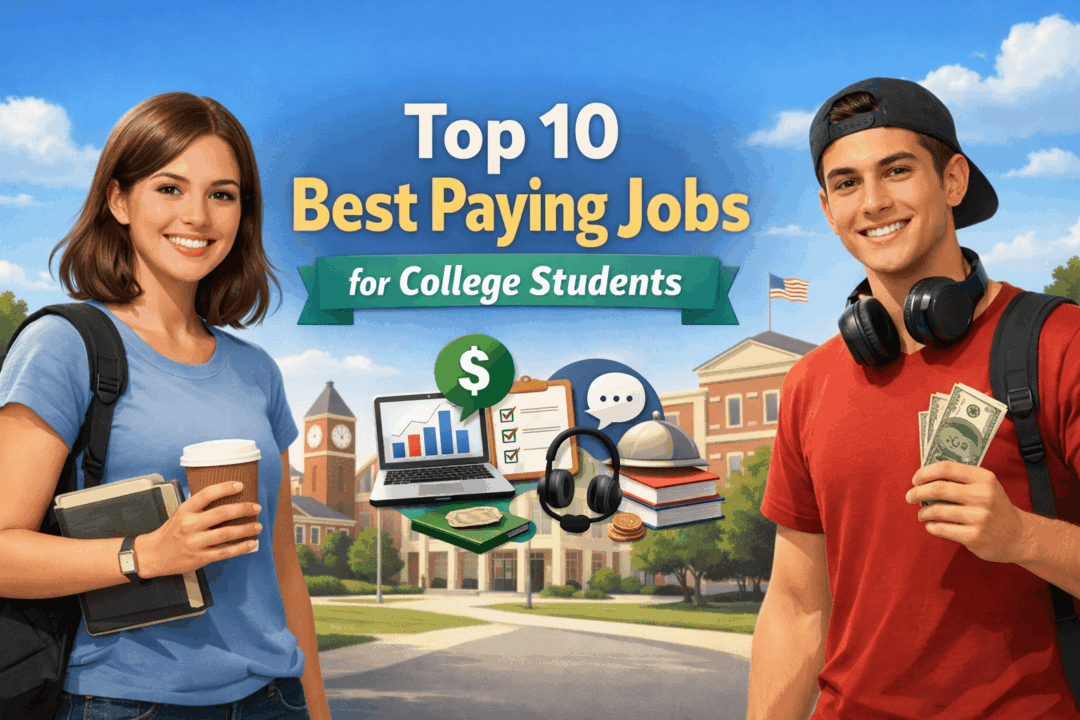
Top 10 Best Paying Jobs for College Students in 2026
Discover the top 10 best paying jobs for college students using official wage data, internship pay research, and practical tips on choosing flexible, resume-building work while in school.
Top 10 Best Paying Jobs for College Students
College students work a lot more often than many families realize. In October 2024, 11.8 million young people ages 16 to 24 were enrolled in college, and 49.2 percent of college students were in the labor force, compared with 22.3 percent of high school students. NCES also reports that 40 percent of full-time undergraduates and 74 percent of part-time undergraduates were employed in 2020. In other words, working during college is normal. The real question is not whether to work. The real question is which jobs pay well, fit a student schedule, and help build a future career.
This guide ranks jobs using current official wage data from the U.S. Bureau of Labor Statistics and current internship compensation data from NACE. The list is not just about the highest adult salary in America. It focuses on jobs that college students can realistically do while enrolled through one of four paths: portfolio-based work, internships, short credentials, or flexible student-friendly employment. One important reality check: when BLS gives a median wage for an occupation, that is the median for all workers in that field, not the typical first paycheck for a 19-year-old beginner. Student entry pay is usually lower, but these fields still matter because they sit in stronger-paying labor markets.
Quick answer: the top 10 best paying jobs for college students
-
Web developer or digital designer
-
Graphic designer
-
Computer user support specialist
-
Real estate sales agent
-
Bookkeeping, accounting, and auditing clerk
-
Paid internship or co-op
-
Dental assistant
-
Fitness trainer or instructor
-
Medical assistant
-
Pharmacy technician
1) Web developer or digital designer
BLS reports median annual pay of $90,930 for web developers and $98,090 for web and digital interface designers in May 2024. BLS also says educational requirements vary, ranging from a high school diploma to a bachelor’s degree, and employment is projected to grow 7 percent from 2024 to 2034, which is faster than average. For college students, this is one of the strongest-paying paths because work can be done as freelance projects, startup contracts, campus web office work, agency support, or paid internships. The catch is simple: you need real skills, a portfolio, and proof you can build or improve websites.
Why this job ranks so high is that pay is tied to specialized skill, not just time on the clock. A student who can code, manage WordPress, improve page speed, fix mobile layout problems, or design clean user interfaces can often earn more than students doing general hourly work. This is especially true for students in computer science, information systems, digital media, UX, or marketing.
2) Graphic designer
Graphic designers had median annual pay of $61,300 in May 2024, and BLS projects employment growth of 2 percent from 2024 to 2034. BLS says graphic designers usually need a bachelor’s degree and should have a portfolio showing creativity and originality. For students, that portfolio point matters more than almost anything else. A strong designer can find paid work creating social graphics, flyers, presentations, email assets, website images, ad creatives, or club and nonprofit branding while still in school.
This is one of the best-paying college jobs for students who already know Adobe tools, Canva at a high level, Figma, or motion graphics basics. The labor market is not exploding, but the work is flexible, remote-friendly, and directly useful for future internships and full-time jobs.
3) Computer user support specialist
BLS reports median annual pay of $60,340 for computer user support specialists in May 2024. BLS says entry requirements vary, but user support specialists often need some college coursework, and some candidates can qualify with a high school diploma plus relevant IT certifications. This is one of the most realistic high-paying student jobs because colleges, libraries, help desks, and local businesses regularly need part-time tech support.
This role is a smart fit for students who are patient, good at troubleshooting, and comfortable explaining tech in plain English. It may not have the headline pay of web development, but it is more accessible for many students and gives resume value in almost every industry.
4) Real estate sales agent
BLS reports median annual pay of $56,320 for real estate sales agents in May 2024, while the broader brokers-and-agents occupation shows a median of $58,960 and projected growth of 3 percent from 2024 to 2034. BLS also notes that most brokers and agents are self-employed, often work irregular hours, and many are able to set their own schedules. That flexibility is exactly why some college students do well in real estate, especially in high-demand local markets.
This job is not for everyone. It usually requires licensing, comfort with sales, and willingness to work evenings or weekends. Pay can also be uneven because commissions matter. But for students with strong people skills and a business mindset, it can outperform many traditional student jobs.
5) Bookkeeping, accounting, and auditing clerk
BLS reports median annual pay of $49,210 in May 2024 for bookkeeping, accounting, and auditing clerks. The typical entry level is some college, no degree, with moderate-term on-the-job training. That makes this one of the best practical high-paying roles for students who are organized, trustworthy, and comfortable with numbers, spreadsheets, and financial records.
This job is especially strong for business, accounting, finance, economics, and entrepreneurship students. Small businesses, local nonprofits, clinics, and campus departments often need help with records, invoices, reconciliation, expense tracking, and reporting. The long-term occupation outlook is weaker than some health roles, but the student-time payoff can still be excellent because the work builds real business skills.
6) Paid internship or co-op
NACE reports that the average hourly wage for bachelor’s-level interns reached $23.04 in its 2025 compensation guide. That is one of the strongest student-specific pay figures available from a major career organization. NACE also notes that, after adjusting for inflation, intern pay was 1.1 percent lower in real terms than in 2015, which is a useful reminder that “record nominal pay” does not always mean greater buying power.
Internships deserve a place in the top 10 because they combine wages with career leverage. A paid internship may not last all year like a regular job, but it often produces something more valuable than a few extra dollars per hour: experience, references, industry contacts, and a much better shot at a strong first full-time job after graduation.
7) Dental assistant
Dental assistants had median annual pay of $47,300 in May 2024. BLS lists the typical entry-level education as a postsecondary nondegree award, and employment is projected to grow 6 percent from 2024 to 2034. For students willing to complete short training, this can be one of the best healthcare-related jobs available before finishing college.
This role is especially attractive for students exploring dentistry, dental hygiene, biology, or broader healthcare careers. It combines decent pay with clinical exposure and a clearer professional environment than many general retail jobs.
8) Fitness trainer or instructor
BLS reports median pay of $46,180 per year or $22.20 per hour for fitness trainers and instructors in 2024. The typical entry-level education is a high school diploma or equivalent, and job growth is projected at 12 percent from 2024 to 2034, much faster than average. That combination of relatively accessible entry, flexible scheduling, and strong growth makes fitness one of the best student jobs for people who enjoy coaching and wellness.
This role can work especially well for students who can teach group classes, personal training sessions, sports conditioning, or campus recreation programs. It is not the absolute highest-paying path on the list, but it has a strong balance of flexibility, hourly earnings, and personal brand-building.
9) Medical assistant
Medical assistants had median annual pay of $44,200 in May 2024. BLS lists the typical entry-level education as a postsecondary nondegree award and projects employment growth of 12 percent from 2024 to 2034, much faster than average. That is one reason medical assistant roles remain a smart option for college students pursuing healthcare and looking for paid experience in clinical settings.
This is a strong choice for pre-med, nursing, public health, biology, and allied-health students. It pays better than many generic campus jobs and gives students direct exposure to how clinics actually work.
10) Pharmacy technician
BLS reports median annual pay of $43,460 in May 2024 for pharmacy technicians. The typical entry-level education is a high school diploma or equivalent, with moderate-term on-the-job training, and employment is projected to grow 6 percent from 2024 to 2034. This job stays on the list because it is one of the more realistic higher-paying roles for students who need evening or weekend work and want something more career-relevant than basic retail.
For students interested in pharmacy, chemistry, pre-health, or patient-facing healthcare, pharmacy tech work can build both income and experience. It is also easier to find in many towns than some of the more specialized jobs above.
What makes a college job “best” instead of just “high paying”?
The highest-paying job is not always the best college job. NCES notes that employment during college can help students pay for living and education costs, but employment can also be associated positively or negatively with academic performance. That means the smartest job is the one with the strongest mix of pay, schedule control, transportation convenience, and career value. A job that pays a little less but protects your GPA and gives you resume skills can beat a slightly higher-paying job that wrecks your sleep, class attendance, or study time.
In practical terms, students should compare jobs using four questions. First, does the schedule fit classes? Second, is the work related to your future major or career? Third, do you need a certificate, license, or portfolio before you can start? Fourth, is the pay steady or highly variable? Real estate, for example, can pay well but may swing wildly because of commissions. Fitness training and freelancing can also vary week to week. By contrast, internships, healthcare support roles, and bookkeeping jobs tend to offer clearer pay structure.
Should students choose work-study or off-campus jobs?
Federal Work-Study can still be a smart option, even when the hourly rate is not the highest on campus. Federal Student Aid says students must submit the FAFSA to be considered, jobs are limited, work-study jobs are part time, students receive a regular paycheck, and work-study earnings will not reduce future student aid. That last point matters. Students with financial need should compare net value, not just hourly wage, because a work-study job can fit college life more safely than a random off-campus shift job.
The best strategy for many students is simple. Use work-study when you need stability and campus convenience. Use internships when you want career momentum. Use skill-based work such as web design, tech support, bookkeeping, or fitness coaching when you already have marketable ability and want higher pay.
Best job matches by student type
Best for tech students: web developer, graphic designer, computer user support specialist.
Best for business students: bookkeeping clerk, real estate sales agent, paid internship.
Best for pre-health students: medical assistant, dental assistant, pharmacy technician.
Best for students who need flexible schedules: fitness trainer, real estate sales agent, freelance web or design work.
Best overall for long-term return: paid internships and skill-based tech work.
Final takeaway
For most college students, the very best jobs are not random side gigs. They are jobs that pay solidly and move you closer to graduation and your first real career step. The winners are usually paid internships, skill-based digital work, healthcare support roles, and business support roles. Students who build a portfolio, earn a short credential, or target career-related internships usually put themselves in a much stronger position than students who chase only the fastest paycheck.
If you are a high school senior reading this, the lesson is simple: the best-paying college jobs usually reward preparation. Learning web skills, design tools, spreadsheet skills, basic bookkeeping, healthcare certifications, or fitness instruction before or during your first year can raise your earning power much faster than waiting until junior or senior year.
Official research and legit websites used for this guide
U.S. Bureau of Labor Statistics Occupational Outlook Handbook for pay, job outlook, and entry requirements across the jobs above.
National Association of Colleges and Employers (NACE) for current intern compensation data.
National Center for Education Statistics (NCES) for college student employment patterns.
U.S. Bureau of Labor Statistics Economics Daily for current labor-force participation among college students versus high school students.
Federal Student Aid for current work-study rules and FAFSA-related guidance.