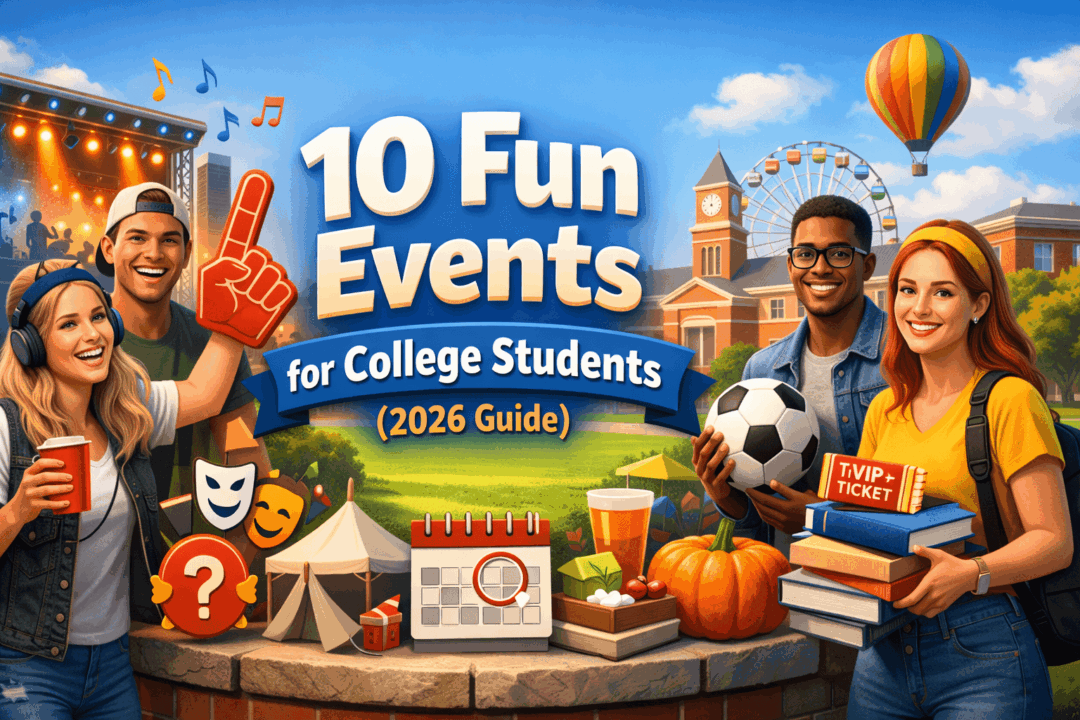
10 Fun Events for College Students (2026 Guide)
College events are not just “extra fun stuff.” The best ones help students make friends, feel like they belong, learn new skills, and stay connected to school. That matters because campus involvement is still weaker than many colleges want. In a 2024 Student Voice survey, 35% of current undergraduates said they had not participated in any campus activities. Students said the biggest things that would increase participation were convenient timing and location and simply knowing what is happening. About one in four also pointed to career relevance, time management, belonging, or proximity to campus as barriers, and 22% of online-only learners said virtual access would raise their involvement. The gap is even bigger at two-year colleges: 49% of students at two-year schools said they had not attended any campus events, compared with 17% of four-year students.
That matters for retention, not just entertainment. A December 2024 Student Voice analysis found that six in 10 stop-outs reported not participating in any activities, research, paid roles, or volunteer work while in college, compared with 35% of current students. Only 15% of stop-outs said they were very involved, versus 40% of current students. One campus example in the same report found that first-year students who attended Weeks of Welcome events had a fall-to-fall retention rate 11 percentage points higher than non-attendees, and students who held a membership or leadership role in a student organization were retained at a rate 14 percentage points higher than students who did not get involved.
A smart events calendar also has to reflect who today’s students are. The American Association of Community Colleges’ 2025 fact sheet shows that community colleges enroll 10.5 million students overall, with 66% of credit students attending part time. The same fact sheet says 32% are first-generation, 13% are single parents, and 23% are students with disabilities. In other words, lots of students are balancing jobs, family, commuting, and school. Events work better when they are short, low-cost, easy to find, and accessible.
There is also a health reason to care. CDC says social connection is linked to significant health benefits, while loneliness and lack of support are associated with worse mental-health outcomes. In CDC’s 2024 MMWR analysis of 2022 BRFSS data, adults ages 18–34 had the highest prevalence of loneliness at 43.3%. CDC also notes that about 1 in 3 U.S. adults feel lonely and about 1 in 4 lack social and emotional support.
And yes, fun events can help careers too. NACE’s 2025 research says employers still value hands-on experience and career-readiness skills, and students should be ready to connect both coursework and extracurriculars to professional skills in interviews. NACE also reported that students who took part in internships and similar experiential learning were more satisfied with their college experience: more than three-quarters said they would choose the same school again, compared with 68% of non-experiential learners.
What makes a college event actually work?
The strongest college events usually share five traits: they are easy to attend, easy to understand, free or cheap, held on a predictable schedule, and connected to a real student need such as belonging, stress relief, leadership, jobs, or community. That matches what current students say they want: better timing, better awareness, clearer value, and more access for commuters and online learners.
1) Welcome Week Block Party
A welcome-week block party is one of the best first events because it lowers the social pressure of “joining college.” Students can show up, grab food, hear music, find campus offices, and meet people without needing to commit to a club right away. That matters because early contact points can shape whether students feel supported and know where to go. The Student Voice reporting on retention found that welcome-style programming was linked to higher first-year retention on one campus.
To make this event work, colleges should keep it simple: music, student groups, free snacks, short activities, and lots of visible staff or student ambassadors. The goal is not to impress students with a huge budget. The goal is to help them feel, “I know where things are, I know a few faces, and this campus has a place for me.”
2) Weekly Lunchtime Pop-Up Series
If a college can only do one event model really well, this might be it. A weekly pop-up series at the same time and place each week is easier to remember than random one-off events. That matters because students say awareness and convenient scheduling are two of the biggest reasons they do or do not participate. One Student Voice example described improved turnout when events happened on consistent days and in key locations across campus.
This can be cheap and effective: a trivia wheel, a mini craft, campus resource table, quick prize drawing, or themed photo spot. For commuter campuses, lunchtime is especially smart because students are already there. For hybrid campuses, post the same schedule online every week and stream one simple component.
3) Club and Campus Jobs Fair
Many students think a club fair is only for extroverts. It should not be. Done right, it is one of the highest-value events on campus because it connects students to organizations, volunteer roles, paid jobs, and leadership tracks in one place. That is important because NACE says employers want students to explain how their extracurricular experiences built job-ready skills, and experiential learning continues to matter in hiring.
A stronger version of this event combines student organizations with campus departments that hire students, volunteer offices, tutoring centers, and career services. That way, students who are not interested in clubs still find something useful. This is especially important for first-generation and part-time students who may ask, very reasonably, “What is in this for me?”
4) Campus Scavenger Hunt
A campus scavenger hunt sounds playful, but it solves a serious problem: unfamiliarity. New students often do not know where resources are or how to move around campus with confidence. A scavenger hunt can send students to the library, advising office, student union, tutoring center, disability services, rec center, and student activities office. It turns orientation into action.
This format works best in the first weeks of the term, when students are still building routines. It also fits what the involvement research suggests: colleges get better results when they place programs where students already are, especially at the start of the semester.
A digital version also works well for commuters and online learners. Students can upload selfies, answer location-based questions, or complete short QR-code tasks. That makes the event more accessible and easier to repeat.
5) Trivia Night or Board-Game Night
Trivia and game nights are strong because they remove the awkwardness of “just socialize.” Students have a built-in activity, which makes conversation easier. For colleges trying to increase belonging, that matters. CDC’s social-connection research shows that loneliness and lack of support are tied to worse mental-health outcomes, especially among younger adults.
The best version is low-pressure and low-cost. Run it in the student center, library commons, or dining area. Offer team sign-up for friend groups, but also “join a team” stickers for students who come alone. That one small design choice can make the difference between inclusion and invisibility.
6) Outdoor Movie Night
Outdoor movie nights stay popular because they are easy to understand and easy to attend. Students do not need special skills, and they can come for ten minutes or the whole event. That flexibility matters on campuses with commuters, working students, and student parents. Community college data show that many students are part-time and balancing other responsibilities, so events that allow casual drop-in attendance are often more realistic than long, highly structured programs.
A better movie night adds one or two small extras: themed snacks, student-voted film choice, or a short pre-show featuring campus clubs. Keep it free. Keep it early enough for public transit users. If the weather is bad, move it indoors instead of canceling.
7) Intramural Mini-Tournament or Recreation Challenge
Not every student wants a varsity-style sports culture, but many do want movement, fun, and teamwork. A one-day intramural mini-tournament—basketball, futsal, pickleball, dodgeball, volleyball, or even e-sports—works because it gives students a clear activity and a reason to show up with friends. It also creates leadership roles for students who organize brackets, referee, or promote the event.
This kind of event can also support the skill-building side of college life. Employers keep emphasizing teamwork, communication, and problem-solving, and students often develop those skills in co-curricular settings, not just in class.
To keep the tone welcoming, make at least one bracket beginner-friendly. “No experience needed” is powerful language. So is “all-gender teams encouraged.”
8) Cultural Festival or International Night
A cultural festival is one of the best ways to make campus life both fun and meaningful. Students can share food, dance, music, language, clothing, art, and stories from their communities. Done well, this type of event helps students feel seen rather than treated like background decoration. That matters because belonging grows when students feel valued and supported, and CDC and student-engagement research both point to connection as a real factor in well-being.
This event works best when student groups help shape it directly. Let students choose performances, explain traditions in their own words, and decide what feels respectful. Keep the format celebratory, but avoid turning the event into a stereotype parade. The goal is shared experience, not tokenism.
9) Volunteer Day or Service Challenge
Volunteer events are fun when they are social, hands-on, and clearly organized. Think local food-bank packing, park cleanup, school-supply drives, neighborhood mural support, or campus garden projects. This kind of event helps students meet others while doing something real, which is why service has long been treated as a high-value educational practice in higher education research. AAC&U’s research summaries report positive outcomes from community-based and civic engagement experiences, and NSSE’s 2024 results continue to show that students see college as contributing to civic development.
Service events are especially strong for students who do not care about “campus traditions” but do care about purpose. They also give colleges a natural way to partner with local nonprofits and community groups, which can deepen town-gown relationships.
10) Career Speed Networking Mixer
A career event can still be fun if it feels human instead of formal. A speed-networking mixer with alumni, employers, faculty, and older students works because it gives students a direct answer to the question: “How does campus involvement help me later?” Student Voice data show that many students are unsure campus participation helps with future success, so colleges should make that connection obvious.
The best version is short, practical, and welcoming. Use small-group rounds instead of intimidating one-on-one interviews. Mix alumni with current student leaders. Add a “first networking event?” table for beginners. NACE’s 2026 outlook and related research support the idea behind this event: employers still value hands-on experience, and students need examples from both classwork and extracurricular life that show real skills.
The main lesson: fun is not enough by itself
The most successful college events are fun, but they also solve a problem. They help students find people, places, information, confidence, and opportunity. That is why random programming often underperforms while consistent, visible, useful events do better. Current students have already said what they need: good timing, strong promotion, easy access, and a clear reason to care.
So if a college wants better turnout, it should stop asking only, “What event sounds exciting?” and start asking, “What kind of event fits how students actually live?”
What high school seniors should look for on a college tour
If you are a high school senior comparing colleges, do not just ask whether a campus has events. Ask whether its events look usable for real students.
-
Are events free or cheap?
-
Are they scheduled at commuter-friendly times?
-
Are there repeated weekly events, not just one big welcome week?
-
Is there something for shy students, working students, and first-generation students?
-
Can students connect events to leadership, service, or career skills?
Those questions matter because today’s student population is diverse, busy, and often balancing more than classes alone.
Final takeaway
The best fun events for college students are not the loudest or most expensive. They are the ones students can actually attend, enjoy, and remember. A strong campus calendar should include welcome events, recurring pop-ups, clubs, games, recreation, culture, service, and career exploration. That mix gives students multiple entry points into campus life, which is exactly what the research suggests colleges need.
Research-backed resources to cite or link in WordPress
For official or credible external links in your post, use the sources behind this article: NSSE Annual Results 2024, CDC Social Connection resources, CDC MMWR on loneliness and support, AACC Fast Facts 2025, NACE Job Outlook 2026, and NACE’s experiential learning research. Those sources support the main claims about belonging, participation barriers, commuter realities, and career readiness.
If you want, I can turn this into a more SEO-aggressive WordPress version with FAQ schema-style questions and shorter paragraphs for mobile.