
Free College Grants: Complete Guide for High School Seniors
Free college grants are real. They are one of the best ways to reduce what you pay for college because grants usually do not have to be repaid. The most important catch is that students must apply the right way, hit deadlines early, and use official websites. For most students, the single most important step is completing the FAFSA® because that one form is used for federal grants and, in many cases, state and school aid too.
If you are a high school senior, here is the big idea: “free college grants” usually come from five places—the federal government, your state, the college itself, special profession/service programs, and a few targeted public programs for special situations. The largest federal grant is the Pell Grant, and current federal guidance shows the maximum Pell award for the 2026–27 award year is $7,395.
What are free college grants?
A college grant is money for education that generally does not need to be paid back. That is different from a loan, which must be repaid, usually with interest. Grants are usually awarded based on financial need, but some are tied to your state residency, your college, your intended career field, or a service commitment.
The word free is mostly accurate, but not perfect. Most grants are truly nonrepayable if you stay eligible. However, there are exceptions. For example, the TEACH Grant can turn into a federal loan if the student does not complete the required teaching service obligation. That is why students should always read the conditions before accepting aid.
Why college grants matter more than ever
College prices are still high. College Board reports that in 2025–26, the average published tuition and fees are about $4,150 at public two-year colleges, $11,950 for in-state students at public four-year colleges, and $45,000 at private nonprofit four-year colleges. Average full-year student budgets are much higher once housing, food, books, transportation, and other expenses are included.
That is exactly why grant aid matters. College Board also reports that, on average, first-time full-time students at public two-year colleges have been receiving enough grant aid to cover tuition and fees since 2009–10. In 2024–25, total grant aid supporting postsecondary students reached $173.7 billion, and Pell recipients increased from 6.4 million to 7.3 million students. NCES also reports that 32.4% of undergraduates received a Pell Grant in 2023–24.
The main types of free college grants
1) Federal Pell Grant
The Federal Pell Grant is the foundation of free grant aid for many students. It is designed mainly for undergraduate students with financial need who have not yet earned a bachelor’s or professional degree. Federal Student Aid says the maximum Pell award for 2026–27 is $7,395. Pell can be used at eligible community colleges, trade schools, career schools, online schools, and four-year colleges.
Pell eligibility is not based only on income. Federal Student Aid says the formula also considers factors such as family size, tax filing status, and federal poverty guidelines. Your actual Pell amount depends on your FAFSA information, your Student Aid Index (SAI), your cost of attendance, and your enrollment intensity.
There are two details high school seniors should know. First, some students can receive up to 150% of their yearly Pell amount if they attend an extra term in the same award year, often called year-round Pell. Second, Pell has a lifetime cap of about six years, or 600% Lifetime Eligibility Used (LEU).
Official Pell link: Federal Pell Grant
2) Federal Supplemental Educational Opportunity Grant (FSEOG)
The FSEOG is another federal grant, but it works differently from Pell. It is a campus-based program, which means the money goes through participating colleges, not directly from the federal government to every eligible student. Federal Student Aid says awards can range from $100 to $4,000 and do not need to be repaid. Students with exceptional financial need, especially Pell recipients, get priority.
The biggest problem with FSEOG is that it is limited. Once a school runs out of its yearly allocation, no more FSEOG awards can be made there for that year. That means students who file FAFSA early and meet school deadlines have a better shot.
Official FSEOG link: FSEOG information
3) TEACH Grant
The TEACH Grant is for students preparing for a teaching career in a high-need field and at a qualifying low-income school. This is a real grant, but it comes with serious strings attached. Recent federal materials list the TEACH maximum at $3,772, although many program descriptions still say the statutory amount is “up to $4,000.” If the teaching service obligation is not completed, the grant converts into a Direct Unsubsidized Loan with interest.
For the right student, TEACH can still be valuable. But it is not the same as Pell. Pell is ordinary need-based grant aid. TEACH is more like a grant-service contract. Students should only accept it if they are confident about completing the required teaching path.
Official TEACH link: TEACH Grant information
4) State grants
Almost every state has at least one grant or scholarship program for residents, and many states have multiple programs. Some are need-based. Some are merit-based. Some are tied to public colleges, workforce majors, or community college attendance. FAFSA is often the gateway form for these programs, and state deadlines can be much earlier than the federal deadline.
State aid is more important than many students realize. College Board reports that average state grant aid per full-time equivalent undergraduate student increased from $920 in 2013–14 to $1,280 in 2023–24, with large differences by state. That means where you live can materially change how much “free money” you can get.
Legit state-aid starting points:
FAFSA state deadlines
NASFAA state financial aid programs directory
5) Institutional grants from colleges
Many colleges give their own grants. These are often called institutional grants, need-based grants, or sometimes promise grants. In plain English, this is money from the college itself. Some schools use FAFSA only. Some also require their own aid forms. Some private colleges use additional forms to calculate institutional aid.
These school grants can be a huge deal. NCES shows that institutional grant awarding patterns vary a lot by sector, and private nonprofit colleges award institutional grants at much higher rates than some other sectors. This is one reason a college with a high sticker price can sometimes end up cheaper than a school with lower published tuition.
The smartest way to estimate school grant potential before you apply is to use each college’s Net Price Calculator and then compare the school in College Scorecard. The Net Price Calculator estimates what students like you paid after grants and scholarships, and College Scorecard lets you compare average annual cost, graduation rate, debt, and earnings.
Official school-cost tools:
Net Price Calculator Center
College Scorecard
6) Special-rule and special-situation grants
Federal rules also create extra protection for some students in unusual or tragic situations. Federal Student Aid says that because of FAFSA Simplification, no new Iraq and Afghanistan Service Grants are being made beginning with 2024–25. Instead, eligible students now receive a maximum Pell Grant under the Special Rule.
Another important issue is family financial change. If your family income dropped because of job loss, divorce, medical bills, or death in the family, the FAFSA may not fully reflect your current reality. In that case, students should contact the college financial aid office and request an aid review, often called professional judgment.
How do you actually apply for free college grants?
The short answer is: start with FAFSA, then finish every state and college requirement early. Federal Student Aid’s own form says the 2026–27 FAFSA is used for aid for July 1, 2026 through June 30, 2027, and for federal aid it can be submitted no earlier than October 1, 2025 and no later than June 30, 2027. But state and school deadlines may be much earlier.
For the 2026–27 FAFSA, the form uses 2024 tax information. Students also need a StudentAid.gov account, and contributors may need accounts too. Federal Student Aid says the FAFSA is always free. Never pay a company just to submit it.
Step-by-step grant application plan
Step 1: Create your StudentAid.gov account.
Students need it to start, sign, and manage the FAFSA. Contributors may need their own accounts too.
Step 2: File the FAFSA as early as possible.
That opens the door to Pell, FSEOG, work-study, many state grants, and a lot of school aid.
Step 3: Check your FAFSA Submission Summary.
This is where you will see your confirmed SAI, which schools use to help build your aid offer. A lower SAI generally means higher financial need. SAI ranges from -1500 to 999999 and is not a dollar amount of aid.
Step 4: Finish any state forms or extra school forms.
Some states and colleges require more than FAFSA. Missing the extra form can cost you grant money.
Step 5: Compare aid offers using net price, not sticker price.
What matters most is what you owe after grants and scholarships.
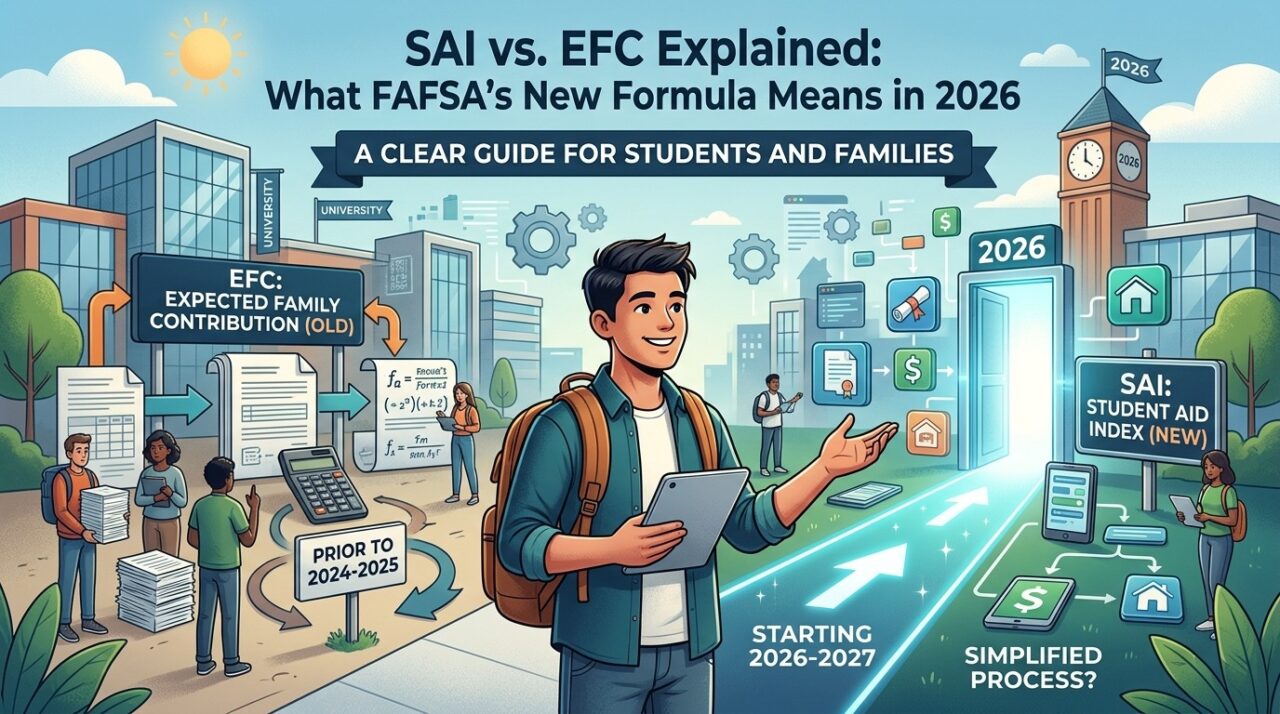
What is the Student Aid Index, and why does it matter?
The Student Aid Index (SAI) is one of the most important numbers in the grant process. Federal Student Aid explains that SAI is a formula-based index number ranging from -1500 to 999999. It represents an estimated level of financial need, but it is not your bill, not your aid offer, and not the exact amount your family must pay.
Schools use your SAI together with your cost of attendance and other aid to calculate need-based support, including Pell and other grants. In general, a lower SAI means a student is more likely to qualify for more need-based aid.
Who should pay extra attention to college grants?
Free college grants are especially important for:
-
students from low- and middle-income families, because Pell and need-based aid are built for financial need;
-
community college students, because grant aid often covers tuition and fees on average in that sector;
-
first-generation students, who may miss aid simply by not filing FAFSA;
-
students whose families had a recent financial setback, because schools can sometimes adjust aid;
-
students with unusual circumstances, because some can submit FAFSA without parent information and seek provisional independence.
Common mistakes that cost students free grant money
The biggest mistake is not filing FAFSA at all. Another big mistake is filing too late. FSEOG and many state programs are limited or priority-based, so late applicants can lose free money even if they technically qualify.
A second mistake is focusing only on tuition. Real college cost includes housing, food, books, transportation, and other expenses. That is why students should look at net price and total budget, not just published tuition.
A third mistake is using unofficial websites or paying for FAFSA help. The FAFSA is free, and official federal information comes from StudentAid.gov and U.S. Department of Education tools.
Official websites to bookmark
Here are the best legit websites for students and families:
-
FAFSA application — the official federal application for grants, loans, and work-study.
-
FAFSA deadlines — official federal, state, and territory deadline information.
-
Federal Pell Grant — official Pell information.
-
Federal Student Aid Estimator — estimate Pell and other federal aid.
-
FSEOG information — official campus-based grant overview.
-
TEACH Grant information — official TEACH overview and requirements.
-
Net Price Calculator Center — official U.S. Department of Education calculator hub.
-
College Scorecard — official school comparison tool for cost, debt, graduation, and earnings.
-
State financial aid directory — a trusted state-by-state starting point for state aid programs.
FAQ
Are free college grants real?
Yes. Federal Pell Grants, FSEOG, many state grants, and many institutional grants are real forms of aid that generally do not need to be repaid.
What is the best first step?
Complete the FAFSA as early as possible. That one step opens the door to most federal aid and a large share of state and school aid.
What is the biggest federal grant?
The Pell Grant is the largest and most widely known federal grant program for undergraduates.
Can I get grants for community college?
Yes. In fact, College Board reports that grant aid has covered tuition and fees on average for first-time full-time students at public two-year colleges since 2009–10.
Do I need straight A’s to get grants?
Not usually. Grants are often based on financial need, residency, or program rules rather than grades alone. Merit scholarships are a separate category.
What if my parents refuse to help with FAFSA?
That does not automatically make a student independent. If there are no unusual circumstances, a student who files without parent information may be limited to a Direct Unsubsidized Loan only and may lose access to Pell and most other federal aid. But students with true unusual circumstances may be able to file without parent information and seek provisional independence.
Final takeaway
If you want free college grants, do not start with random search results. Start with FAFSA, file early, check your state deadline, finish every required school form, and compare colleges using net price, not sticker price. Grants are one of the few forms of college funding that can reduce your bill without creating debt, and for many students they are the difference between an affordable college plan and an impossible one.