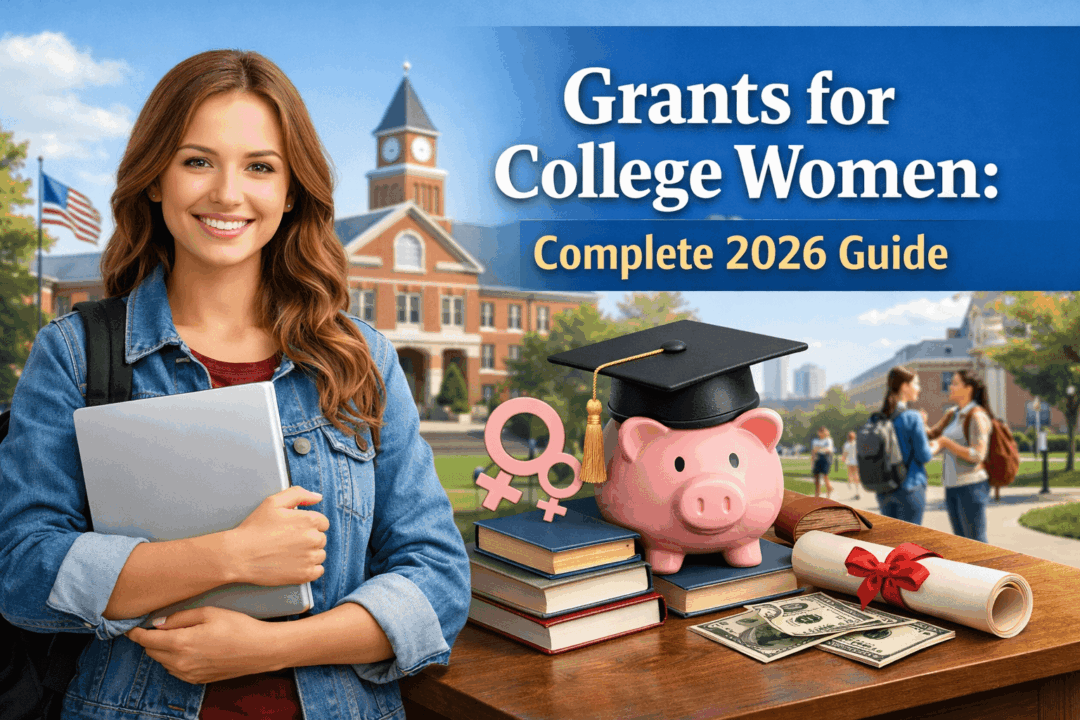
If you are searching for “grants for college women,” the most important thing to know is this: the biggest real grant dollars usually do not come from a single women-only national program. For most students, the best grant money comes from the FAFSA, then from state grants, college-funded institutional grants, and a smaller number of private education awards aimed at women or women in specific situations. That matters because women already make up the majority of U.S. undergraduate enrollment, and female high school completers enroll in college at higher rates than male completers, so women are already a major part of the grant-aid system.
There is also a language problem online: many websites call everything a “grant,” even when the program is really a scholarship, education award, or support fund. For students, that label matters less than one simple question: Do you have to repay it? If the answer is no, it is free money for school and worth pursuing. Still, accuracy matters, and the honest answer is that true women-only national grant programs are limited, especially for a traditional high school senior going straight to college.
What counts as a real grant for college women?
A real college grant is aid that usually does not need to be repaid. The federal government’s main grant programs include the Federal Pell Grant, Federal Supplemental Educational Opportunity Grant (FSEOG), and TEACH Grant. Private organizations may use different names, but if the money is awarded for education and does not have to be repaid, it belongs in your free-money strategy. The one big exception is the TEACH Grant, which can turn into a loan if the teaching service requirement is not completed.
For a college-bound young woman, the smartest mindset is this: do not wait for a perfect “women’s grant.” Start with the aid systems that already distribute the most money, then layer targeted women-focused programs on top. In other words, the real grant plan is usually federal + state + college + targeted private aid.
The biggest grant sources most college women should pursue first
1) Federal Pell Grant
The Federal Pell Grant is the most important starting point for many students because it is the largest federal source of grant aid for undergraduates with financial need. For the 2026–27 award year, the maximum Pell Grant is $7,395. You apply by filing the FAFSA, and the federal deadline for the 2026–27 form is June 30, 2027, though students should submit much earlier because states and colleges can run out of aid before the federal deadline.
For many female students, Pell is the foundation of the whole aid package. It can be combined with state grants, campus grants, scholarships, and sometimes women-focused private awards. If your family income is modest, or if your college costs are high relative to what your family can pay, Pell should be the very first grant you try to unlock.
2) Federal Supplemental Educational Opportunity Grant (FSEOG)
The FSEOG is a campus-based federal grant for undergraduates with exceptional financial need. Officially, awards can range from $100 to $4,000 a year, and the program is administered by colleges that participate in it. Because the money is limited at the campus level, students who file the FAFSA earlier usually have a better shot than students who wait until late spring or summer.
This is one reason many families underestimate how grant aid works. The rule is not just “apply,” but apply early enough for limited funds. A student who waits can still qualify for federal aid on paper and still miss out on campus-based aid in practice. That is why a college woman looking for grants should think in terms of timing, not just eligibility.
3) TEACH Grant
The TEACH Grant is for students preparing to become teachers in high-need fields. The program can provide up to $4,000 a year, but it comes with a service obligation: recipients must teach full-time for at least four years in a qualifying setting, generally within eight years after leaving school. If the obligation is not met, the grant converts to a Direct Unsubsidized Loan with interest.
This makes TEACH very useful for women who are serious about education careers, especially in shortage areas, but it is not “free money with no strings.” It is best for students who already expect to teach and understand the paperwork and service rules before they accept the award.
4) State grants
After federal grants, state grant programs are often the next biggest source of free money. States use the FAFSA to award many of their own need-based grants, and state deadlines can be much earlier than the federal FAFSA deadline. In some cases, a student who files “on time” for federal aid is already late for state money.
For a high school senior, this is where many avoidable mistakes happen. A student spends weeks hunting niche women-only awards but forgets to secure the larger, more reliable state grant first. The smarter order is: FAFSA first, state deadline second, private awards third.
5) Institutional grants from colleges themselves
A huge amount of grant aid comes directly from colleges. Schools use institutional grants to recruit students, meet financial need, improve affordability, and shape their incoming class. This is especially important because many students fixate on outside scholarships while ignoring the grant money already built into admission and financial aid offers. StudentAid.gov specifically advises students to compare aid offers carefully, and the U.S. Department of Education’s College Scorecard is one of the best official tools for checking cost and value.
If you are a young woman comparing colleges, look at net price, not sticker price. A school with a high advertised tuition may still be cheaper after grants than a lower-priced school with weak aid. That is why every serious grant search should include the school’s aid letter, the school’s net price calculator, and College Scorecard data side by side.
Legitimate women-focused grants and education awards
This is the part most students mean when they search “grants for college women.” These programs are real, but they are often targeted. That means they may be excellent for some women and irrelevant for others. The key is to match the program to your situation honestly.
Patsy Takemoto Mink Education Foundation Education Support Awards
The Patsy Takemoto Mink Education Foundation offers Education Support Awards for low-income women with children who are pursuing postsecondary education or training. The foundation’s published 2025 cycle offered five awards of up to $5,000 each. This is a legitimate and highly targeted option, but it is generally a better fit for student mothers than for a typical 17- or 18-year-old first-time freshman.
Official link: Patsy Takemoto Mink Education Foundation Education Support Application
Soroptimist Live Your Dream Awards
The Soroptimist Live Your Dream Awards are for women who provide the primary financial support for their families. The application window listed on the official page runs from August 1 to November 15, and recipients can ultimately receive up to $16,000 through the program’s award structure. This is one of the strongest legitimate education-award options for women who are supporting children or other dependents while trying to attend school.
Official link: Soroptimist Live Your Dream Awards application page
Jeannette Rankin National Scholar Grant
The Jeannette Rankin Foundation offers a national scholar grant for students who are age 35 or older, demonstrate financial need, and are pursuing a technical/vocational program, first associate’s degree, or first bachelor’s degree at an accredited U.S. institution. This is a powerful option for adult women returning to school, but it is not designed for most traditional high school seniors.
Official link: Jeannette Rankin National Scholar Grant
Women’s Independence Scholarship Program (WISP)
The Women’s Independence Scholarship Program is aimed at survivors of intimate partner abuse. Its official eligibility information says applicants must be physically separated from their abuser for at least one year but no more than ten years, be enrolled in a college, trade, or certificate program, and meet other criteria. The program’s official award pages say grants typically range from $500 to $2,000 per semester or quarter, with awards based partly on enrollment. Since 1999, WISP says it has awarded $50 million in grants to thousands of survivors.
Official link: WISP first-time eligibility page
What a high school senior should understand right now
Here is the honest bottom line for a traditional high school senior girl heading to college: the best grant strategy is usually not a women-only strategy. It is a broad need-based aid strategy first, plus selected women-focused programs if you fit them. That is because women-only national grant programs often target student mothers, adult learners, family breadwinners, or survivors rather than first-time freshmen.
So if you are an incoming freshman, your highest-probability path is usually this:
-
File the FAFSA as early as possible.
-
Check your state deadline on the official FAFSA deadlines page.
-
Compare colleges using net price, not just tuition sticker price, with College Scorecard and each school’s net price calculator.
-
Ask each college financial aid office whether you were considered for institutional grants, need-based grants, first-year grants, women’s center awards, or emergency aid. StudentAid.gov advises students who come up short to ask about additional need-based programs and aid adjustments.
-
Then add targeted outside awards that fit your real identity and circumstances.
Women’s colleges can also matter
If you specifically want a women-centered environment, do not overlook women’s colleges. The Women’s College Coalition maintains an official college finder, and its public materials emphasize that women’s colleges are deeply engaged in financial aid and access. That does not mean every women’s college will automatically be cheaper, but it does mean these schools belong on the list when a student is comparing grant-rich aid packages.
Official link: Women’s College Coalition college finder
Trusted places to look for real grants for college women
Use these first. They are legitimate and widely recognized.
-
Federal Student Aid — the main federal starting point for FAFSA, grants, deadlines, and aid offers.
-
Federal grants overview — official federal grant hub.
-
FAFSA deadlines — official federal and state deadline page.
-
How to evaluate your aid offers — official guidance for comparing grants, loans, and total cost.
-
College Scorecard — official U.S. Department of Education data tool for comparing colleges.
-
Patsy Takemoto Mink Education Foundation — targeted support for low-income women with children.
-
Soroptimist Live Your Dream Awards — targeted support for women who are primary family earners.
-
Jeannette Rankin Foundation — targeted support for women 35 and older.
-
WISP — targeted support for survivors of intimate partner abuse.
-
FTC scholarship and financial aid scam guide — official consumer protection advice.
How to avoid fake “grants for women” offers
The FTC warns students to be skeptical of any scholarship or aid company that says a grant is “guaranteed,” claims it has secret information you cannot get anywhere else, or asks for a credit card or bank account to “hold” your award. The FTC also warns students not to hand over their FSA ID. Real federal aid starts with the FAFSA, which is free.
A good rule is simple: if the site looks flashy but vague, and the application path does not lead to a real school, a real nonprofit, or a real .gov page, slow down. A legitimate award page should tell you who runs the program, who qualifies, how much is offered, when the deadline is, and how the selection works.
Frequently asked questions
Are there grants only for women?
Yes, but they are fewer than many students expect. Most big-dollar grants are not women-only; they are federal, state, or institutional grants based on financial need, program of study, or campus policy. Women-focused private awards do exist, but many are targeted to women with children, adult learners, or women supporting families.
Can a high school senior girl get women-focused grant money?
Possibly, but a typical high school senior will usually have more success with FAFSA-based grants, state grants, and college grants first. Many national women-focused programs are designed for nontraditional students rather than first-time freshmen.
Do I need the FAFSA even if I want private grants for women?
Almost always, yes. The FAFSA is required for Pell, FSEOG, TEACH, many state grants, and many institutional grants. Even some private programs ask for financial information or want to see your aid situation clearly.
Can I stack grants together?
Usually yes. Pell can often be combined with state grants, institutional grants, and private scholarships or awards, though total aid cannot exceed the school’s cost of attendance and some campus policies may affect how aid is packaged.
Are women’s colleges a smart place to look for grants?
They can be. Women’s colleges often emphasize access and financial aid, and the Women’s College Coalition is a strong place to start if you want a women-centered college search. Still, you should compare actual net price and aid offers, not rely on assumptions.
Final takeaway
The smartest way to search for grants for college women is to stop thinking of the problem as “Where is the one grant for women?” and start thinking of it as “How do I build the strongest free-money package possible?” For most students, that package starts with the FAFSA, grows through state and college grants, and gets even better if you also qualify for a targeted women-focused award. That is the accurate, practical, and research-based path.