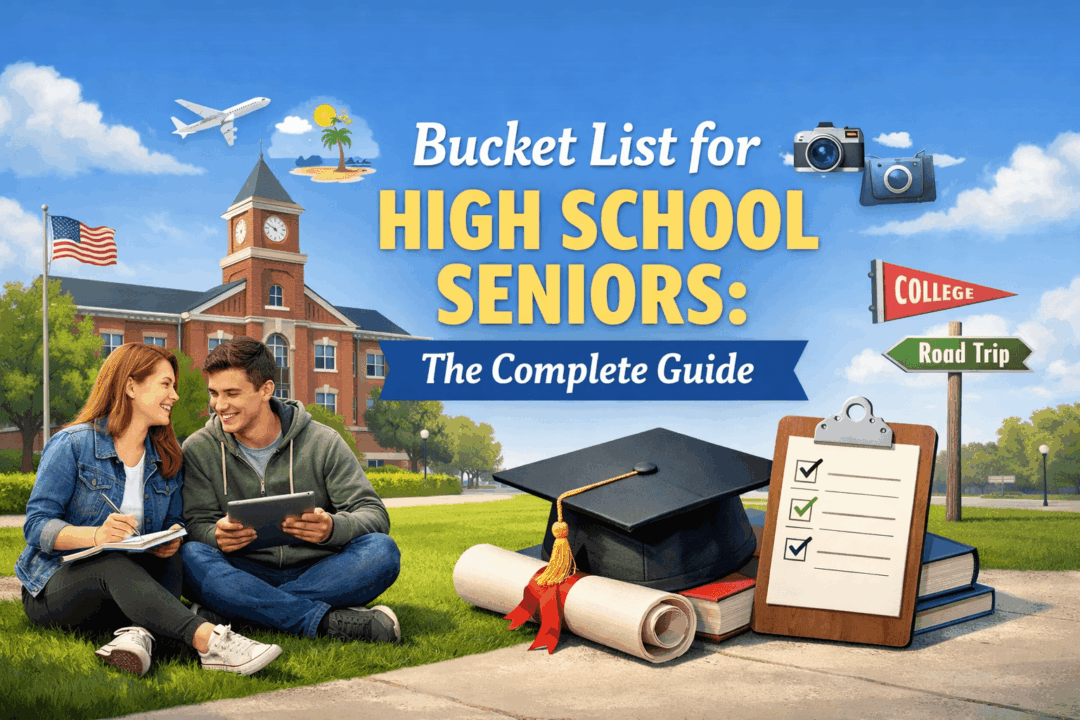
Bucket List for High School Seniors: The Complete Guide
Senior year goes fast. One minute you are planning classes and taking pictures on the first day of school. The next minute you are ordering a cap and gown, checking college portals, and realizing graduation is only weeks away.
That is why a good bucket list matters.
A strong senior-year bucket list is not just a list of fun things to do. It should help you do three things at the same time:
-
make memories you will actually care about later,
-
prepare for college, work, or training after graduation, and
-
protect your health, friendships, and peace of mind during one of the busiest years of your life.
That balance matters. In the United States, 62% of recent high school completers enrolled in college by the following October, which means millions of seniors are making major education decisions in a very short time. At the same time, CDC data show that 40% of U.S. high school students reported persistent feelings of sadness or hopelessness in 2023, and only 58% said they received the social and emotional support they needed.
So the best bucket list for high school seniors is not only about prom, senior sunrise, and yearbook signatures. It is also about financial aid, applications, healthy habits, gratitude, and getting ready for real adult life.
What is a bucket list for high school seniors?
A bucket list for high school seniors is a personal checklist of experiences, goals, and milestones you want to complete before graduation. Some items should be fun. Some should be practical. Some should help you grow.
The smartest version is a balanced list with six parts:
-
memory-making
-
college and career planning
-
financial aid and money tasks
-
friendship and family moments
-
health and self-care
-
service and leadership
That approach fits what the data say seniors actually need. Physical activity, social support, and school connection all matter for student well-being, and postsecondary planning matters because what you do after graduation can affect cost, debt, and long-term earnings. CDC reports that only about 1 in 4 high school students were physically active for at least 60 minutes daily in 2023, while BLS data show clear earnings and unemployment differences by education level.
The research-based rule: do not make your list all fun or all pressure
Many seniors make one of two mistakes:
-
They create a list that is all parties, pictures, and “lasts.”
-
They create a list that is all applications, deadlines, and stress.
Neither one works very well.
Your bucket list should help you enjoy senior year and leave it stronger than you started. Federal data show that workers with a bachelor’s degree had median weekly earnings of $1,543 in 2024 compared with $930 for workers with only a high school diploma, while unemployment rates were 2.5% versus 4.2%. That does not mean college is the only path, but it does mean senior year is a good time to make serious plans about education, training, and career direction.
The Ultimate Bucket List for High School Seniors
Below is a complete list you can copy into WordPress or turn into a printable checklist.
1) Memory-Making Bucket List Items
-
Attend at least one school event you would normally skip.
-
Go to a football game, basketball game, theater show, concert, or spirit event.
-
Take a picture in your first-day-of-school spot and recreate it near graduation.
-
Watch a sunrise with friends before school.
-
Watch a sunset after a big senior event.
-
Dress up for spirit week at least once.
-
Sign as many yearbooks as possible with real messages, not just names.
-
Create a “senior year” photo album on your phone.
-
Take a photo with your favorite teacher.
-
Take a photo with every close friend group you have.
-
Make a short video diary of your last semester.
-
Go to prom, senior picnic, senior trip, or another milestone event if it fits your budget and comfort.
-
Save one small item from senior year, like a ticket, wristband, program, or school newspaper.
-
Write down your favorite high school memories before you forget the details.
-
Revisit one place on campus that means something to you.
2) College, Career, and Future-Planning Items
-
Finalize a college list, trade school list, military plan, apprenticeship path, or work plan.
-
Compare colleges or programs by cost, graduation rates, debt, and likely earnings.
-
Visit at least one campus, training center, or workplace in person or online.
-
Meet with a counselor to confirm graduation requirements.
-
Double-check application portals and email accounts for missing documents.
-
Build a simple résumé with activities, volunteer work, jobs, and awards.
-
Ask for one recommendation letter before you urgently need it.
-
Practice sending a professional email.
-
Make a “life after graduation” folder for passwords, IDs, forms, and important documents.
-
Research three careers that match your interests.
-
Take a career quiz and write down what surprised you.
-
Learn how to read a financial aid offer.
-
Make a list of deadlines for deposits, housing, orientation, and placement tests.
-
Create a backup plan in case your first option changes.
-
Write a one-page “future me” note about what kind of person you want to become.
This part of the list is worth taking seriously because official college-planning tools now let students compare not only schools but also fields of study, debt, and salary outcomes. The U.S. Department of Education’s College Scorecard and NCES College Navigator are two of the most useful free tools for that work.
3) Financial Aid and Money Bucket List Items
-
Complete the FAFSA as early as possible for the school year you plan to attend.
-
Create your StudentAid.gov account and learn how contributor invitations work.
-
Check your state grant deadlines.
-
Search for at least 10 scholarships you actually qualify for.
-
Apply for at least 3 scholarships, even if the amounts look small.
-
Use a scholarship tracker spreadsheet.
-
Learn the difference between grants, scholarships, work-study, and loans.
-
Estimate your aid with the Federal Student Aid Estimator.
-
Compare net price, not just sticker price.
-
Ask a college financial aid office questions if an award letter is confusing.
-
Learn what a Pell Grant is and whether you may qualify.
-
Create a basic budget for books, food, transportation, and personal expenses.
-
Open a savings account if you do not already have one.
-
Learn how interest works before borrowing any money.
-
Talk with family about what costs are realistic.
This is one of the most important sections on the whole list. Federal Student Aid says the 2026–27 FAFSA should be submitted as early as possible after opening, and the federal deadline is June 30, 2027, though states and colleges often require much earlier dates. StudentAid.gov also notes that the maximum Federal Pell Grant for 2026–27 is $7,395.
Scholarship searching is also worth your time. College Board’s BigFuture says its scholarship search covers more than 24,000 programs totaling more than $1.5 billion yearly, and BigFuture’s scholarship platform also offers Class of 2026 seniors opportunities to qualify for no-essay scholarships by completing planning steps.
4) Friendship and Family Bucket List Items
-
Have one no-phone hangout with friends.
-
Write thank-you notes to parents, guardians, relatives, or mentors.
-
Eat at a favorite local spot with friends one more time.
-
Plan a “last regular school day” picture with your closest group.
-
Make a shared playlist for senior year.
-
Ask older family members about their senior year memories.
-
Have dinner with your family without rushing.
-
Tell one teacher or mentor exactly how they helped you.
-
Make a memory box with friends.
-
Trade handwritten notes instead of only texting.
-
Take photos with siblings or cousins before graduation.
-
Plan one low-cost celebration that does not depend on expensive tickets.
-
Apologize where you need to.
-
Forgive where you can.
-
Say goodbye well instead of pretending change is not happening.
Connection matters more than many students realize. CDC’s recent data show only 58% of high school students felt they got the social and emotional support they needed, and CDC also warns that social isolation and loneliness can harm health. That is one reason a strong senior bucket list should include real relationship time, not only achievement tasks.
5) Health, Balance, and Self-Care Items
-
Get one full night of sleep before an important day instead of scrolling.
-
Go for regular walks during stressful weeks.
-
Move your body in a way you actually enjoy.
-
Try a sport, workout, or class one last time before graduation.
-
Limit doomscrolling during application season.
-
Clean out your backpack, locker, and room.
-
Make a stress plan for finals and decision season.
-
Keep a short journal for one month.
-
Learn one easy meal you can cook yourself.
-
Learn how to do your laundry correctly.
-
Schedule a checkup, dental visit, or eye appointment if needed.
-
Practice asking for help when you feel overwhelmed.
-
Spend one afternoon outdoors with no academic agenda.
-
Make a playlist that calms you down.
-
Protect time each week when you are not “performing” for school or social media.
CDC says regular physical activity supports lifelong health and well-being, yet only about 1 in 4 high school students were physically active for at least 60 minutes every day in 2023. CDC also reports that higher academic grades are associated with more positive health behaviors.
6) Service, Leadership, and Character Items
-
Volunteer for one cause you care about.
-
Help with a school event for younger students.
-
Tutor someone in a subject you know well.
-
Donate clothes, books, or school supplies.
-
Write advice for next year’s seniors.
-
Thank school staff members who often get overlooked.
-
Join one service day, cleanup, or fundraiser.
-
Support a local food pantry, library, or youth program.
-
Leave your club, team, or organization better organized than you found it.
-
Mentor a younger student.
-
Finish one leadership project you started.
-
Be the person who includes someone new.
-
Stand up for someone respectfully.
-
Practice being on time and dependable.
-
Do one thing simply because it helps someone else.
Service belongs on a senior bucket list because it builds habits that matter after graduation too. AmeriCorps describes its mission as improving lives, strengthening communities, and fostering civic engagement through service and volunteering.
7) Real-World Life Skills Items
-
Learn how to fill out basic forms without help.
-
Memorize your Social Security number only if appropriate and safe to do so, or know where to access it securely.
-
Learn how to read a pay stub.
-
Learn how taxes work at a basic level.
-
Practice making a doctor’s appointment.
-
Learn how health insurance cards work.
-
Build a simple monthly budget.
-
Learn how to spot scholarship scams and fake offers.
-
Create a professional voicemail greeting.
-
Update your email address if yours is too childish for college or work use.
-
Make a simple LinkedIn profile if it fits your goals.
-
Save digital copies of important documents in a secure location.
-
Learn how to cook 3 low-cost meals.
-
Know your transportation plan after graduation.
-
Practice introducing yourself to an adult professionally.
Senior year should prepare you for adult systems, not only graduation ceremonies. ACT’s student planning resources focus on college and career readiness, while federal tools like College Navigator and StudentAid.gov exist to help students make informed next-step decisions.
A Simple Way to Use This List
Do not try to complete everything.
Instead, choose:
-
10 memory items
-
10 future-planning items
-
5 money items
-
5 relationship items
-
5 health items
-
5 service or life-skill items
That gives you a focused 40-item senior bucket list that is fun, realistic, and useful.
A Smart Senior-Year Timeline
Early Senior Year
-
Confirm graduation requirements.
-
Build your college, career, or training plan.
-
Start FAFSA and scholarship prep.
-
Take senior photos if that matters to you.
-
Join fall events and create memories early.
Middle of Senior Year
-
Submit applications and financial aid forms.
-
Compare offers and costs.
-
Keep up your grades.
-
Stay connected with friends and adults you trust.
-
Protect your sleep and stress levels.
Late Senior Year
-
Finalize your next-step choice.
-
Complete deposits, housing, and paperwork.
-
Say thank you to teachers, coaches, and family.
-
Make room for celebration.
-
Finish strong academically and personally.
Trusted Websites for High School Seniors
Use these real, reputable sites while working through your bucket list:
-
Federal Student Aid — official source for FAFSA, Pell Grants, work-study, federal loans, and aid tools.
-
FAFSA Checklist: What Students Need — practical prep list for the 2026–27 FAFSA process.
-
Federal Student Aid Estimator — estimate federal aid eligibility for the 2026–27 award year.
-
College Scorecard — compare colleges, majors, debt, and salary outcomes.
-
College Navigator — free federal college search tool covering more than 7,000 schools.
-
BigFuture Scholarship Search — search thousands of scholarship programs.
-
BigFuture Scholarships for Seniors — no-essay scholarship opportunities for the Class of 2026.
-
ACT Students and Parents — college and career planning resources, test prep, and timelines.
-
AmeriCorps Serve — service pathways and volunteer opportunities.
-
CDC Youth Risk Behavior Survey — trusted national data on teen health, mental health, and activity.
Final Advice for Seniors
Your bucket list does not need to be flashy to be meaningful.
The best one is the one that helps you leave high school with:
-
good memories,
-
fewer regrets,
-
stronger relationships,
-
less confusion about money,
-
a clearer next step,
-
and a little more confidence than you had at the start of the year.
That is a successful senior year.
FAQs
What should be on a bucket list for high school seniors?
A strong senior bucket list should include fun experiences, future-planning tasks, financial aid steps, health habits, friendship moments, and life skills. That mix fits the reality of senior year better than a list that is only social or only academic.
How many things should a senior put on a bucket list?
A practical target is 25 to 40 items. That is enough to feel exciting without turning your final year into another pressure project.
Should high school seniors put FAFSA on their bucket list?
Yes. The FAFSA is one of the most important senior-year tasks for students planning to attend college, career school, or technical programs. For 2026–27, Federal Student Aid says students should submit as early as possible, and the federal deadline is June 30, 2027.
Are scholarships still worth applying for during senior year?
Yes. Scholarship searches are still worth it, even for smaller awards. BigFuture says its scholarship search includes more than 24,000 programs totaling over $1.5 billion each year.
What if I am not going straight to a four-year college?
You still need a bucket list. Replace some college tasks with job-search steps, military planning, trade or apprenticeship research, certification prep, budgeting, and life-skill goals. BLS earnings data show that education and training choices can affect income and unemployment, so planning still matters.
Is senior year supposed to feel stressful?
For many students, yes. That is one reason balance matters. CDC data show many high school students report sadness, hopelessness, and gaps in social-emotional support, so your bucket list should include rest, movement, and connection, not only deadlines.