
Can You Get Financial Aid Without a High School Diploma? (2026 Guide)
Yes — you can sometimes get financial aid without a high school diploma, but only in specific situations. For most students, federal aid eligibility is established by having a high school diploma, a state-recognized equivalent such as a GED/HiSET, a qualifying homeschool completion, or an approved ability-to-benefit path. If you do not have a diploma or equivalent, the main federal pathway is usually the Ability-to-Benefit (ATB) route inside an Eligible Career Pathway Program (ECPP). A separate special rule also exists for some students with intellectual disabilities who enroll in an approved Comprehensive Transition and Postsecondary (CTP) program.
This matters because the issue is not rare. According to the Census Bureau, 6.1% of employed workers in 2024 did not have a high school diploma or equivalent, and NCES reports that in 2022 there were 2.1 million status dropouts ages 16–24, with a 5.3% status dropout rate. That means millions of Americans still need alternate routes into training and college.
The simple answer
If you do not have a high school diploma, you are not automatically shut out of federal student aid. But you also do not qualify just because a college admits you or because you are over age 18. Under federal rules, the real question is whether you meet one of the lawful alternatives in the Higher Education Act and Title 34 regulations.
What federal law says
The core law is 20 U.S.C. § 1091 on student eligibility, and the main regulation is 34 CFR § 668.32. Together, they say a student can qualify for Title IV federal aid by having a diploma or equivalent, by qualifying through homeschool rules, by meeting an ATB alternative, or by being in an approved CTP program for students with intellectual disabilities. The ATB pathway for students without a diploma is tied to an eligible career pathway program, unless the student is part of a narrow older “grandfathered” group discussed later.
Helpful legal links (LII)
The main way to get federal aid without a diploma: Ability-to-Benefit (ATB)
For students who first enrolled in an eligible postsecondary program on or after July 1, 2012, the federal ATB route works only if the student is enrolled in an Eligible Career Pathway Program. Federal Student Aid’s handbook explains that students in an ATB-eligible career pathway program may qualify for Title IV aid if they do one of the following:
-
pass an approved, independently administered ATB test;
-
complete at least 6 credit hours or 225 clock hours that apply toward a degree or certificate offered by the school; or
-
qualify through a state process approved by the U.S. Department of Education.
That is the key takeaway for readers: no diploma does not automatically mean no aid. But the student must be in the right kind of approved program, and the college must document that program correctly under federal rules. Not every college offers these programs, because institutions must meet specific federal documentation and approval requirements for career pathway programs.
What is an Eligible Career Pathway Program?
An Eligible Career Pathway Program (ECPP) is not just any certificate program. Under 34 CFR § 668.157, it must be a structured program that connects postsecondary training with adult education and workforce preparation, aligns with labor-market needs, includes advising or counseling, and is designed to lead to a valid high school diploma or recognized equivalent along with a postsecondary credential path. In plain English, it is supposed to help students earn skills, move toward a high school-equivalent credential, and prepare for a real job at the same time.
The three ATB options, explained simply
1) Pass an approved ATB test
The 2025–26 Federal Student Aid Handbook lists currently approved ATB exams such as CELSA, ACCUPLACER, and the Texas Success Initiative (TSI) Assessment, with required passing scores. In practice, schools usually handle the testing process and documentation rather than the student trying to guess which test to take on their own.
2) Successfully complete 6 credits or 225 clock hours
This is one of the most important rules for students to understand. The credits or clock hours must count toward a Title IV-eligible degree or certificate offered by the institution, and remedial or developmental coursework does not count toward this ATB threshold. Also, federal aid does not begin during the same period in which the student is earning those 6 credits or 225 hours. The handbook says eligibility begins only in the following payment period, and Direct Loans can only be originated for a later period.
3) Use an approved state process
Federal regulations also allow states to create ATB approval systems. The 2025–26 Federal Student Aid Handbook says that, as of that edition, approved state processes existed for Illinois, Minnesota, California, Washington, and Wisconsin. Because this list can change, students should verify the current status with the school financial aid office and the state higher-education agency.
Special rule for students with intellectual disabilities
A different pathway applies to some students with intellectual disabilities. Under 34 CFR § 668.233, a student in an approved Comprehensive Transition and Postsecondary (CTP) program can receive Federal Pell Grant, FSEOG, and Federal Work-Study assistance even if the student does not have a high school diploma, a recognized equivalent, or an ATB test score. The related regulation, 34 CFR § 668.231, defines CTP programs as programs designed to support students with intellectual disabilities in academic, career/technical, and independent living instruction in higher education settings.
This is an important exception, but it is also a narrow one. It is for students in approved CTP programs, not for every student with a disability and not for every college program on campus.
A rare older exception: “grandfathered” students
Federal guidance also preserves a limited exception for students who were enrolled in an eligible postsecondary program before July 1, 2012. Those students may still use ATB alternatives even if they are not currently in an eligible career pathway program. For today’s typical high school senior, this exception usually does not apply, but it is still part of the rule and matters for some older adult learners.
What usually does not qualify
A lot of confusion comes from things that sound helpful but do not create federal aid eligibility by themselves.
Being admitted by a college is not enough
A school can admit some students under its own admissions rules, but federal aid eligibility is a separate legal question. The student still has to meet diploma/equivalency, homeschool, ATB, or CTP requirements under Title IV rules.
Being over 18 is not enough
Age alone does not replace the diploma-equivalent or ATB requirement for federal aid. The rules focus on academic qualification for postsecondary study, not just age.
You cannot get Title IV aid for GED or high school equivalency training itself
The handbook states that an adult pursuing a high school equivalency certificate is not considered enrolled in secondary school, but the student cannot receive Title IV aid for that equivalency training itself. That is a major distinction. Federal aid may sometimes become available through a qualifying career pathway structure, but not simply to pay for GED prep alone.
If you are still enrolled in high school, you are not yet eligible for Title IV aid for a college program
Federal Student Aid guidance says a student enrolled in secondary school is not eligible for Title IV aid, even if the student is also taking an eligible college program. That matters for current high school seniors: you can prepare and file FAFSA for the coming year, but actual aid disbursement depends on meeting eligibility rules by the time you enroll as a postsecondary student.
How FAFSA works for this issue in 2026–27
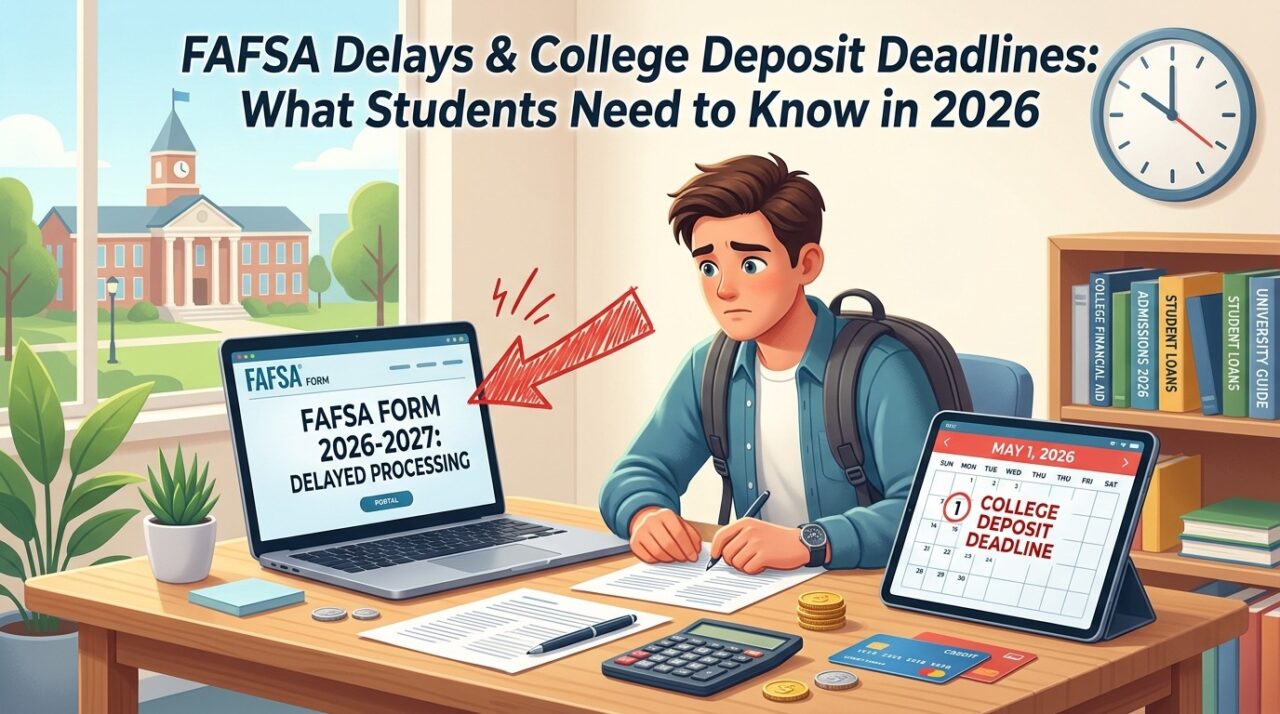
The 2026–27 FAFSA covers aid for July 1, 2026 through June 30, 2027. The form says students should submit for federal aid no earlier than October 1, 2025, and the federal deadline is June 30, 2027. The FAFSA is free and is used to apply for federal and state grants, work-study, and loans; Federal Student Aid also says it gives access to most sources of aid, including federal, state, and school aid.
FAFSA also now asks about your high school completion status. Federal Student Aid’s FAFSA instructions say that if you select “State-recognized high school equivalent,” you must provide the type of equivalent credential and the issuing state. That matters for students with a GED or HiSET.
Another important point: the FAFSA does not make the final award by itself. Federal Student Aid explains that the schools you list receive your FAFSA information and then make a final determination of your eligibility and aid offer. That means program structure, institutional documentation, and school review all matter, especially for ATB and CTP cases. Based on that process, it is reasonable to infer that state and institutional aid rules may vary by campus and state, even though the FAFSA is the common application point.
What students should do next
If a student does not have a diploma or equivalent and wants aid, the best next step is very practical:
-
Ask the college’s financial aid office whether the exact program is an approved Eligible Career Pathway Program or an approved CTP program. Federal eligibility depends on the program structure, not just the school’s name.
-
Ask which ATB route the school uses: approved test, 6 credits/225 hours, or an approved state process.
-
Complete the FAFSA anyway if you may qualify through ATB, CTP, GED/HiSET, or homeschool rules. The FAFSA is the entry point for federal aid and most state/school aid.
-
Keep documentation of any GED/HiSET, state equivalency, homeschool completion, ATB test results, or completed credits/clock hours. FAFSA and school review can depend on accurate records.
What if a school told you that you qualified when you did not?
There is also a consumer-protection angle here. Federal Student Aid provides a false certification discharge process for borrowers whose school certified loan eligibility based on false high school graduation status or improper ATB certification. StudentAid.gov and the federal form materials specifically address borrowers who did not have a diploma or GED when they enrolled and believe the school improperly certified their ability to benefit.
Bottom line
Yes, you can get financial aid without a high school diploma — but only through specific legal pathways. For most students, the realistic federal route is Ability-to-Benefit inside an Eligible Career Pathway Program. A second route exists for some students in approved CTP programs for intellectual disabilities. But you generally cannot get federal aid just because you were admitted, because you are older, or because you are working on GED prep by itself. The safest rule for families is this: ask the school whether the program is federally approved for ATB or CTP purposes before you enroll or borrow.