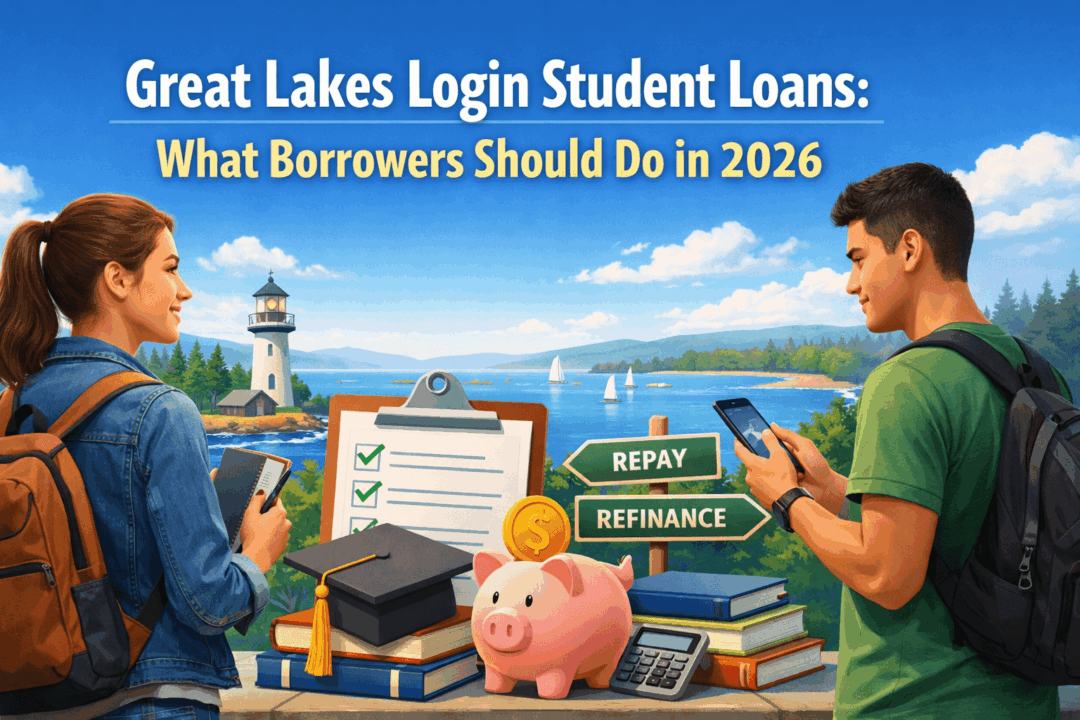
Great Lakes Login Student Loans: What Borrowers Should Do in 2026
If someone searches “Great Lakes login student loans” today, the safest answer is simple: do not depend on an old standalone Great Lakes login page for federal loans. Federal Student Aid’s current list of official federal loan servicers does not include Great Lakes, and the government tells borrowers whose loans were transferred to use their new servicer and confirm everything in StudentAid.gov. For many former Great Lakes federal borrowers, that means Nelnet.
Official websites to use
These are the legitimate places borrowers should use first:
-
StudentAid.gov — your federal student loan dashboard and FSA ID sign-in.
-
Who’s My Student Loan Servicer? — official federal servicer lookup.
-
Nelnet Federal Student Loan Login — official portal for borrowers whose loans are now serviced by Nelnet.
-
Loan Simulator — official repayment-plan comparison tool.
-
Avoiding Student Aid Scams — official anti-scam guidance.
What happened to Great Lakes?
Great Lakes stopped being the login destination most borrowers should use for federal loans because the company was acquired by Nelnet in 2018, and Great Lakes is not listed among the current official federal servicers shown by Federal Student Aid. Today’s official federal servicer list includes names such as Nelnet, MOHELA, Edfinancial, Aidvantage, ECSI, CRI, and Default Resolution Group. That is the clearest sign that borrowers should verify their account through the government’s current servicing system instead of chasing outdated search results.
That matters because federal servicer websites were also moved from older “.com” branding to “.gov” or StudentAid.gov-branded domains. In plain English: if a borrower clicks a random search result that looks like “MyGreatLakes” but is not part of the official federal system, they may end up on a lookalike site instead of the real portal.
The easiest way to log in now
A student or parent who once used Great Lakes should take this route:
-
Start at StudentAid.gov and sign in with the borrower’s FSA ID. StudentAid says the dashboard shows your loans, status, and servicer information.
-
Open “My Loans” or the dashboard area showing “My Loan Servicers.” StudentAid says this is where borrowers can see loan type and servicer name.
-
If the servicer listed is Nelnet, use the official Nelnet StudentAid.gov login page. If you have never used Nelnet’s site before, Nelnet says new or transferred borrowers should create an online account first.
-
If your loans were recently moved, do not panic if the old account looks empty or says “paid in full.” Federal Student Aid says that can happen during a transfer and does not mean your debt was forgiven.
-
After transfer, borrowers usually need to set up online access again and restart services like auto pay with the new servicer.
What borrowers should expect during a transfer
Federal Student Aid lays out a very specific transfer process. Borrowers are supposed to receive notice at least two weeks before a transfer. After the new servicer fully loads the loans, the new servicer should appear on StudentAid.gov within roughly 7–10 business days. If payment history looks incomplete, StudentAid says it can take up to 30 business days for the full record to update.
This is one of the most confusing parts of student loan servicing, because the old servicer may look wiped clean while the new servicer is still loading the account. A borrower can easily mistake that for cancellation, disappearance, or an error. The smarter move is to verify the servicer in StudentAid.gov first, then wait for the new account instructions, then compare balance, interest rate, repayment plan, and payment history after the transfer finishes.
How to tell whether the loan is federal, FFEL, or private
This is where many families get stuck. StudentAid says the borrower can log in and look under the loan breakdown to see whether a loan says “FFEL” in its name. It also says to check the “My Loan Servicers” section to see whether a loan is held by the Department of Education. If the loan does not show up in StudentAid.gov at all, that often means it may be a private loan rather than a federal one.
That distinction matters because the old FFEL Program ended in 2010. New federal student loans are now made through the Direct Loan Program, not the FFEL program. So if someone is a current high school senior, they are not borrowing a “new Great Lakes federal loan.” They are entering a federal system centered on StudentAid.gov, Direct Loans, and current servicers.
Why correct login info matters more than ever
Student loan servicing is not a tiny niche problem. Federal Reserve data updated March 6, 2026 show about $1.84 trillion in total student loan balances in the United States at the end of Q4 2025. Separately, Federal Student Aid reported in August 2025 that about 5.3 million ED-serviced borrowers with nearly $117 billion in outstanding federal student loans were in default as of June 2025. That is a reminder that missing the right portal, missing notices, or failing to reconnect autopay after a transfer can have real consequences.
For high school seniors, this is also a warning about future borrowing. Student loans are not just about getting approved. They are also about understanding who owns the loan, who services it, where to log in, and how repayment works years later. A confusing login search can turn into a missed payment problem fast if the borrower does not verify the real servicer.
What a current senior or parent should know before borrowing
For loans first disbursed between July 1, 2025, and June 30, 2026, the federal interest rate is 6.39% for undergraduate Direct Subsidized and Direct Unsubsidized Loans, 7.94% for graduate Direct Unsubsidized Loans, and 8.94% for Direct PLUS Loans. These are fixed federal rates, and they apply through the current award-year window.
That means families should not obsess over the Great Lakes brand itself. The real questions are: Is the loan federal or private? What is the interest rate? What repayment options will exist? Which official portal should the borrower use? Those questions matter much more than the legacy servicer name a borrower may remember from old paperwork.
What to do right after you log in
Once the borrower gets into StudentAid.gov or the new servicer account, the first five checks should be these:
First, confirm the servicer name. Do not assume it is still Great Lakes. Check the dashboard.
Second, confirm the loan type. Look for Direct, FFEL, Parent PLUS, or private-loan clues.
Third, confirm repayment status. Is the loan in school, grace, repayment, deferment, forbearance, or default? StudentAid says those statuses are visible in the borrower account view.
Fourth, rebuild account settings. If the loan moved, borrowers may need to recreate online access and re-start auto pay.
Fifth, compare repayment plans. Federal Student Aid says borrowers can use Loan Simulator to estimate payments and compare options.
Repayment options in 2026
A good login guide should not stop at sign-in. Borrowers need to know what comes after. Federal Student Aid says the online income-driven repayment application is available, and borrowers can compare plans with Loan Simulator. It also says court action is currently blocking implementation of the SAVE Plan, while other IDR options remain available for eligible borrowers.
That matters for former Great Lakes borrowers because the best action after regaining account access may not be “just make a payment.” It may be to switch repayment plans, update income, apply for an IDR plan, or check forgiveness/discharge eligibility depending on work, disability, or financial hardship. The login is the door; the repayment strategy is the real decision.
Scam warning: the safest rule
The safest rule is this: start from StudentAid.gov, not from a random search result. Federal Student Aid warns that borrowers never need to pay a company to consolidate federal loans, apply for IDR, or get ordinary servicing help. It also provides an official list of legitimate servicers and notes that scams often imitate real student loan language.
For a website article aimed at students and families, this is the takeaway sentence worth remembering: If a site is asking for money to “unlock” repayment options or promising special access to your old Great Lakes account, leave immediately. Federal student loan help is supposed to come through official channels.
Bottom line
The phrase “Great Lakes login student loans” is now mostly a legacy search term. In 2026, the smart path is to verify the account in StudentAid.gov, identify the current servicer, and, if that servicer is Nelnet, use the official Nelnet federal portal to create or access the account. Great Lakes is not part of the current official federal servicer list, and borrowers should treat old-brand search results with caution.
For current high school seniors, the larger lesson is even more important: the student loan system changes names, portals, and contractors over time, but the safest habit stays the same — use official federal sites, know your loan type, and verify your servicer before you act.
Short FAQ
Can I still log in through Great Lakes directly?
For federal borrowers, you should not assume that. Federal Student Aid says transferred loans are handled by the new servicer, and Nelnet says transferred borrowers may need to create a new online account.
Why does my old account say “paid in full”?
StudentAid says that can happen during a transfer. It does not mean forgiveness.
How long does it take for the new servicer to appear?
Usually about 7–10 business days after the transfer is fully loaded, though full payment history can take up to 30 business days.
Where should I start if I do not know my servicer?
Start with StudentAid.gov and check My Loans and My Loan Servicers.
Are new federal student loans still FFEL loans?
No. StudentAid says the FFEL Program ended in 2010; new federal loans are made through the Direct Loan Program.