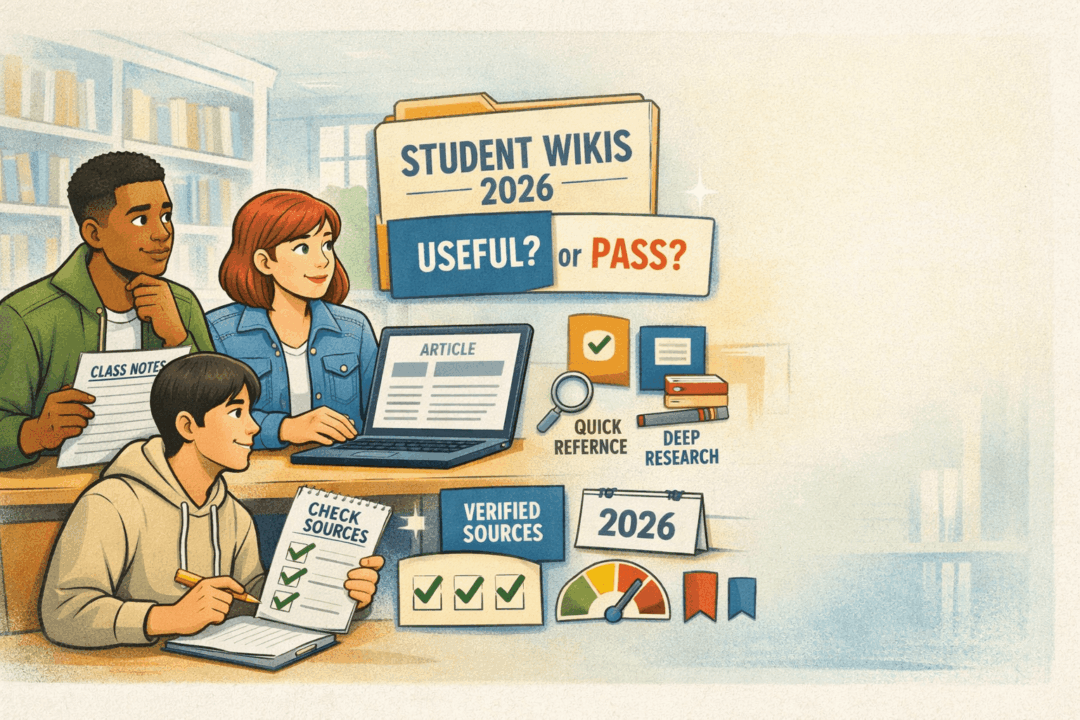
Student Wikis 2026: Are They Still Worth It? (Or Just Pass?)
If you’re a high school or college student in 2026, chances are you’ve Googled something and the first link you saw was Wikipedia. 👀 But here’s the big question:
👉 Can you actually trust it?
👉 Is it good for schoolwork, or just for fun facts?
Let’s break it down in easy terms, so you know when a student wiki is your best friend—and when you should scroll right past it.
🌐 What Even Is a Wiki?
A wiki is a website that anyone (yes, even your cousin who thinks pineapple belongs on pizza 🍍🍕) can edit. The most famous one is Wikipedia, which has over 6.7 million English articles and is constantly updated by volunteers.
Other “student wikis” include things like:
-
Course-specific wikis (students post notes, study guides, and test tips).
-
Campus wikis (info about clubs, professors, housing, etc.).
-
Subject-specific wikis (like math or science communities).
So yeah, it’s not just Wikipedia—wikis pop up in almost every subject area now.
✅ Why Wikis Are Still Useful in 2025
Even with AI tools, TikTok explainers, and Google Scholar, wikis haven’t gone away. Here’s why:
-
🏃 Fast facts, quick refreshers → Perfect for when you forgot what “mitosis” means five minutes before bio class.
-
📖 Simple explanations → Articles often summarize tough concepts in plain English.
-
🔗 Starting point for research → Most wiki pages have footnotes that link to legit sources (these can actually help your essay).
-
🌍 Always updating → News, science, and even memes show up faster than your textbook can keep up.
⚠️ The Downsides (a.k.a. Why Teachers Say “Don’t Cite Wikipedia”)
Now, the flip side:
-
✏️ Anyone can edit → Mistakes, bias, or even trolls can sneak in.
-
📑 Not always peer-reviewed → Unlike academic journals, no professor double-checks every fact.
-
🎭 Vandalism happens → Yes, sometimes people change articles as a joke.
This doesn’t mean wikis are “bad”—it just means you shouldn’t use them as your final source for assignments.
🎓 Smart Way to Use Wikis (Pro Tips for Students)
Instead of asking “Is Wikipedia trustworthy?” the better question is “How do I use it smartly?” Here’s the play:
-
Start with a wiki for quick background.
-
Scroll down to “References” → That’s where the good stuff is (real books, articles, and academic sources).
-
Fact-check with reliable sites like:
-
Purdue OWL (writing + citations help)
📊 Fun Fact: What Studies Say About Wikipedia
A study from Nature found that Wikipedia’s accuracy on science topics was almost the same as Encyclopedia Britannica (back when that was a thing). Another report from MIT showed that students who used Wikipedia as a starting point performed better—because they followed the sources listed at the bottom.
So yeah, your teachers aren’t totally wrong… but wikis aren’t trash either. They’re just Step 1, not Step Final.
📝 Final Verdict: Wiki or Nah?
-
✔️ Yes, use wikis to learn, refresh, or find sources.
-
❌ No, don’t cite wikis as your main reference in essays or research papers.
-
🔑 Pro move: Mine the references for gold. That’s where your legit sources live.