College Financial Aid Guide
College affordability in the United States is not a single price; it is a negotiated outcome shaped by federal formulas, state policy, institutional “discounting,” family income and assets, academic profile, and timing. This research synthesizes the post-FAFSA-Simplification financial aid landscape (2024–25 onward), the 2025–26 federal aid parameters (Pell and Direct Loan interest rates), and the July 2025 “One Big Beautiful Bill Act” (OBBBA) reforms that begin phasing in July 1, 2026—especially the shift to the Repayment Assistance Plan (RAP) and new borrowing caps. Using public data and authoritative guidance (U.S. Department of Education/Federal Student Aid, NCES, IRS, College Board, NACUBO, Congressional Research Service), this guide translates the modern aid system into an evidence-based framework students and families can use to (1) minimize net price, (2) reduce borrowing, and (3) avoid preventable “aid cliffs” and repayment traps.
Keywords: FAFSA, Student Aid Index, Pell Grant, net price, institutional aid, tuition discounting, Direct Loans, RAP, income-driven repayment, cost of attendance, verification, professional judgment.
Executive summary: the 12 findings that matter most in 2026
-
The “sticker price” is not the price. Net price (cost after grants/scholarships) is what families actually face; net tuition has fallen in inflation-adjusted terms in several sectors even as published prices remain high.
-
Grant aid is big—and growing again. College Board estimates $173.7B in grant aid supported students in 2024–25, with Pell driving a sizable year-over-year increase and ~7.3M Pell recipients.
-
Pell is still the bedrock of need-based aid. The maximum Pell Grant is $7,395 for 2025–26, with year-round Pell allowing up to 150% of a scheduled award for eligible students.
-
SAI replaced EFC—and that change is structural. The Student Aid Index can be negative to –1,500, and the FAFSA formula no longer counts the number of siblings in college the way it used to.
-
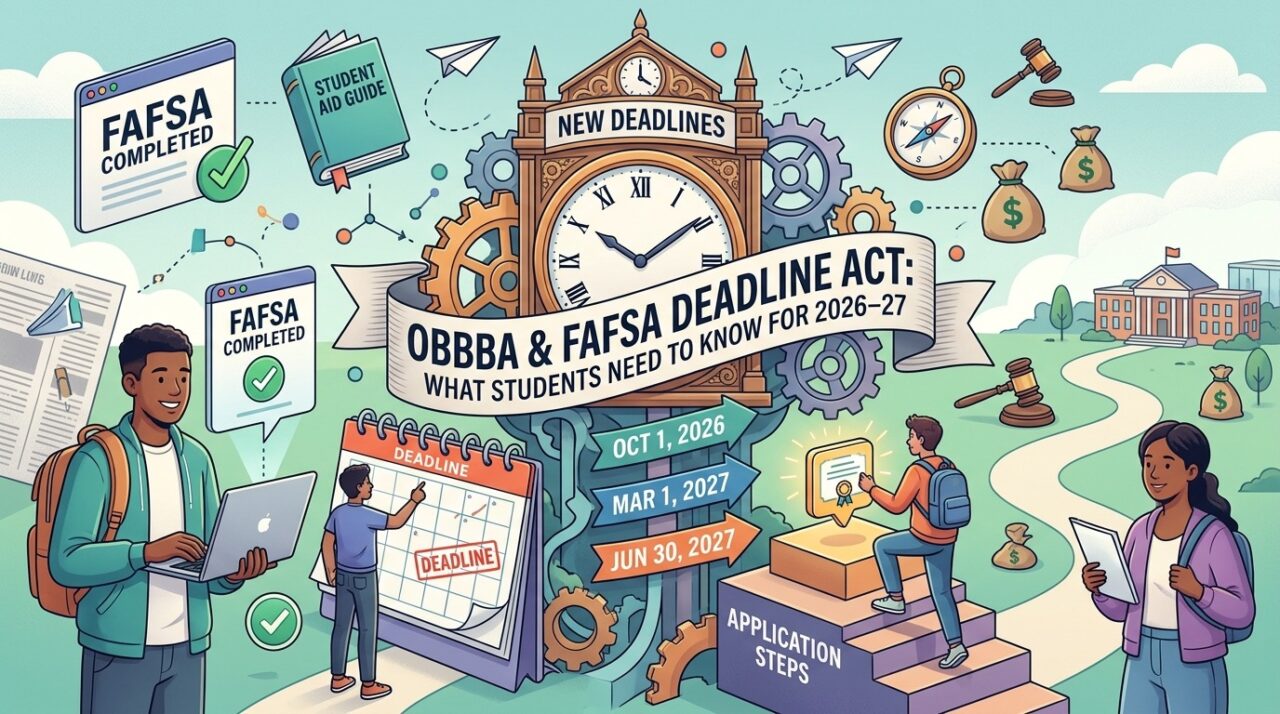
Timing is strategy. The FAFSA has a hard federal deadline (e.g., June 30, 2026 for 2025–26) but state and campus dollars are often first-come/first-served. The 2026–27 FAFSA became broadly available September 24, 2025 (ahead of the planned October 1 launch), an intentional shift after recent cycle disruptions.
-
Private colleges often run on “discounting.” In 2024–25, NACUBO reports an average tuition discount rate of 56.3% for first-time, full-time undergraduates at participating private nonprofit institutions. That discounting can lower net price—but it can also be unevenly distributed and contingent on enrollment behavior.
-
Borrowing is now a policy moving target. Direct Loan rates for July 1, 2025–June 30, 2026 are set annually; federal guidance details the rates and statutory caps.
-
Student debt remains macro-economically large. The New York Fed reports outstanding student loan debt around $1.65T (2025Q3) and rising delinquency as missed payments re-entered credit reporting.
-
Major repayment reform is already law. The OBBBA (signed July 4, 2025) restructures repayment: for new loans on/after July 1, 2026, ED is largely limited to a standard plan and RAP (an income-based plan).
-
Existing borrowers face a transition cliff. Many borrowers in SAVE/PAYE/ICR must move plans by July 1, 2028 under OBBBA timelines; implementation guidance is evolving.
-
The “tax bomb” is back (federally) in 2026 for some forgiveness. IRS guidance notes ARPA’s federal tax exclusion for many student-loan discharges applied 2021–2025; after that, forgiven balances may again be taxable for certain pathways (with important exceptions like PSLF remaining tax-free).
-
Families win by treating aid as a multi-year system, not a one-time form. The biggest financial mistakes come from: (a) choosing schools without net-price clarity, (b) missing state/campus deadlines, (c) over-borrowing in years 2–4, and (d) ignoring completion risk and program ROI.
1) The 2026 affordability landscape: what the data say (and what it implies)
1.1 Published price vs. cost of attendance vs. net price
Most families hear “tuition” and assume that is the cost. In financial aid, colleges use a broader Cost of Attendance (COA)—tuition/fees plus housing/food, books, transportation, and personal expenses. NCES shows COA varies substantially by living arrangement (on campus vs. off campus vs. with family) and by sector (public, private nonprofit, for-profit).
Implication: A lower-tuition school can be higher total cost if housing and non-tuition budgets are high—or if the institution’s grant aid is weaker.
1.2 Grant aid scale and composition
College Board’s 2024–25 reporting underscores the scale of grant aid and the rebound of Pell expenditures in inflation-adjusted terms.
Implication: The “aid economy” is real. Your strategy should be to qualify and compete for grants before loans—not just fill gaps later with debt.
1.3 The private-college discounting model
NACUBO’s tuition discounting results show private nonprofit institutions often discount heavily, with average discounts above 50% for first-time, full-time students in reporting schools.
Implication:
-
Good news: high-discount schools can produce competitive net prices for many families.
-
Risk: “discount rate” is not the same as your discount. Students with weaker academic profiles, late applicants, or complex financial circumstances may see less.
2) The modern FAFSA (2025–26 and 2026–27): how the system actually works now
2.1 FAFSA timeline: federal deadlines vs. real deadlines
For 2025–26, the FAFSA PDF itself states you should file “as early as possible” (no earlier than Oct 1, 2024) and that the federal deadline is June 30, 2026.
For 2026–27, ED announced the form reached broad availability on September 24, 2025 (after beta testing), positioning earlier access as a corrective response to prior cycle issues.
Translation for families:
-
Federal deadline = last chance for some federal aid.
-
State/campus deadlines = when the money actually runs out. File as early as you can do it accurately.
2.2 Student Aid Index (SAI): what changed and why it matters
Federal guidance on FAFSA Simplification Act implementation highlights major formula changes:
-
EFC replaced by SAI
-
SAI can be negative to –1,500
-
Number of family members in college removed from the calculation
Why that matters in practice:
-
Some families who previously benefited from multiple children enrolled simultaneously may see higher SAIs than under EFC rules (all else equal).
-
A negative SAI can expand eligibility for maximum Pell and other need-based aid at many institutions.
2.3 FAFSA as a “permission slip” for multiple aid streams
Filing FAFSA is not just about federal aid. It is also:
-
the trigger for many state grants,
-
the requirement for many institutional need-based grants, and
-
a gateway for some scholarship programs that require a verified financial need record.
3) The aid package: how schools build it (and how families should read it)
3.1 The packaging identity
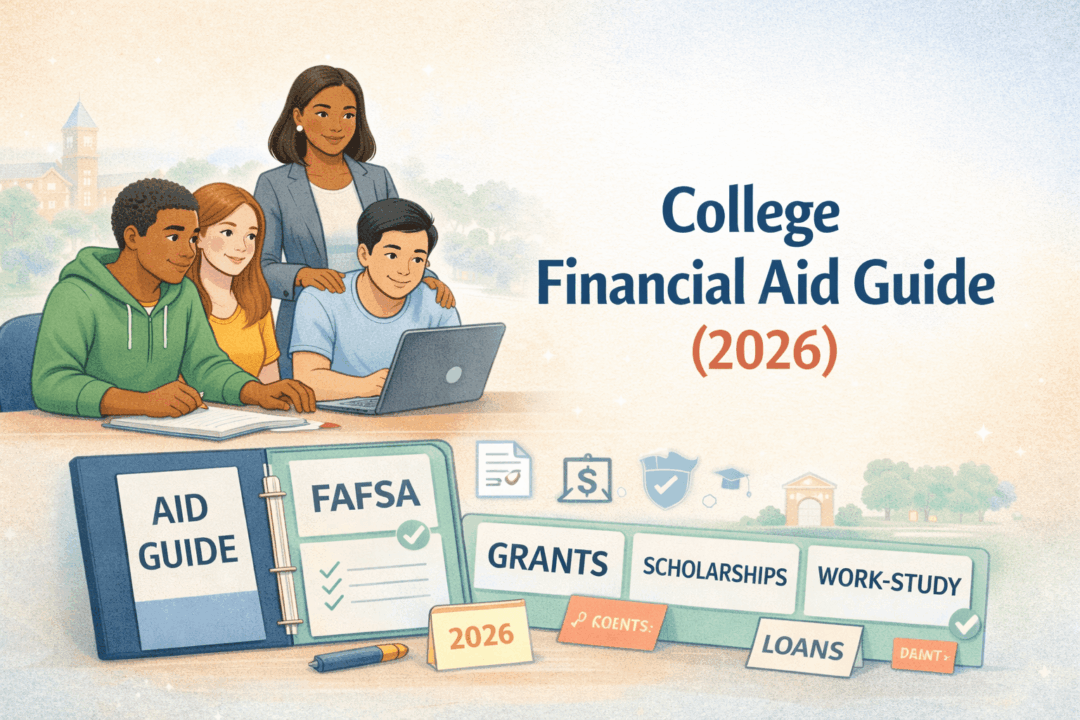
A typical aid package is a mix of:
-
Gift aid: grants + scholarships
-
Self-help: work-study + student employment expectations
-
Borrowing: federal loans, sometimes PLUS/private loans
-
Institutional expectations: unmet need or family contribution (not always stated clearly)
3.2 A universal “offer letter translation” formula
To compare schools apples-to-apples, compute:
Net cost (year 1)
= COA
– (all grants + scholarships you do not repay)
= net cost before work/loans
Then separate:
-
Work-study is not a discount; it’s earned wages.
-
Loans are not aid; they are financing.
What to demand from every offer:
-
Total COA line-item detail
-
Separate totals for grants/scholarships, work-study, and loans
-
Renewal criteria for every scholarship (GPA, credits, major, conduct)
4) Federal grants and need-based programs (2025–26 parameters)
4.1 Pell Grant: maximums, year-round Pell, and who benefits
Federal Student Aid and partner guidance list $7,395 as the maximum Pell for 2025–26 and emphasize year-round Pell up to 150% for eligible students.
How Pell changes behavior:
-
Pell can reduce or eliminate the need to borrow for tuition at many community colleges and some public institutions.
-
Pell also functions as an eligibility signal for other need-based dollars.
4.2 Federal Work-Study: why it’s often misunderstood
Work-study is a wage subsidy, not a tuition discount. Its value depends on: job availability, hourly wage, schedule compatibility, and whether the student can actually earn the full award.
Best practice: treat work-study as optional upside, not guaranteed money, unless you confirm job placement rates on that campus.
5) Scholarships and institutional aid: the “stacking” layer that determines net price
5.1 Institutional aid is usually the biggest scholarship most students will ever get
Even families who win external scholarships often see the largest dollar value from institutional grants and tuition discounts—especially at private nonprofits with high discounting.
5.2 Stacking rules: the fine print that changes outcomes
Schools can apply “scholarship displacement,” meaning external scholarships may reduce institutional grant dollars. Policies vary widely; families must ask:
-
Will outside scholarships reduce institutional grants?
-
Are merit awards “first dollar” or “last dollar”?
-
Are there caps on total gift aid?
6) Federal student loans (2025–26 rates) and the 2026 reform shock
6.1 The 2025–26 Direct Loan interest-rate environment
FSA partner guidance publishes Direct Loan interest rates for loans first disbursed July 1, 2025–June 30, 2026, noting statutory maximum caps by loan type.
Borrower takeaway: Federal rates are fixed for the life of the loan once disbursed, but the rate resets for new loans each academic year. So borrowing in year 1 vs. year 3 can carry different rates.
6.2 Repayment is being rewritten: OBBBA and RAP
Multiple authoritative sources confirm OBBBA’s repayment restructuring:
-
Congress.gov summarizes that ED may offer largely two repayment options going forward: a standard plan and an income-based plan called RAP—with new-loan limitations on/after July 1, 2026.
-
CRS explains RAP as a new IDR option available July 1, 2026 for eligible Direct Loans.
-
ED describes negotiated rulemaking and caps for new borrowers starting July 2026, including annual and aggregate limits for graduate/professional borrowing.
-
NASFAA provides implementation summaries (including minimum payments and transition timelines).
What families should do with this information (practically):
-
Students starting programs in Fall 2026 and later may have different repayment menus than older cohorts.
-
Families considering high-debt graduate/professional paths need to re-estimate financing under the new caps and repayment structure.
6.3 The student debt context (why repayment design matters)
The NY Fed reports outstanding student debt near $1.65T (2025Q3) and elevated delinquency as repayment resumed and delinquency began appearing in credit reports again.
Implication: repayment programs and borrower behavior are not “small print”—they are a core affordability variable.
7) Taxes and financial aid: credits, deductions, and the return of the “tax bomb” in 2026
7.1 Federal tax treatment of discharged student loans: what changed on Jan 1, 2026
IRS publications state that the American Rescue Plan Act modified the federal tax treatment of many student-loan discharges for 2021 through 2025.
In 2026, that broad federal exclusion has expired, meaning some forgiveness pathways may again create taxable income—while major exceptions (like PSLF) remain non-taxable.
Operational takeaway: families should treat forgiveness taxability as a real planning variable (especially for long-horizon IDR forgiveness), and coordinate with tax guidance.
7.2 Education tax benefits remain part of the “net cost” picture
IRS Publication 970 outlines education-related tax benefits and references the student-loan interest deduction and the student-loan forgiveness treatment window.
8) A data-driven decision framework families can actually use
8.1 The Net-Price-First Rule (NPF)
Before committing to a school, a student should be able to answer, with numbers:
-
What is year-1 net cost (COA minus gift aid)?
-
What is 4-year expected net cost (considering renewal rules and typical increases)?
-
What is the borrowed amount at graduation under conservative assumptions?
8.2 The Borrowing Guardrails Rule
A simple evidence-aligned guideline is:
-
Borrow less than expected first-year salary (or even half for conservative families), and
-
Prefer federal loans over private when borrowing is necessary (due to borrower protections and repayment options), while monitoring the changing federal repayment landscape under OBBBA.
(ScholarshipsAndGrants.us note: You can turn this into an interactive calculator with a “safe borrowing range” slider by major/field using College Scorecard outcomes.)
8.3 Completion risk is affordability risk
Net price is only “affordable” if the student completes. Aid often requires satisfactory academic progress (SAP), continuous enrollment, and credit completion. A financially “cheap” school with poor completion outcomes can become expensive if students lose aid or extend time-to-degree.
9) Tactical playbook: the 10 highest-ROI actions for students & families
-
File FAFSA early, accurately, every year. Federal deadline is late; state/campus dollars are not.
-
Treat SAI as a planning variable. If income is volatile, simulate scenarios (job change, overtime, business swings).
-
Ask about “scholarship displacement” in writing. External awards can reduce institutional grants.
-
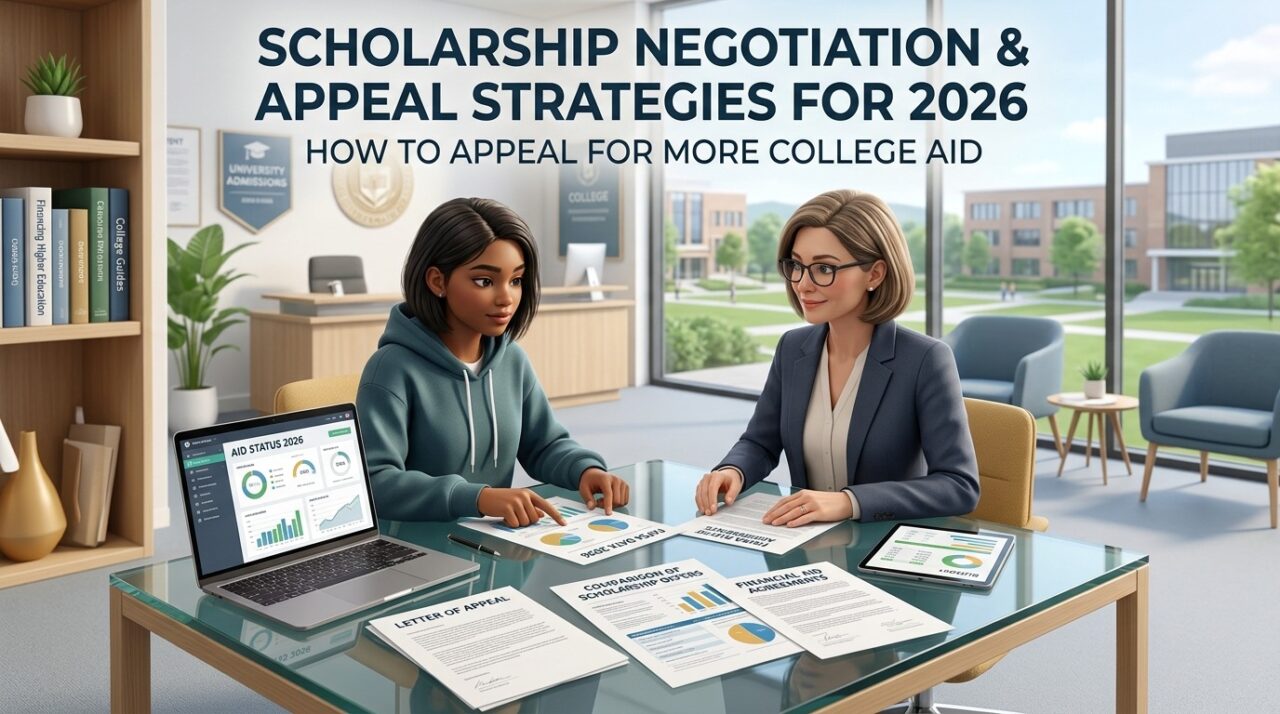
Appeal strategically (professional judgment). Use documentation, show changed circumstances, and specify what you’re requesting (more grant, less loan, work-study swap).
-
Compare offers using net cost before loans. Loans are financing, not discounts.
-
Confirm renewal rules for every scholarship. Most “surprise debt” happens in years 2–4.
-
Work-study: verify job access. If no job, the award is imaginary money.
-
Minimize borrowing in high-rate years. Rates change annually for new disbursements.
-
Plan around the 2026 repayment regime (RAP). Especially for students borrowing beginning July 1, 2026 and later.
-
Integrate taxes into aid planning. The 2026 shift in federal taxability of some forgiveness pathways can change long-term cost projections.
10) What ScholarshipsAndGrants.us can add to make this guide “best on the internet” (data + UX)
A. “Aid Offer Decoder” widget
Upload award letter → user inputs COA + line items → outputs standardized comparisons (gift aid vs loans vs work).
B. SAI & Pell quick estimator (not official, but educational)
Uses simplified assumptions and clearly labels uncertainty; points users to file FAFSA.
C. RAP readiness module (for students starting Fall 2026+)
A plain-English explainer of: repayment menu constraints for new loans, minimum payments, and transition deadlines for legacy plans—linked to authoritative sources.
D. “Discounting reality check” for private colleges
Explain NACUBO discount rates and how to interpret them without assuming every student receives the average.
Limitations (research integrity)
-
Federal and state aid rules can shift via regulation and legislation; this guide reflects the published parameters and law/implementation guidance available as of January 25, 2026.
-
Institutional aid practices vary widely and are not fully observable in public datasets; families should verify policies directly with each campus financial aid office.
References (selected, APA-style without raw URLs)
-
College Board. (2024–2025). Trends in Student Aid: Highlights and Trends in College Pricing/Student Aid reports.
-
Congressional Research Service. (2025). The Repayment Assistance Plan (RAP) in P.L. 119-21 (IF13075).
-
National Center for Education Statistics. (2023–2024). Condition of Education: Price of attending an undergraduate institution; Digest tables on tuition, fees, room and board.
-
NACUBO. (2024–2025). Tuition Discounting Study results.
-
U.S. Department of Education, Federal Student Aid. (2023–2025). FAFSA Simplification Act implementation guidance; Pell Grant maximum/minimum Dear Colleague Letter; Direct Loan interest rate announcement; FAFSA availability announcements.
-
Internal Revenue Service. (2024–2025). Publication 970; Publication 4681.
-
Federal Reserve Bank of New York. (2025). Student debt (Quarterly Household Debt and Credit reporting).